
In brief: A good kitchen thermometer delivers accurate readings quickly and reliably. In our test, digital models with a stainless steel probe and clear display perform best. A fast response time and easy operation are particularly important. We show you what to look for when buying.
An accurate kitchen thermometer is the key to achieving the perfect cooking point. Whether you are grilling a juicy steak, preparing a roast or checking the temperature of your refrigerator, the right device provides reliable data. In our kitchen thermometer test and comparison 2026, we present the best models. We assess them based on accuracy, ease of use and temperature range.
You will find out which thermometer suits your needs. We provide you with sound buying advice to help you make a confident choice for your kitchen accessories.
Table of contents
What types of kitchen thermometers are there?
Kitchen thermometers are generally divided into analogue and digital models. Analogue models usually work with a bimetal strip. They are robust and do not require a battery, but are often less accurate.
Digital thermometers are standard today. They use an electronic sensor and show the reading on a display. They are more accurate, faster and offer more functions.
Instant-read thermometer
This is the classic design. You insert the probe directly into grilled food or a roast. The temperature is measured at the centre. These devices are ideal for meat, fish and poultry.
Oven thermometer with probe
These models have a probe attached to a heat-resistant cable. You place the probe in the roast and run the cable out of the oven. The display unit stays outside. This allows you to monitor the cooking process without opening the oven.
Infrared thermometer
These contactless devices measure surface temperature. They are well suited to pans, frying oil or checking liquids. They are not suitable for measuring core temperatures.
Test criteria
We assessed the thermometers according to several important criteria. You should also consider these points when making your choice.
Accuracy and measuring range
Accuracy is the most important criterion. A deviation of more than one degree can already affect the cooking point. Look for high resolution, such as 0,1°C.
The measuring range should cover your intended applications. For most households, a range of -20°C to +250°C is sufficient. This covers refrigeration checks, roasting and deep-frying.
Speed and response time
A good thermometer delivers a stable reading within a few seconds. Speed is particularly important when grilling, so you do not leave the oven or grill door open for too long. A response time of under five seconds is ideal.
Build quality and ease of use
The probe should be made of stainless steel. It should be dishwasher-safe. The housing should provide a secure grip and be heat-resistant. With oven thermometers in particular, the heat resistance of the cable is crucial.
Take care when cleaning. Never immerse the entire digital device with its display in water unless it is explicitly labelled as waterproof. Only clean the removable probe.
Comparison of the Best Models
Our test shows that digital models with stainless steel probes are leading the way. They combine precision with convenient operation. Here, we present some outstanding products from our range.
The
impresses with its clear digital display and robust stainless steel probe. It is an all-rounder for grilling and roasting.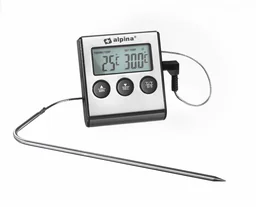
For demanding grilling sessions, the
is a great choice. The SMART BBQ thermometer can often be controlled via an app and offers programmable alarm functions.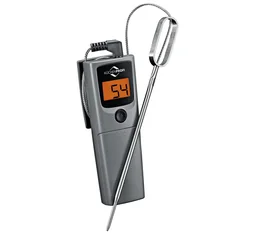
Models with two sensors, such as the
, are particularly practical. This lets you measure the internal temperature at two points simultaneously, or the grill and internal temperatures.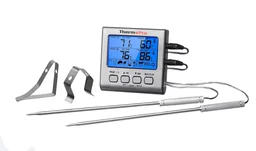
If you also want to monitor your refrigeration appliances, the
is the right choice. Its measuring range extends well into sub-zero temperatures.
For a direct comparison of the technical data and features, use our clear comparison table.
The most highly rated kitchen thermometers in our range compared directly:
| Model | Customer rating | Availability |
|---|---|---|
| 2in1 Wireless Digital Fridge/Freezer Thermometer | – | Currently unavailable |
| BBQ, Roast and Oven Thermometer, Stainless Steel | – | Currently unavailable |
| Digital Grill/Meat Thermometer, Stainless Steel | – | Currently unavailable |
| Digital Fridge Thermometer - measures from -20 to +50 °C, stainless steel | – | Currently unavailable |
| Digital Roast and Grill Thermometer SMART BBQ | – | Currently unavailable |
Tip: Calibrate your new thermometer before using it for the first time. Check the display in melting ice (0°C) and boiling water (100°C). This ensures accurate readings.
Use and Care
Proper handling extends the life of your thermometer and guarantees accurate readings.
How to Measure Correctly
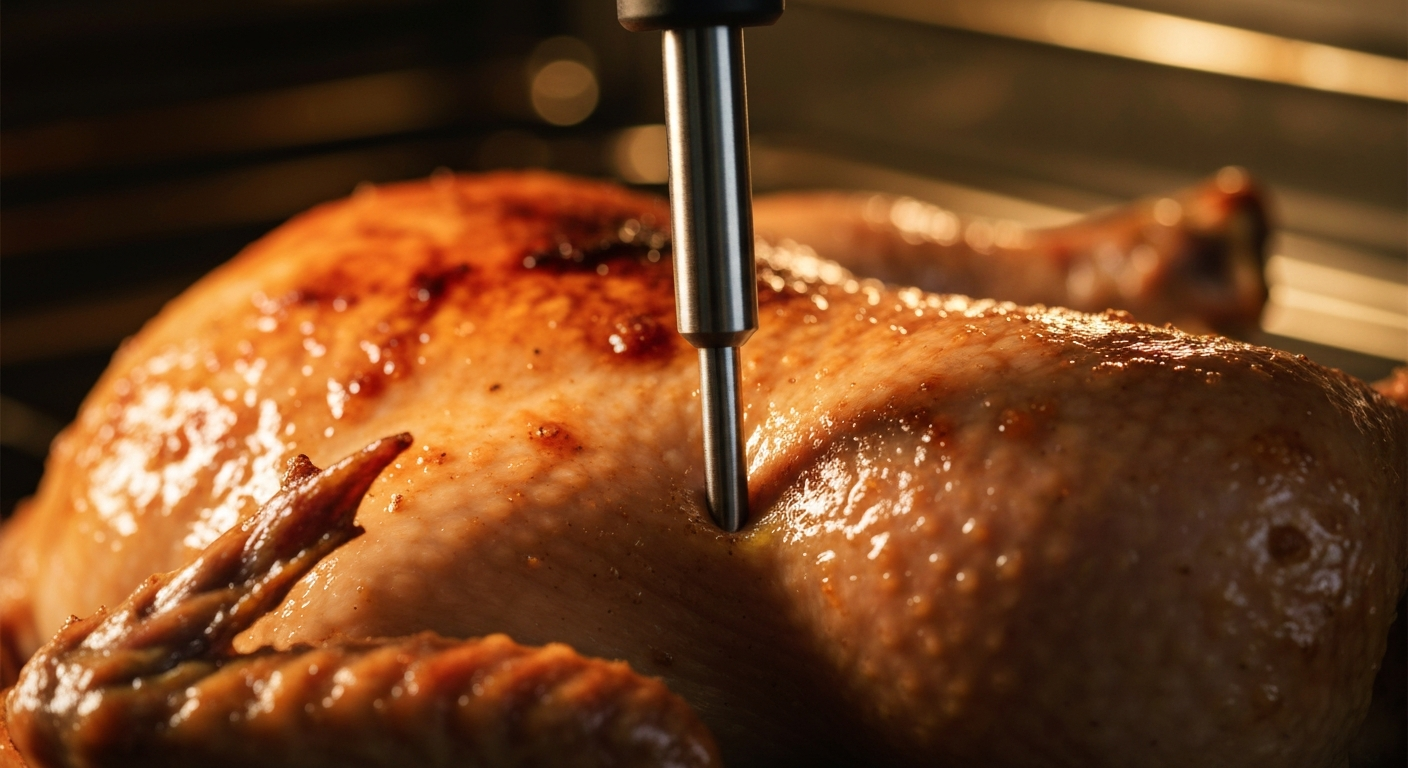
Always insert the probe into the thickest part of the food. Make sure it does not touch a bone or a fatty area. This would distort the reading. For poultry, measure in the thigh or breast.
Wait until the reading has stabilised. On digital models, an audible signal often indicates that the measurement is complete.
Cleaning and Storage
Clean the probe thoroughly after every use. Use warm water and washing-up liquid. Stainless steel probes are generally dishwasher-safe. Check the manufacturer's instructions.
Always dry the thermometer completely before putting it away. Store it in a dry place. If it will not be used for an extended period, remove the batteries to prevent corrosion.
Note: The probe has a limited service life. Frequent use at high temperatures can cause measurement accuracy to deteriorate over time. An occasional calibration check is advisable.
Conclusion and Buying Guide
Choosing the right kitchen thermometer depends on your main applications. Make your decision based on your specific needs.
Which Model Is Ideal for Whom?
For occasional grillers and home cooks: A simple, robust digital thermometer like the is perfectly adequate. It is accurate, fast and easy to use.
For passionate grillers and smokers: Invest in a device with a wireless connection or app control, such as the . Remote monitoring is a major convenience.
For professionals and large households: A dual-sensor model like the offers maximum flexibility. It allows you to monitor several parameters accurately at the same time.
Our Recommendation
A high-quality digital instant-read thermometer is the best solution for most households. Look for a precise display, a fast response time and a dishwasher-safe stainless steel probe.
Also consider the power supply. Models with replaceable standard batteries are more practical than those with permanently installed rechargeable batteries. See the quality for yourself in our kitchen thermometers category. There, you will find all the tested models for your home.
With the right thermometer, meat dishes and more will turn out perfectly every time. You will feel more confident in the kitchen and be able to reproduce your results precisely. A worthwhile investment for anyone who values precise cooking.
Frequently Asked Questions
- What are the advantages of a digital kitchen thermometer?
- Digital thermometers show the temperature on a display. They are generally more accurate and faster than analogue models. Many offer practical additional features such as a timer or programmable alarm limits.
- Can I also use a meat thermometer for grilling?
- Yes, many models are suitable for a wide range of applications. Make sure it has a sufficiently wide temperature range and a heat-resistant probe. Specialised grill thermometers are often more resistant to splashes and smoke.
- How do I calibrate my kitchen thermometer?
- Test its accuracy in ice water (0°C) and boiling water (100°C). Digital models can often be adjusted at the touch of a button. For analogue devices, use the calibration nut if necessary.
- What temperature range is suitable for household use?
- A range of at least -20°C to +250°C covers most applications. These include checking refrigerators, roasting meat and deep-frying. For special purposes such as sugar work, you will need higher values.
- What does the response time mean on a thermometer?
- The response time indicates how quickly the device displays the actual temperature. A short time of 3-5 seconds is ideal, so you do not have to wait too long. It depends on the probe and the electronics.