
In brief: The best waterfall pump depends on your project. For small streams in sunny spots, a solar pump such as PRODUCT_131312 may be all you need. Larger streams need a more powerful pump, with a battery or mains connection. The key things to consider are the pumping height, the flow rate you want and whether you have access to a power supply. Our comparison covers pumps for a range of setups.
Best Waterfall Pumps 2026: Reviews and Buying Guide
A gently flowing stream can bring any garden to life. A reliable pump is at the heart of it. We compare leading waterfall pumps for 2026 and help you find the right one. Read on to learn what to look for in a pump’s performance, power source and ease of use.
Contents
Pump performance: pumping height and flow rate
Two figures are key when choosing a pump: pumping height and flow rate. They measure different things.
Maximum pumping height
Pumping height tells you how high the pump can raise water, in metres. Measure the vertical distance from the pump in the pond to the stream outlet, then add about one metre for a safety margin. A pump with a 2m pumping height will already be working near its limit if the stream rises by 1.5m.
Flow rate in l/h
Flow rate tells you how much water the pump can move per hour. A flow rate of 300-800 litres per hour is often enough for a gentle trickle. For a wider, faster-flowing stream, look for at least 1500 l/h. Keep in mind that a pump only reaches its maximum flow rate when it has to lift the water very little. The higher the stream, the lower the actual flow rate.
Note: Manufacturer figures are often based on ideal conditions. Allow for a flow-rate loss of around 20-30% due to hose friction and the height the water must be lifted.
Power source: solar, battery or mains?
Your choice of power source affects where you can install the pump, its running costs and how reliably it operates.
Solar pumps without a battery
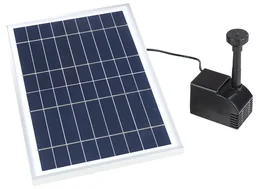
Models such as the are simple and economical to run. They work directly from sunlight, so there are no electricity costs. However, their performance can vary: in cloudy weather or shade, the flow rate drops. These pumps are a good choice for small, sunny streams where continuous operation is not essential.
Solar pumps with a battery
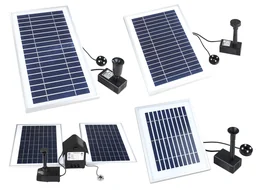
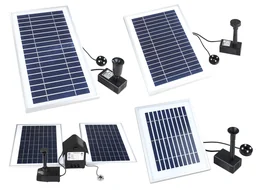
These pumps, such as the or the , pair a solar panel with a battery. The panel charges the battery during the day, so it can power the pump when it’s cloudy or after sunset. This helps keep the stream running more consistently. Check the battery capacity to see how long the pump can run without sunlight.
Mains-powered pumps
Corded waterfall pumps offer the highest performance and run reliably whatever the weather. They are a good choice for large streams that need a high flow rate. You will need a suitable power supply near the garden, and the pump will add to your electricity bill.
Important: For an outdoor mains-powered pump, use a weatherproof outdoor socket and a suitable cable. Safety comes first.
Waterfall pumps compared
Here are some selected models from our range. See the table for a side-by-side comparison.
The is a typical entry-level solar pump. With a flow rate of 800 l/h, it suits small streams where the solar panel gets sunlight throughout the day. It is easy to use and needs no wiring.
The offers more flexibility. This solar pump with a battery delivers a steady 400 l/h even when sunlight is limited. It is a good option for partly shaded locations or if you want your stream to keep flowing into the early evening.
The offers a higher flow rate. With 1600 l/h and battery support, it can handle more demanding streams. It is a versatile choice if you want the convenience of solar power and a stronger flow.
Here is how our top-rated waterfall pumps compare:
| Model | Customer rating | Availability |
|---|---|---|
| Solar pond pump, 800 l/h 🏆 Top pick | ★ 4,8 (30) | In stock |
| 1200 l/h solar pump | – | Currently unavailable |
| 1600 l/h solar pump | – | Currently unavailable |
| 1600 l/h solar pump with battery | – | Currently unavailable |
| 200 l/h solar pump with battery, no light | – | Currently unavailable |
Tips for Installation and Maintenance
Proper installation can significantly extend the life of your pump.
The Ideal Location in the Pond
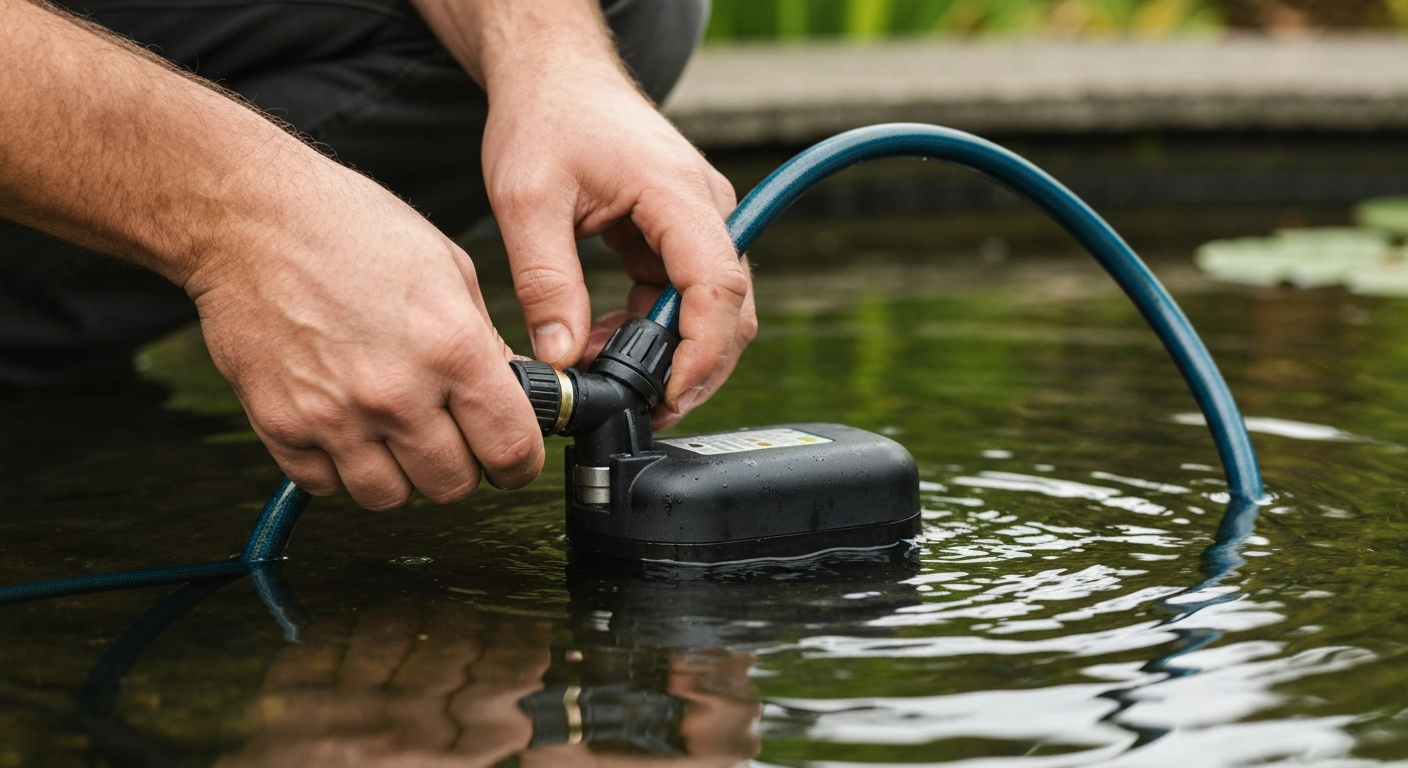
Always place the pump at the deepest point of the pond or in a designated pump basin. This prevents it from drawing in sludge or leaves. Make sure the housing is always completely submerged. Running the pump dry will damage it immediately.
Installing and Concealing the Hose
Use a hose with a suitable diameter that is UV-resistant. Lay it so that no kinks form. You can bury the hose along the edge of the stream or cleverly conceal it with gravel and stones. Make sure there is a slight slope back towards the pond so that the pump drains when switched off.
Regular Maintenance
Remove coarse dirt from the pump's intake grille every few weeks. Check the hose for leaks. Before the frost season, remove the pump completely from the water, clean it thoroughly and store it in a frost-free, dry place.
Tip: Before putting the pump into operation, place it in a bucket of clear water for a few hours. This helps loosen any possible transport residue from the seals and impeller.
Buying Guide: How to Find Your Waterfall Pump
Answer these three questions to find the right pump.
- What is the height difference? Measure it accurately. Choose a pump with a maximum head at least 30% higher than the value you measured.
- How much water should flow? Choose between a gentle trickle (200-800 l/h) and a strong stream (from 1500 l/h). Take a look at similar streams in our pond construction section.
- Do you have a nearby power outlet or plenty of sunlight? Without a power outlet, you are dependent on solar power. Without full sunlight, you need a battery. For powerful streams, mains power is often the simplest solution.
Discover all available options in our waterfall pumps category.
Operation and Care Throughout the Year
With the right care, your waterfall pump can last for many years.
Spring: Starting Up
Remove coarse winter deposits from the pond and stream. Install the pump and initially run it in a bucket of clear water for a short time to flush it. Check all connections.
Summer: Regular Checks
Heavy algae growth can quickly clog the intake grille. Check it weekly. With solar pumps, also regularly clean dust and bird droppings from the surface of the panel.
Autumn and Winter: Preparing for Storage
Before the first frost arrives, remove the pump from the water. This also applies to solar pumps! Store it in a frost-free place. Remove the hose and flush it through. This prevents frost damage and ensures a trouble-free start to the next season.
With this information, you are perfectly equipped to enhance your garden with a charming stream. You can find the right pump in our comparison.
Frequently Asked Questions
- How many liters per hour should my waterfall pump deliver?
- The required flow rate depends on the width and desired flow speed of your stream. For a narrow, gentle trickle, 200-500 l/h is often sufficient. For a wider, livelier stream, it is better to plan for 1000-2000 l/h. Roughly estimate the volume your stream should hold.
- Do solar waterfall pumps also work in the shade?
- Pure solar pumps without a battery only operate at full power in direct sunlight. In the shade or in cloudy conditions, the flow rate immediately decreases. For consistent operation even in changeable weather, models with an integrated battery such as PRODUCT_133992 are the better choice.
- What is the difference between maximum head and flow rate?
- The flow rate (l/h) indicates how much water the pump can move. The maximum head (m) shows how high it can pump the water, for example from the pond to the source of the stream. Pay attention to both values: A high flow rate is of little use if the maximum head is insufficient for your height difference.
- Can I leave a waterfall pump running throughout the winter?
- No. If there is a risk of frost, you must switch off the pump, drain it and store it in a frost-free place. Water that freezes inside the housing can irreparably damage the pump. You should therefore only operate it during the frost-free season.
- How complicated is it to install a waterfall pump?
- Installation is usually simple. Place the pump in the pond at the required depth, lay a hose to the start of the stream and connect the cable to a power outlet or solar panel. The most time-consuming part is often laying and concealing the hose.