
In brief: You can build a wooden deck on a stable substructure with a slight slope. Choose weather-resistant wood such as larch, Douglas fir or certified tropical hardwoods. For maintenance, clean the boards annually, sand them when necessary and apply a suitable oil or wood stain to protect the wood from UV radiation and moisture.
A wooden deck can transform any garden into an extended living room. It radiates warmth, feels pleasant underfoot and blends harmoniously into nature. Building one requires planning, while the right care preserves its beauty for many years. This guide takes you through all the important steps, from choosing the right decking boards to effective maintenance.
Why a wooden deck is the right choice for your garden
Wood is a living material. Every board has a unique grain and colour that gives your deck its own character. In summer, wood heats up less than stone or WPC, making it more comfortable under bare feet. It creates a direct connection with the surrounding garden and provides a natural, welcoming outdoor seating area.
A well-planned and well-built wooden deck can also increase the value of your property. It extends your usable living space and provides the perfect place to relax, enjoy barbecues or spend time with family and friends. The scent of wood and its natural feel create an incomparable atmosphere.
Finding the right wood: Which decking boards are right for you?
Choosing the wood is the most important decision. It determines not only the appearance, but also the lifespan, maintenance requirements and price of your deck. Wood is divided into durability classes (1=very durable, 5=not durable). For decking, you should choose wood from classes 1 to 3.
Local woods: Affordable and sustainable
Local softwoods are a popular and cost-effective option. They require regular maintenance to withstand the weather.
- Siberian larch: Due to its slow growth, it is very dense and rich in resin. This makes it naturally resistant to fungi and insects (durability class 2-3). It is more robust than European larch.
- Douglas fir: This wood originally comes from North America, but it has long been commercially grown in European forests. It has a beautiful reddish colour and is moderately weather-resistant (class 3).
- Pressure-treated pine (KDI): Pine is naturally not very durable (class 4-5). However, treating it with wood-preserving salts under high pressure makes it resistant to rot and pests and gives it greater durability.
Choosing the right wood should always involve balancing aesthetics, durability and environmental impact. Local wood from sustainably managed forests can provide just as much enjoyment with the right care as expensive tropical hardwood.
Tropical hardwoods: Durable and elegant
Tropical hardwoods are known for their exceptional hardness and natural resistance to the effects of weather. They are easy to maintain, but also more expensive.
- Bangkirai: One of the best-known decking woods. It is very hard, heavy and durable (class 2). However, it can bleed, which may discolour adjacent house walls.
- Cumaru: Often used as an alternative to Bangkirai. It is also very resistant (class 1-2) and comes in a wide range of colours, from reddish brown to yellowish.
- Ipe: Considered one of the hardest and longest-lasting woods in the world (class 1). It is extremely dimensionally stable and resistant, but also very expensive and difficult to work with.
Important note
When buying tropical hardwoods, always look for the FSC label (Forest Stewardship Council). This certification guarantees that the wood comes from responsibly managed forests and that social and environmental standards are upheld.
Thermowood: The innovative alternative
Thermowood is local wood (e.g. ash, pine) that is modified through a special heat treatment without chemical additives. This breaks down the sugar molecules in the wood, removing the food source for fungi and insects. As a result, the wood becomes extremely dimensionally stable and achieves a high durability class (1-2), similar to tropical hardwood. However, it is slightly more brittle than untreated wood.
Build a Wooden Deck Yourself: A Step-by-Step Guide
With careful planning and the right tools, you can build your own wooden deck. Take your time with the preparation, as a solid foundation is the basis for a long-lasting deck.
Planning and Preparing the Ground
First, determine the exact size and shape of the deck and mark out the area. Check whether you need planning permission. Then excavate the area to a depth of approximately 30-40 cm. A slope of 1-2 % away from the house is important so that rainwater can drain away and does not collect beneath the deck.
Fill the excavation with a 20-25 cm thick layer of crushed stone or gravel and compact it with a vibrating plate. Place paving slabs or concrete blocks on this foundation as support points for the future substructure. The spacing between the slabs depends on the dimensions of the substructure beams (usually 50-80 cm).
The Substructure: The Foundation of Your Deck
The substructure supports the decking boards. Use timber with at least the same durability class as the decking boards. Place the substructure beams on the concrete slabs. To avoid direct contact with the ground and ensure good ventilation, place small rubber pads between the concrete slabs and the wooden beams. Use a spirit level to align the structure precisely.
Expert tip
Pay attention to structural timber protection. A gap of at least 1-2 cm between the individual decking boards ensures ventilation. Use spacers between the substructure and the decking boards. This allows water to dry quickly and prevents rot.
Before laying the decking boards, spread weed-control fabric over the gravel bed. It prevents weeds from growing up between the boards while allowing water to drain through. The substructure beams should be spaced approximately 40-60 cm apart, depending on the thickness of the decking boards. The thinner the board, the smaller the spacing.
Laying Decking Boards: How It Works
Start laying the boards against the house wall. Leave an expansion gap of 1-2 cm from the wall. You have two fastening options: visible or concealed fixing. For the visible option, use special stainless steel decking screws, screwed from above through the board into the substructure. Pre-drill the holes to prevent the wood from splitting.
For a flawless appearance, special clip systems allow concealed fixing from the side or underneath. Leave a gap of 5-8 mm between the individual boards to allow the wood to expand and contract. You may need to cut the boards to size; a handsaw such as the
or a mitre saw is ideal for this. The right power tools make the job much easier.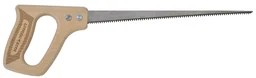
Good ventilation is essential for a long-lasting wooden deck. This means leaving enough space from the ground, gaps between the decking boards and avoiding closed side panels that block air circulation.
How Do I Care for My Wooden Deck So It Stays Beautiful for Longer?
Wood is a natural product and reacts to sunlight, rain and snow. With the right care, you can preserve the beauty and functionality of your deck for many years.
Annual Deep Cleaning
You should thoroughly clean your deck at least once a year, preferably in spring. First, sweep away coarse dirt and leaves. Then scrub the boards lengthways with a brush, water and a special wooden deck cleaner. Do not use a pressure washer. The powerful water jet roughens the wood fibres, makes the wood more susceptible to moisture and encourages splintering. You can find suitable scrubbing brushes and brushes under garden tools.
Oil, Wood Stain or Varnish? The Right Wood Protection
After cleaning and allowing the wood to dry completely, it needs protection. You have the following options:
- Decking oil: Penetrates deep into the wood, preserves its natural grain and feel and protects it from within. Clear oils enhance the wood's natural colour. Pigmented oils provide better UV protection and slow down greying. Depending on the level of use, treatment must be renewed every 1-2 years.
- Wood stain: Forms a thin, protective layer on the wood. Thin-film stains partially penetrate the wood, while thick-film stains provide a film-forming protective layer. Stains are available in many shades and generally offer good UV protection.
- Varnish: Completely seals the wood surface. Varnish is unsuitable for decking boards because the seal quickly cracks and flakes due to the constant movement of the wood and mechanical stress.
Removing Grey Discolouration and Fighting Algae
Untreated wood gradually develops a silvery-grey patina as a result of UV radiation and rain. This is a natural process and does not affect the durability of the wood. If you want to restore the original wood colour, use a wood brightener. Apply the product, leave it to work and then wash it off with a brush and water. The wood must then be oiled again.
Green deposits of algae and moss can form, especially in shady and damp corners, making the deck slippery. Remove them during the annual deep clean using an algae and moss remover.
Additional Tips for a Long-Lasting Wooden Deck
Small everyday measures help keep your deck in the best possible condition. Do not place plant pots directly on the decking boards; instead, use saucers or small feet so that air can circulate and persistent moisture cannot collect.
Additional advice
Make sure water can drain properly from plant pots and does not remain on the decking boards. Special wheeled pot saucers not only create space underneath, but also make moving heavy pots during cleaning child's play.
Remove heavy objects from the deck in winter. A continuous layer of snow does not harm the wood; it even protects it. However, avoid using road salt, as it damages the wood. If necessary, you can protect the deck with a breathable wood cover tarpaulin, but make sure there is sufficient ventilation.
A self-built and well-maintained wooden deck is an asset to any home. It is a project that rewards practical skills and creates a place to relax for many years. Discover more ideas and products for your dream garden + outdoor living room.
Frequently asked questions
- Which wood is best for a deck?
- The best wood depends on your budget and how much maintenance you are prepared to do. Tropical hardwoods such as Bangkirai are extremely durable but expensive. Local woods such as Siberian larch or Douglas fir offer good value for money. Thermowood is a dimensionally stable and durable alternative to tropical hardwood.
- Does a wooden deck need to be oiled?
- Oil treatment is not essential for durability, but it is highly recommended. Oil protects against UV radiation, prevents the wood from turning grey too quickly and keeps its colour looking fresh. It also protects against moisture penetration and cracking, which extends the life of the deck.
- How often should you maintain a wooden deck?
- Carry out a thorough clean once a year. Remove dirt and algae. Depending on the weather and type of wood, you will need to apply a new coat of oil or stain every one to three years. Check the surface regularly for signs of wear to determine the right time for re-treating it.
- What is the best base for a wooden deck?
- A stable, water-permeable base is ideal. A compacted 20 cm-thick bed of crushed stone or gravel, with paving slabs or strip foundations placed on top as support points for the substructure, provides stability and prevents standing water from collecting beneath the deck.
- How can you prevent a wooden deck from becoming slippery?
- Slip hazards are usually caused by algae and moss growth. Clean your deck regularly, especially in shaded and damp areas. Grooved decking boards provide more grip, but can retain water if installed incorrectly. A clean, dry surface is the best protection.
You might also be interested in
- Wooden deck substructure: Build a stable and simple base
- Composite decking boards: Benefits and maintenance for your deck
- Restore and maintain wood: How to keep it looking great for longer
- Maintaining a wooden deck: Avoid these 3 common mistakes
- Applying wood stain: Protection and care for outdoor wood
- Cladding a deck with boards: How to build your new wooden deck