
In brief: Our 2026 test and comparison shows that deep well pumps are a reliable way to draw groundwater. The right pump depends on the maximum head, flow rate and required diameter. Stainless steel housings are especially durable, while powerful models such as the MSC 4/10 are suitable for greater depths. We recommend carefully assessing your needs before choosing a pump.
Planning to supply your home or farm with your own groundwater? A powerful deep well pump is the heart of the system. Our 2026 review and comparison helps you find the right model for your needs. We assess pumping performance, material quality and compatibility.
There are many models to choose from, but not every pump is right for every well. Choosing the correct specifications is essential. We explain what to look for and compare current models that have proven themselves in real-world use and technical performance.
Table of contents
What is a deep well pump?
A deep well pump is a special submersible pump installed permanently in the well pipe below the water surface. It reliably pumps groundwater up from great depths. Unlike a domestic water system, it does not draw water in; it pushes it upwards.
These pumps are designed for continuous operation and run quietly because they are submerged. They are suitable for wells approximately 8 meters deep to well over 50 meters deep. This makes it possible to supply an entire household with drinking and utility water.
Design and operation
The housing is narrow and cylindrical so it fits inside the well pipe. A multistage centrifugal pump generates the required pressure, powered by an integrated electric motor. High-quality models have a corrosion-resistant stainless steel housing.
Tip: Check the materials. Stainless steel (VA) resists corrosion and is ideal for long-lasting installations. Brass components are also durable and provide a good seal.
Which criteria matter in a pump test?
We assess several key criteria in our comparison. You can find these details in the pump's technical specifications, where they provide a basis for your buying decision.
Maximum head (Hmax): The maximum height to which the pump can move water. Add the static head (from the water level to the highest point of use) to the pressure loss in the pipes. Always allow for a reserve of 10-20%.
Flow rate (Qmax): The maximum volume of water the pump can deliver in liters per hour. Your requirements depend on the number of outlets. If the flow rate is too low, pressure will drop when several taps are open at once.
Nominal diameter (inches): The pump's outside diameter. Common sizes are 3 inches and 4 inches. The pump must fit inside your well pipe with at least 1 cm of clearance. Measure the pipe's internal diameter precisely.
Power consumption and efficiency: An energy-efficient pump helps reduce running costs over time. Modern models are often designed to operate at an optimal duty point.
Important: Maximum head is not the same as well depth! The total head includes the suction head (from the water level to the pump), the delivery head to the house and the pressure head in the domestic water system. Accurate calculation is essential.
Best Deep Well Pumps Compared
Our 2026 comparison focuses on powerful, tried-and-tested models. The selection includes pumps for a range of needs, from single-family homes to agricultural applications.
Our top-rated deep well pumps:
| Model | Customer rating | Availability |
|---|---|---|
| Stainless Steel EJ 6 Plus Cistern Submersible Pressure Pump, up to 6.300 l/h flow rate | – | Currently unavailable |
| MSC 3/3 M Deep Well Pump, Stainless Steel / Brass, 3-inch, up to 2.250 l/h flow rate, up to 58m head | – | Currently unavailable |
| MSC 4/10 Deep Well Pump, Stainless Steel, 4-inch, up to 5.500 l/h flow rate, up to 72m head | – | Currently unavailable |
| "TBP 6000/7" Deep Well Pump | – | Currently unavailable |
| EJ 6 Plus Cistern Submersible Pressure Pump with Connection Accessories & electrical Pump Control, up to 6.300 l/h flow rate | – | Currently unavailable |
The table gives you a quick overview of the key technical specifications. Before choosing a pump, though, you’ll need to know what your setup requires. In the next section, we take a closer look at the features of the models we reviewed.
Model in Detail: MSC 3/3 M Deep Well Pump
The
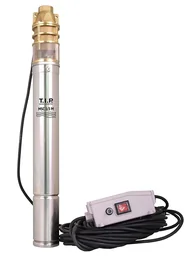
With a flow rate of up to 2.250 l/h, it can reliably meet the needs of a single-family home with garden irrigation. Its 3-inch diameter fits many existing well casings. It’s a dependable, long-lasting standard option.
Model in Detail: MSC 4/10 Deep Well Pump
For deeper wells and higher flow rates, the
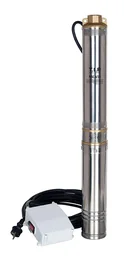
This 4-inch pump is ideal for deeper groundwater levels or supplying multiple households. It has the power for demanding projects in the garden or on a farm.
Model in Detail: Complete Set with Control Unit
The
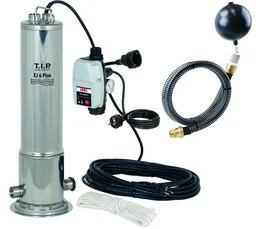
The control unit regulates pressure and protects the pump from running dry. It also makes installation much easier. This set is a great choice if you’re looking for a complete, ready-to-use solution.
Note: Spare parts such as diaphragms (for example, for pasture pumps) are important for maintenance. Keep your pump’s model number handy so you can find the right parts, such as the
or a compatible replacement.
How Do You Choose the Right Pump?
Start by listing the conditions at your well. This checklist will help you gather the information you need.
- Well casing diameter: Measure the clear inside diameter in millimeters or inches.
- Static water level: The distance between ground level and the water level when the well is at rest.
- Dynamic water level: The water level while the pump is running (this can be estimated).
- Total head: The height difference between the pump and the highest outlet, plus pressure loss.
- Peak demand: How much water do you need, and when? Count all outlets that may be used at the same time.
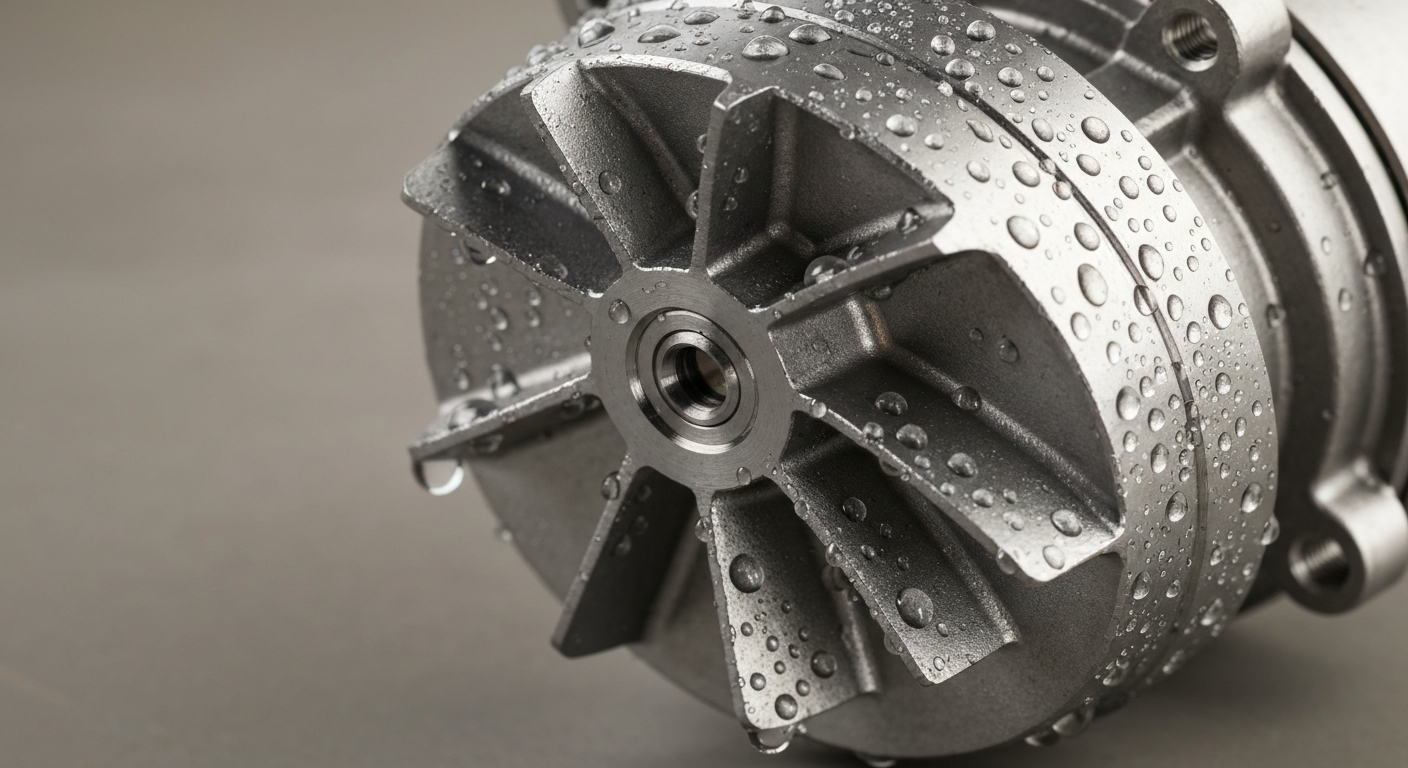
Use these figures to compare pump curves. For the best efficiency and longest service life, choose a pump that operates in the middle of its curve rather than at its upper limit.
3-inch vs. 4-inch: Choosing the Right Size
Your existing well casing often determines the pump size. You can install a 3-inch pump in a 4-inch well casing, but not the other way around. A smaller pump in a larger casing also leaves more room for maintenance and retrieval.
Because of their larger size, 4-inch pumps have more room for larger pump stages and motors. They’re the top choice for very high heads and flow rates. Browse our range of deep well pumps.
Installation and Maintenance
Installing a deep well pump can be challenging. You’ll need solid practical skills or help from a specialist. Incorrect installation can cause serious damage.
Lower the pump into the well using a sturdy stainless steel or nylon safety rope. Securely fasten the power cable and riser pipe. A check valve above the pump prevents water from flowing back down the pipe.
Maintenance for a Long Service Life
With proper installation and good water quality, deep well pumps need little maintenance. Check the pressure system and electrical fuses once a year. Protecting the pump from running dry is especially important.
An integrated or aftermarket dry-run protection device switches the pump off when the water level gets too low. This helps prevent damage to the bearings and seals. Make sure your setup includes this protection.
Buying Guide & Conclusion
Our 2026 test and comparison show that there’s no single best deep well pump. The right choice depends on your well and water needs.
For a typical household well of medium depth, the is an excellent, durable choice. For very deep wells or high flow rates, there’s hardly any alternative to the powerful . For a convenient all-in-one solution with smart controls, the set offers excellent value.
Calculate your requirements carefully. Invest in quality materials such as stainless steel, and protect your pump with a suitable control system and dry-run protection. This will help ensure many years of reliable, independent water supply.
Browse our extensive selection of pumps and find the perfect solution for your needs.
Frequently Asked Questions
- What flow rate does my household need?
- The flow rate you need depends on the number of people in your household and how you use the water. A four-person household with garden irrigation often needs a pump with a flow rate of 3,000 to 5,000 liters per hour. Be sure to include all water outlets, such as toilets, washing machines, and outdoor faucets, in your calculations.
- What’s the difference between 3-inch and 4-inch pumps?
- The inch measurement refers to the diameter of the pump housing. 4-inch pumps are more powerful and designed for higher flow rates and greater depths. 3-inch pumps fit in narrower well casings and are suitable for moderate water needs. Measure your well casing before buying.
- How long does a high-quality deep well pump last?
- With proper installation and maintenance, quality models made from stainless steel or brass can last 8 to 15 years. Key factors include clean, sand-free water, effective dry-run protection, and staying within the maximum number of switching cycles.
- Do I need a pump controller?
- Yes, a controller is essential. It regulates pressure, protects the pump from running dry, and helps maintain steady water pressure in your home. Complete sets with a controller make installation much easier and improve operating safety.
- Can I use a deep well pump in a water tank?
- It’s possible, but not ideal. Special water tank pumps are optimized for lower delivery heads and are often quieter. If you’re using a pump only in a water tank, submersible pressure pumps such as the EJ 6 Plus are the more efficient choice.