
In brief: Our 2026 test and comparison shows that deep well pumps are reliable solutions for extracting groundwater. The choice depends on delivery head, flow rate and the required diameter. Stainless steel housings stand out for their durability, while powerful models such as the MSC 4/10 are also suitable for great depths. We recommend determining your specific requirements carefully.
Are you planning to supply your home or farm with your own groundwater? A powerful deep well pump is the heart of this system. Our 2026 test and comparison helps you find the right model for your specific requirements. We analyse pumping performance, material quality and compatibility.
There is a wide range to choose from, but not every pump is suitable for every well. The right specifications are crucial. We explain what to look for and compare current models that have proven themselves in practical use and in terms of technology.
Table of contents
What is a deep well pump?
A deep well pump is a special submersible pump that is permanently installed in the well pipe below the water surface. It reliably pumps groundwater up from great depths. Unlike domestic water systems, it does not draw in the water but pushes it upwards.
These pumps are designed for continuous operation and run very quietly because they are submerged. They are suitable for wells approximately 8 meters deep to well over 50 meters deep. This makes it possible to supply an entire household with drinking and utility water.
Design and operation
The housing is narrow and cylindrical so that it fits into the well pipe. A multistage centrifugal pump generates the necessary pressure. An integrated electric motor drives the pump. High-quality models have a housing made of rust-resistant stainless steel.
Tip: Pay attention to the materials. Stainless steel (VA) is corrosion-resistant and ideal for long-lasting installations. Brass components are also robust and provide good sealing.
Which criteria are important in the test?
In our comparison, we assess several key criteria. You can find this data in the pump's technical specifications. They form the basis for your buying decision.
Delivery head (Hmax): The maximum height over which the pump can transport water. Add the geodetic head (from the water level to the highest point of use) and the pressure loss in the pipes. Always allow for a reserve of 10-20%.
Flow rate (Qmax): The maximum amount of water in liters per hour that the pump can deliver. Your requirements depend on the number of outlets. An insufficient flow rate causes a drop in pressure when several taps are opened at the same time.
Nominal diameter (inches): The outside diameter of the pump. Common sizes are 3 inches and 4 inches. The pump must fit into your well pipe with at least 1 cm of clearance. Measure the internal diameter of your pipe precisely.
Power consumption and efficiency: An energy-efficient pump saves running costs in the long term. Modern models are often designed for operation at an optimal duty point.
Important: The delivery head is not the well depth! The total delivery head consists of the suction head (from the water level to the pump), the delivery head to the house and the pressure head in the domestic water system. Accurate calculation is essential.
Comparison of the Best Deep Well Pumps
Our 2026 comparison focuses on powerful, tried-and-tested models. The selection includes pumps for a range of requirements, from single-family homes to agricultural applications.
The highest-rated deep well pumps in our range compared directly:
| Model | Customer rating | Availability |
|---|---|---|
| Stainless Steel EJ 6 Plus Cistern Submersible Pressure Pump, up to 6.300 l/h flow rate | – | Currently unavailable |
| MSC 3/3 M Deep Well Pump, Stainless Steel / Brass, 3-inch, up to 2.250 l/h flow rate, up to 58m head | – | Currently unavailable |
| MSC 4/10 Deep Well Pump, Stainless Steel, 4-inch, up to 5.500 l/h flow rate, up to 72m head | – | Currently unavailable |
| "TBP 6000/7" Deep Well Pump | – | Currently unavailable |
| EJ 6 Plus Cistern Submersible Pressure Pump with Connection Accessories & electrical Pump Control, up to 6.300 l/h flow rate | – | Currently unavailable |
The table provides a quick overview of the key technical data. However, you need to know your personal requirements before making a decision. In the following section, we look at the special features of the tested models.
Model in Detail: MSC 3/3 M Deep Well Pump
The
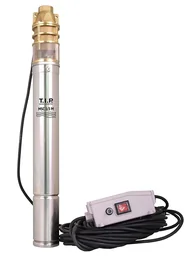
With a flow rate of up to 2.250 l/h, it reliably covers the needs of a single-family home with garden irrigation. Its 3-inch diameter makes it compatible with many existing well pipes. It is a reliable and durable standard solution.
Model in Detail: MSC 4/10 Deep Well Pump
For greater depths and higher flow rates, the
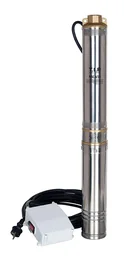
This 4-inch pump is ideal for deeper groundwater levels or supplying several households. It provides the power needed for demanding projects in the garden or in agriculture.
Model in Detail: Complete Set with Control Unit
The
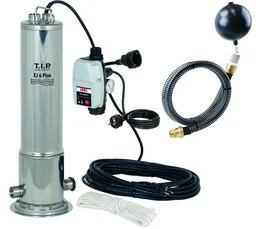
The control unit regulates the pressure and effectively protects the pump from dry running. Installation is greatly simplified. This set is perfect for anyone looking for a complete, ready-to-use solution.
Note: Spare parts such as diaphragms (e.g. for pasture pumps) are important for maintenance. Always have your pump's model designation to hand so you can find suitable parts such as the
or similar.
How Do You Find the Right Pump?
Proceed systematically. First, note down your individual conditions. This checklist will help you.
- Well pipe diameter: Measure the clear internal diameter in millimetres or inches.
- Static water level: Distance between ground level and the resting water level in the well.
- Dynamic water level: Water level while the pump is running (can be estimated).
- Total head: Height difference from the pump position to the highest draw-off point, plus pressure loss.
- Peak demand: What volumes are needed and when? Count all potentially simultaneous consumers.
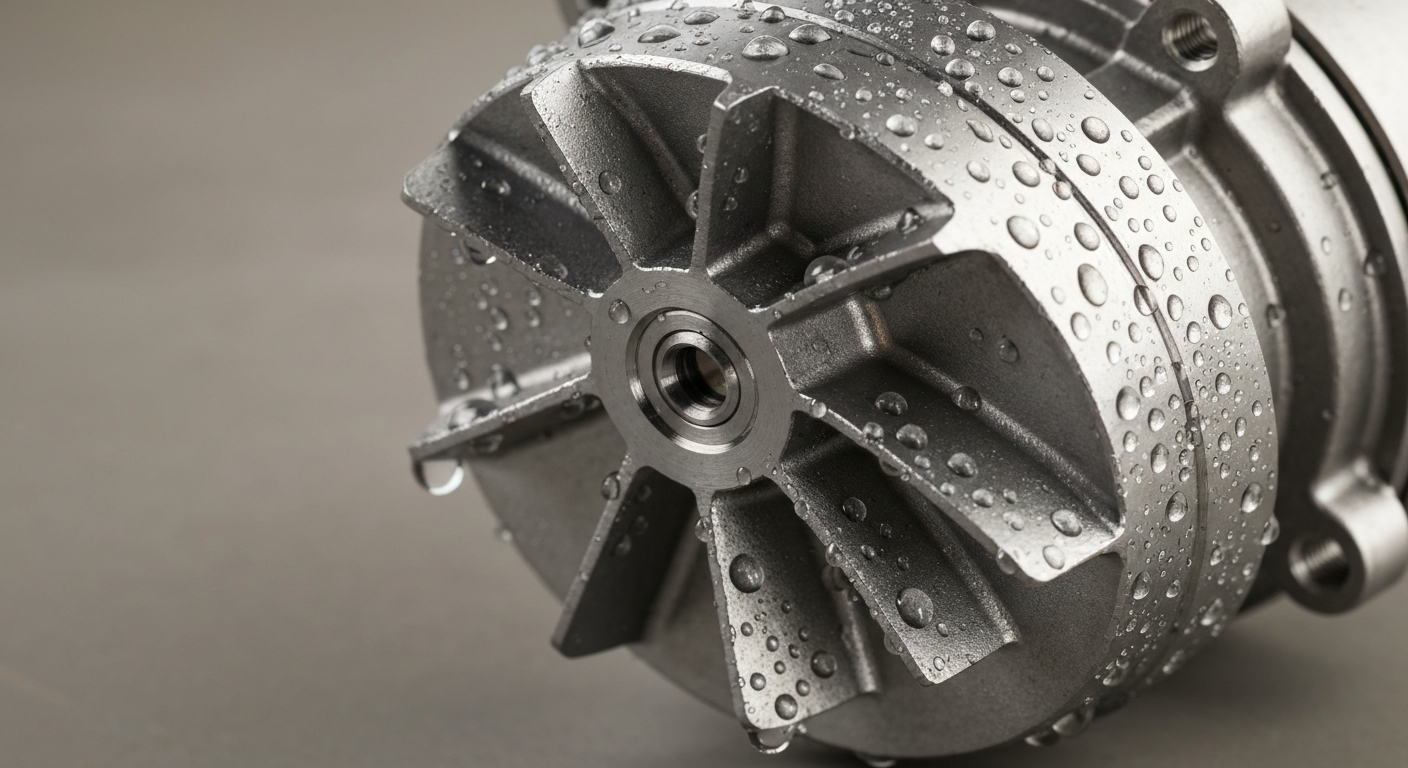
Use these values to compare the pump curves. The ideal pump operates in the middle range of its curve, not at the maximum limit. This gives you the best efficiency and service life.
3-inch vs. 4-inch: Making the Right Choice
The choice of diameter is often predetermined. You can easily use a 3-inch pump in an existing 4-inch well pipe. The reverse is not possible. A smaller pump in a larger pipe makes future maintenance and retrieval easier.
Due to their physical dimensions, 4-inch pumps offer more space for more powerful pump stages and motors. They are therefore the first choice for extreme heads and flow rates. Take a look at our range of deep well pumps.
Installation and Maintenance
Installing a deep well pump is a demanding task. You should have sound practical skills or hire a specialist company. Incorrect installation can cause serious damage.
The pump is lowered into the well on a sturdy stainless steel or nylon rope. The power cable and riser pipe must be securely fastened. A check valve above the pump prevents the column of water from flowing back.
Maintenance for a Long Service Life
With correct installation and good water quality, deep well pumps require little maintenance. An annual check of the pressure system and electrical fuses is advisable. The most important maintenance aspect is protection against dry running.
An integrated or retrofitted dry-run protection device switches the pump off when the water level is too low. This prevents damage to the plain bearings and seals. Make sure you invest in this protection.
Buying Guide & Conclusion
The 2026 test and comparison shows that there is no single best deep well pump. The ideal choice always depends on your individual well and water requirements.
For the average domestic well of medium depth, the is an excellent and durable choice. For very deep wells or high flow requirements, there is hardly any alternative to the powerful . For a convenient all-in-one solution including intelligent control, the set offers excellent value.
Calculate your requirements carefully. Invest in quality materials such as stainless steel. And protect your pump with a suitable control system and dry-run protection. This will give you many years of reliable, independent water supply.
Browse our extensive range of pumps and find the perfect solution for you.
Frequently Asked Questions
- What flow rate do I need for my household?
- The required flow rate depends on the number of people and how the water is used. A four-person household with garden irrigation often needs a pump with a flow rate of 3,000 to 5,000 litres per hour. Make sure you include all outlets, such as toilets, washing machines and outdoor taps, in your calculations.
- What is the difference between 3-inch and 4-inch pumps?
- The inch measurement refers to the diameter of the housing. 4-inch pumps are more powerful and designed for higher flow rates and greater depths. 3-inch pumps fit into narrower well casings and are suitable for moderate requirements. Measure the diameter of your well casing before buying.
- How long does a high-quality deep well pump last?
- With proper installation and maintenance, quality models made from stainless steel or brass can last 8 to 15 years. Key factors include clean, sand-free water, effective dry-run protection and adherence to the maximum number of switching cycles.
- Do I definitely need a pump controller?
- Yes, a controller is essential. It regulates the pressure, protects against dry running and ensures constant water pressure in the house. Complete sets with a controller make installation considerably easier and improve operational safety.
- Can I also use a deep well pump for a water tank?
- This is possible, but it is not ideal. Special water tank pumps are optimised for lower delivery heads and are often quieter. For use exclusively in a water tank, submersible pressure pumps such as the EJ 6 Plus are the more efficient choice.