
In brief: Essential garden fertilizers include organic slow-release options such as compost and cattle manure, mineral fertilizers for quick results, and specialized lawn fertilizers. Organic fertilizers improve the soil, while mineral fertilizers can address specific nutrient deficiencies. The right choice depends on the plants, soil and time of year. Often, a combination of both works best.
Essential Garden Fertilizers for Healthy Plants
A healthy garden starts with good soil. The right nutrients support strong growth, abundant blooms and plentiful harvests. But there are so many plant fertilizers to choose from. Here’s a look at the fertilizers every gardener should know.
Fertilizers vary in where they come from, how they work and which plants they’re made for. Organic and mineral fertilizers are the main types. Specialty fertilizers round out the range for lawns, vegetables, trees and shrubs.
Expert tip
Get your soil tested before applying fertilizer for the first time. A soil test shows its pH and which nutrients are already present, so you can fertilize accurately and avoid overfertilizing. Many local gardening organizations offer soil testing.
Think of your garden as a complex system. Every plant has its own needs. A lawn needs different nutrients than a tomato plant, and a rose bush has different requirements than an apple tree.
What are the basics of plant nutrition?
Plants need three primary nutrients to grow: nitrogen (N), which promotes leaf and shoot growth; phosphorus (P), which supports root development and flowering; and potassium (K), which regulates water balance and strengthens cell walls.
Plants also need trace nutrients such as iron, magnesium and zinc. They’re needed in smaller amounts, but they’re just as important. A magnesium deficiency often shows up as yellow leaves with green veins.
The NPK numbers on a fertilizer package show the ratio of these primary nutrients. Lawn fertilizer often has a high nitrogen content (the first number). Fall lawn fertilizer contains plenty of potassium (the third number) to help improve frost resistance.
The key to fertilizing isn’t using more, but using the right amount. Matching nutrients to a plant’s needs helps it stay healthy over time. Overfertilizing weakens plants and harms the environment.
How do organic and mineral fertilizers work?
Organic fertilizers come from plant or animal materials. Examples include compost, horn shavings and cattle manure. Soil organisms break them down before their nutrients become available to plants.
That means organic fertilizers work slowly and gently over several weeks. They also improve soil structure and support healthy soil life, making them an investment in your garden’s long-term health.
Mineral fertilizers are manufactured nutrient salts. Their nutrients dissolve in water, so plants can absorb them right away. You can see results quickly, especially when correcting an acute nutrient deficiency.
However, too much mineral fertilizer can “burn” plants and pollute groundwater. Apply it carefully and follow the directions on the package.
Which organic fertilizers belong in every garden?
Granulated cattle manure is an excellent, versatile organic fertilizer.
is one such fertilizer. It provides vegetables, roses and perennials with natural nutrients.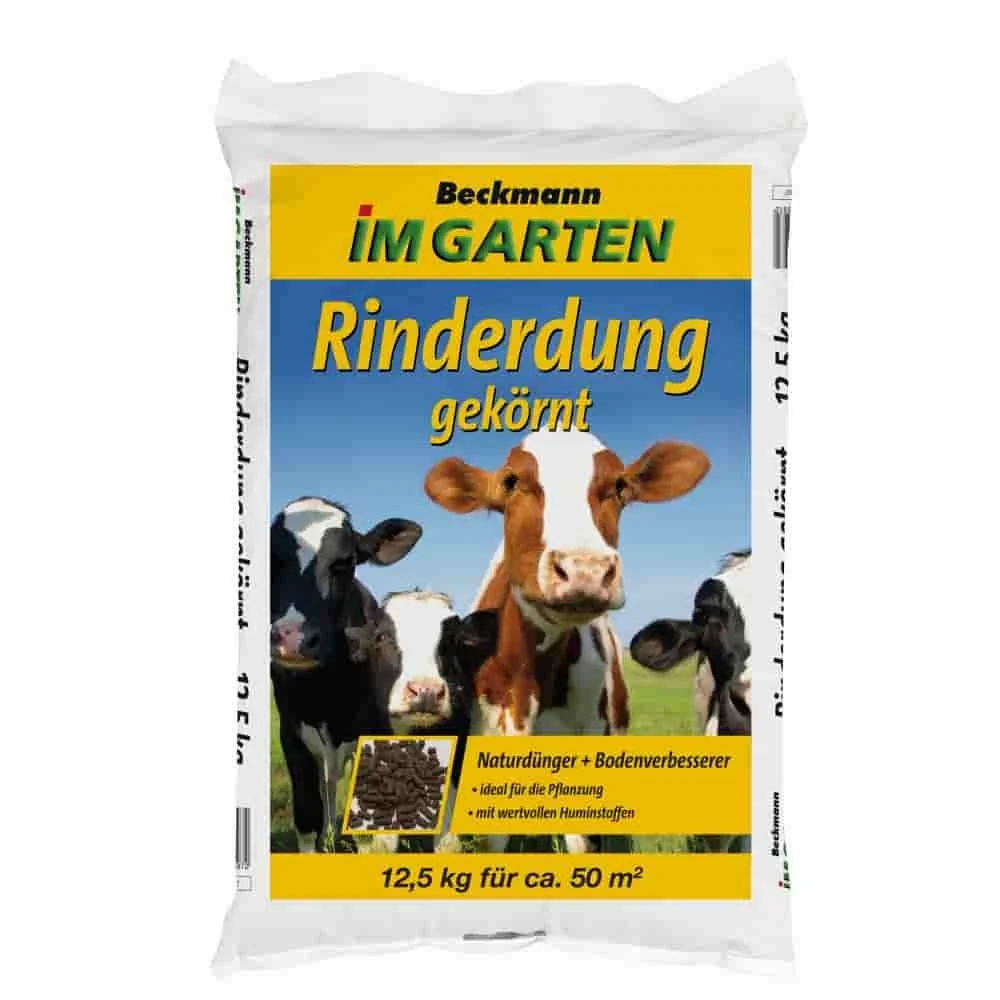
Cattle manure helps improve soil fertility over time. Its nutrients are released gradually, which can help prevent them from leaching away. Lightly work it into garden beds in spring or spread it as a mulch.
Homemade compost is the king of organic fertilizers. It provides nutrients as well as valuable humus. A composter is a worthwhile investment for any garden.
Horn shavings and horn meal are nitrogen fertilizers with a long-lasting effect. They’re ideal as starter fertilizers for plants with high nutrient needs. Mix them into the soil when planting new trees or shrubs.
Important note
Store organic fertilizers such as cattle manure in a dry place sheltered from rain. Moisture speeds up decomposition, which can lead to nutrient loss and unpleasant odors. Seal opened bags securely.
When should I use mineral complete fertilizers?
Mineral complete fertilizers can provide fast help in the garden when you’ve identified a nutrient deficiency. Plants can benefit from this quick source of nutrients, especially during the main growing season from April to July.
A general-purpose fertilizer such as
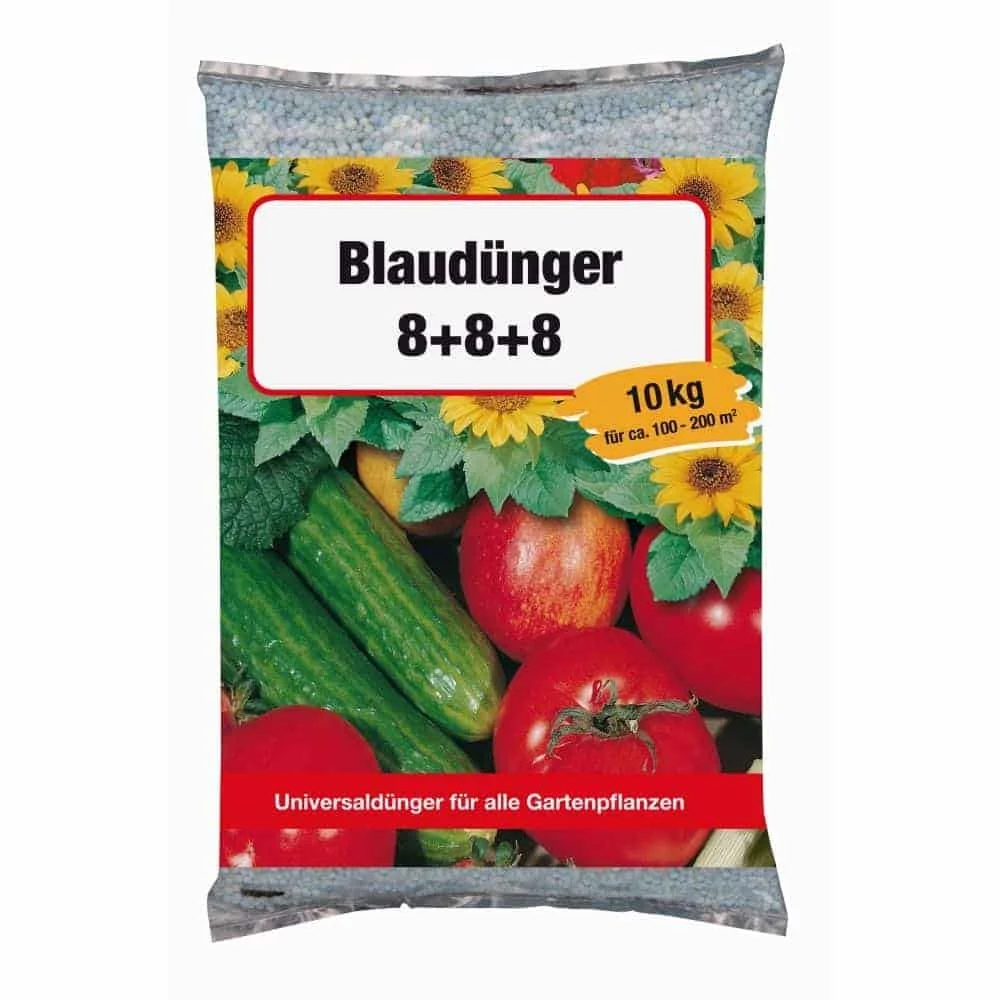
Apply mineral fertilizers before a rain shower when possible. Rain dissolves the nutrient salts and carries them into the root zone. You can also water thoroughly after applying fertilizer to help prevent leaf scorch.
Always follow the recommended dosage. More fertilizer won’t give you a better harvest. In fact, excess salts in the soil can damage delicate root hairs and interfere with water absorption.
Why does your lawn need a special fertilizer?
Grass is perennial and has specific nutrient needs. Regular mowing removes nutrients from the soil. A standard all-purpose fertilizer often isn't formulated to meet those needs.
Lawn fertilizers usually contain a high proportion of nitrogen, which promotes lush green color and dense growth. An organic lawn fertilizer such as
is especially gentle and sustainable.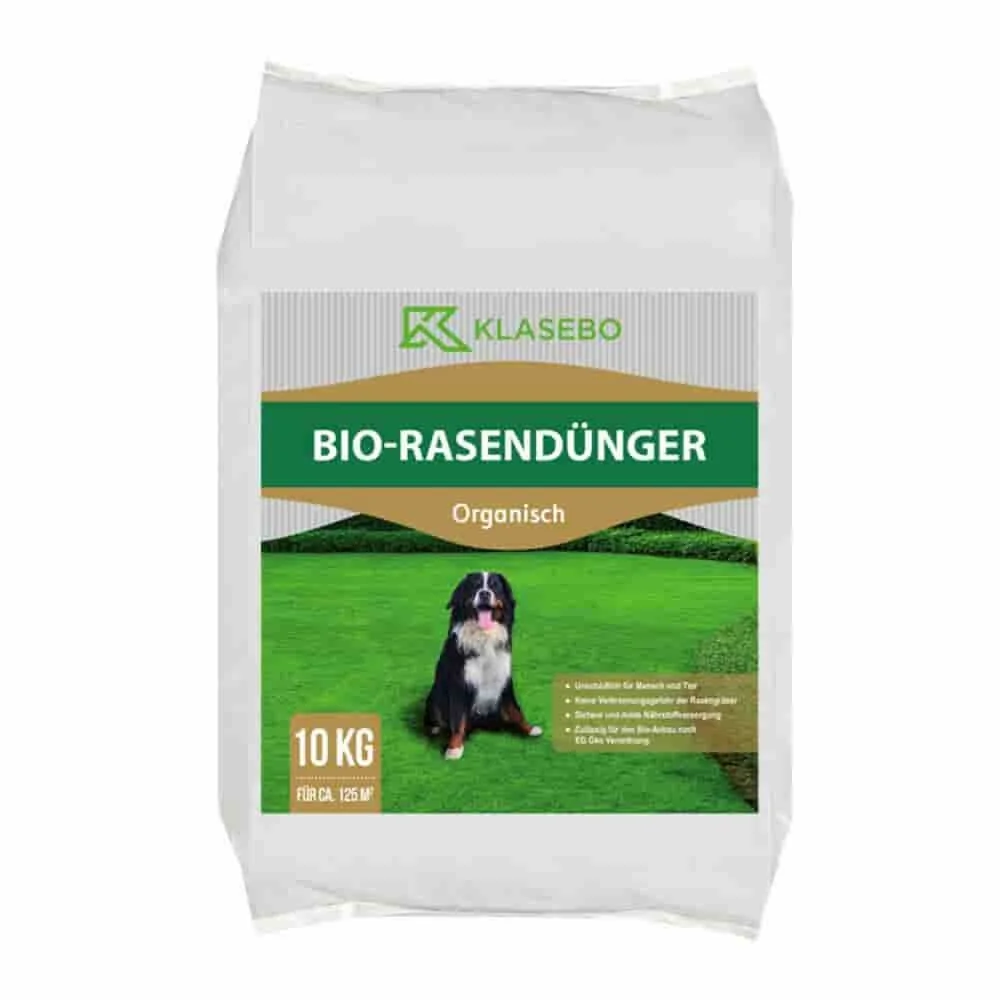
Fertilize your lawn according to the seasons. In spring, use a nitrogen-rich slow-release fertilizer to wake your lawn from winter dormancy and encourage thicker growth.
Choosing the right fertilizer in fall is essential. A fall lawn fertilizer such as
is high in potassium and low in nitrogen. Potassium strengthens grass cell walls and helps your lawn withstand winter. This makes it harder for moss and disease to take hold.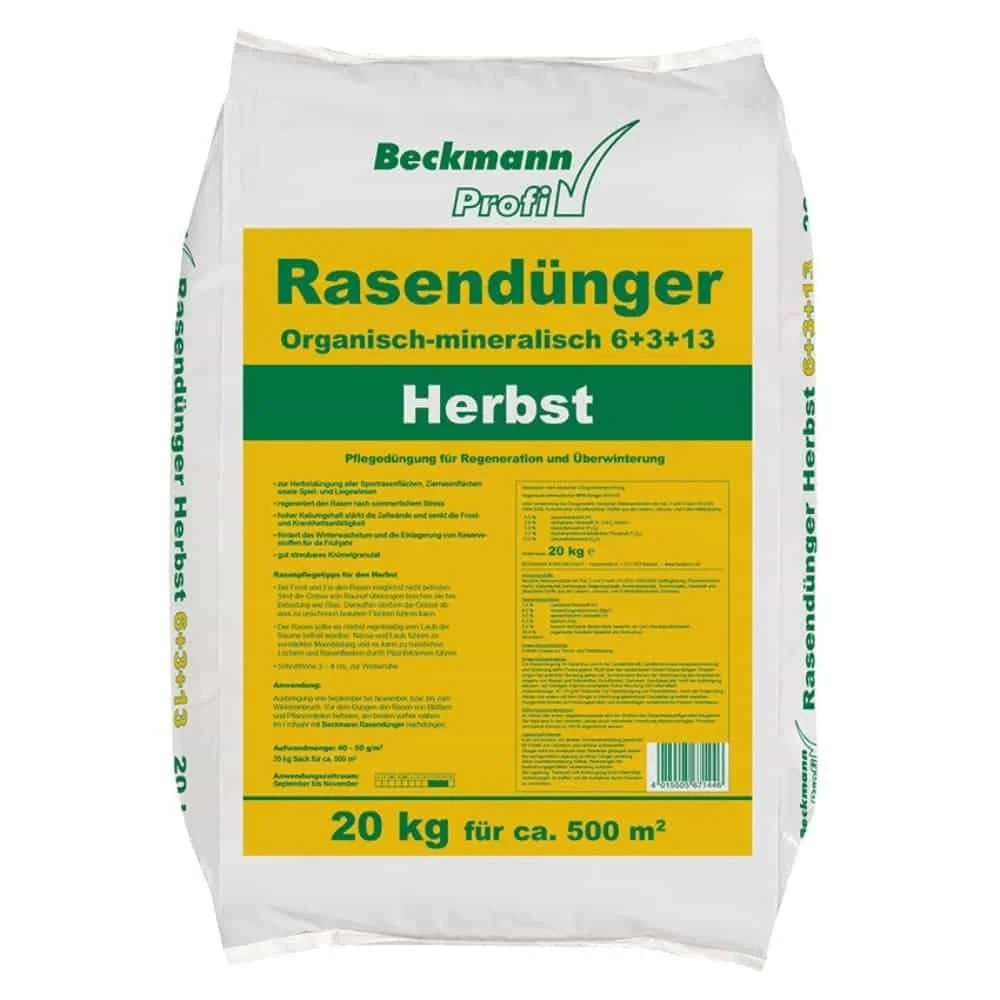
Explore our selection of lawn fertilizers for every season and need. From starter fertilizer for new lawns to maintenance fertilizer for ornamental lawns, you'll find everything you need.
Fall fertilizing is the most important application of the lawn care year. It lays the foundation for a healthy, deeply rooted lawn the following spring. Don't skip it.
What are the benefits of organic lawn fertilizer?
Organic and certified organic lawn fertilizers work with nature. They're made from plant-based or animal-derived materials. Soil microorganisms gradually release their nutrients.
This slow-release effect is their greatest advantage. You need to fertilize less often because the nutrients are released steadily over 2-3 months. It also significantly reduces the risk of over-fertilizing.
Every application of organic fertilizer also feeds soil organisms. Earthworms and microbes become more active, loosening the soil and building valuable humus. Your lawn develops a deeper, more resilient root system.
Organic fertilizers are often a top choice for home gardeners with children or pets because they're safer to handle. After application, children and pets can usually walk on the lawn right away.
Additional tip
Dethatch your lawn before applying spring fertilizer. Removing thatch and moss helps fertilizer reach the soil and roots, improving nutrient uptake. Overseed any bare patches at the same time.
How do I fertilize vegetables, fruit trees and ornamental plants?
In the vegetable garden, a plant's nutrient needs determine how you fertilize. Group vegetables as heavy, medium or light feeders. Heavy feeders such as tomatoes, cabbage and pumpkins need generous initial feeding with compost or cow manure.
Feed them again as the fruit develops, using a fast-acting, potassium-rich fertilizer. Tomato fertilizers with extra potassium are ideal for flavorful fruit. Medium feeders such as carrots and lettuce need less.
Fertilize fruit trees such as apple trees and berry bushes in early spring. Use an organic berry fertilizer or compost. A second, light application after harvest helps the plants form flower buds for the following year.
Ornamental plants such as roses benefit from specialized feeding. Rosefertilizers often contain extra magnesium for rich leaf color and trace nutrients for abundant blooms. Apply the first dose when growth begins and the second after the first flush of flowers.
You'll find a wide selection of fertilizers and useful accessories, including broadcast spreaders, in our category. They help you apply fertilizer accurately and cleanly.
Which specialty fertilizers are useful?
There are fertilizers for specific needs, too. Rhododendrons and other acid-loving plants need acidic soil. Fertilizers formulated for these plants contain no lime and often include iron.
Boxwood fertilizers are sometimes combined with a fungicide to help protect against box tree moths or fungal diseases. This provides nutrients and protection at the same time. Read the application instructions carefully.
Liquid fertilizers are ideal for potted plants on balconies and patios. They work quickly and can be mixed with water. They're also suitable for foliar feeding when a plant has an acute nutrient deficiency.
Fertilizer sticks are a convenient way to feed houseplants. Simply push them into the soil. They dissolve slowly as you water, feeding the plant for several months.
How can I avoid common fertilizing mistakes?
The most common mistake is over-fertilizing. More isn't better. Excess nutrients can damage roots, encourage soft, vulnerable growth and pollute groundwater. Follow the recommended application rates carefully.
Never fertilize dry soil. The salt concentration can get too high and scorch the roots. Water garden beds or lawns thoroughly first, or apply fertilizer when rain is in the forecast.
Avoid applying only one type of nutrient. A nitrogen-only fertilizer may make plants grow bigger, but it can also make them soft and more vulnerable to pests. Choose a balanced NPK fertilizer suited to the plant.
Don't overlook your soil's pH. If it's too acidic or too alkaline, plants may not be able to absorb many nutrients, even when they're present in the soil. Apply lime if the pH is too low.
For questions about soil care and plant protection, we offer expert advice and the right products. Healthy soil is the best form of prevention.
Choosing and applying the right fertilizer makes all the difference. It promotes healthy plants, abundant harvests and a resilient lawn. Start with the basics: an organic slow-release fertilizer and a complete mineral fertilizer for when plants need a quick boost. Pay attention to your plants. They'll show you what they need.
Frequently Asked Questions
- What is the difference between organic and synthetic fertilizer?
- Organic fertilizer, such as compost or cow manure, is made from natural materials. It works slowly, improves soil structure, and supports soil life. Synthetic fertilizer provides nutrients in a form plants can absorb right away. It works quickly and can target specific nutrient deficiencies, but it does not build up humus.
- When should I fertilize my lawn?
- Fertilize your lawn in spring with a nitrogen-rich slow-release fertilizer to give it a strong start. A second application in early summer helps maintain its vitality. In fall, a potassium-rich fall lawn fertilizer such as PRODUCT_55168 is essential. It strengthens the grass for winter and makes it more resistant to frost and disease.
- What do the NPK numbers on a fertilizer package mean?
- The NPK numbers indicate the percentages of the main nutrients. N stands for nitrogen (for leaf growth), P for phosphorus (for roots and flowers), and K for potassium (for resilience). An NPK 6+3+13 fertilizer therefore contains 6% nitrogen, 3% phosphorus, and 13% potassium. The remaining percentage consists of carrier materials.
- Can I use all-purpose fertilizer for every plant?
- An all-purpose fertilizer such as PRODUCT_3713 is suitable for many garden plants, flower beds, and perennials. However, specialized fertilizers are better for plants with specific needs. Roses, rhododendrons, and tomatoes have particular nutrient requirements. Lawns need different NPK ratios than vegetables. All-purpose fertilizer is a good basic feed.
- How often should I fertilize my vegetable garden?
- Heavy feeders such as tomatoes, cabbage, and pumpkins need a base application of organic fertilizer such as PRODUCT_23313 before planting. During the growing season, apply fertilizer 1-2 more times using a fast-acting synthetic fertilizer. Medium and light feeders such as beans and lettuce can often grow well with just the base application. Pay attention to crop rotation.
You may also be interested in
- Plant Fertilizer Guide: How to Choose the Right Fertilizer for Your Plants
- How to Fertilize Your Garden: Give Plants the Nutrients They Need
- Vegetable Garden Fertilizer: 2026 Test and Comparison
- Optimal Plant Care: The Basics of a Healthy Garden
- How to Fertilize Perennials for a Spectacular Display of Flowers
- Find the Right Lawn Fertilizer