
In brief: Golden bamboo (Phyllostachys aurea) grows well in a sunny to partly shaded spot with well-drained, nutrient-rich soil. A root barrier is essential to prevent it from spreading uncontrollably. Water regularly during dry spells, feed once a year in spring and thin out the canes to keep the plant healthy and vigorous.
Golden bamboo care: planting and growing tips
Golden bamboo, botanically known as Phyllostachys aurea, is prized for its golden-yellow canes and elegant growth habit. It is one of the most popular bamboo species for privacy screens and as a feature plant. However, its care differs from that of clump-forming Fargesia. Here’s what you need to know.
What makes golden bamboo special?
Phyllostachys aurea is a running bamboo. Its underground rhizomes spread if you don’t install a barrier. The canes turn from green to a warm golden yellow in the sun. As they mature, their internodes develop distinctive thickened sections.
It grows considerably taller than many Fargesia species and is ideal for fast-growing, dense privacy screens. Its distinctive Asian character adds structure to any garden.
How do I find the ideal location?
Golden bamboo thrives in sunny to partly shaded locations. Its canes develop a more intense color in full sun. A sheltered spot helps protect the leaves from wind and reduces water loss.
The soil should be well-drained and rich in humus and nutrients. Improve heavy, waterlogged clay soil with sand and compost. Find suitable growing media in our range of garden and plant accessories.
Expert tip
Don’t plant bamboo too close to property lines or patio slabs. Even with a rhizome barrier, the roots need room to grow. Keep it at least one meter from paved areas.
Why is a root barrier essential?
This is the most important care consideration for Phyllostachys. Without a barrier, the rhizomes can spread several meters and send up new shoots wherever they take hold. A high-quality, 2 mm thick HDPE rhizome barrier is the solution.
Install the barrier at least 70 cm deep, with 5 cm above the soil. This makes it easy to spot and cut off any rhizomes that escape. Install it in a circle without corners, as rhizomes can grow upward when they reach a corner.
Important note
Cheap plastic sheeting from home improvement stores often isn’t sturdy enough. Vigorous rhizomes can eventually pierce it. Invest in a purpose-made bamboo root barrier; installing one later is extremely labor-intensive.
How do I plant golden bamboo?
Dig a planting hole about twice as wide and deep as the root ball. Install the rhizome barrier and add a drainage layer of gravel. Mix the excavated soil with compost or potting soil.
Plant the bamboo at the same depth it was growing in its container. Firm the soil around it and shape a watering basin. Water it in thoroughly, then keep the soil consistently moist for the first few weeks.
How to water bamboo for strong growth
Bamboo is a grass and prefers consistently moist soil. Water thoroughly, especially during dry spells in summer. A light sprinkle over the surface won’t do much. Use a drip hose or water directly at the roots instead.
Find practical solutions in our garden irrigation range. Yellow or curled leaves are a clear sign that the plant needs water.
“Bamboo shows drought stress by rolling up its leaves. It’s a natural way to protect itself. Water it promptly, and the leaves will unfurl again within a day.”
When and how should I fertilize bamboo?
Apply a nitrogen-rich, slow-release fertilizer once a year in spring. Bamboo fertilizer is ideal, but an organic all-purpose fertilizer works too. The nutrients support the growth of new canes.
A second, light application in June can encourage growth. Stop fertilizing after August so the shoots have time to mature before winter. Find suitable products in our fertilizers category.
Additional advice
In fall, spread a thick layer of leaves or grass clippings around the bamboo. This protects the shallow rhizomes from frost, helps the soil retain moisture and breaks down into natural humus.
How should I prune bamboo?
Severe pruning is rarely necessary. Instead, thin the plant regularly. In spring, remove old, thin, broken or dried-out canes at the base.
This lets more light reach the center and encourages stronger new canes to grow. For a formal hedge, trim the sides in summer with a sharp hedge trimmer. Always cut just above a node (nodium).
Choosing the right tools for pruning bamboo
Use a sharp garden saw to remove entire canes. Sharp pruning shears are enough to shorten side shoots. Clean cuts reduce the risk of infection, while blunt tools can crush the canes.
Clean and maintain your tools after use. Find quality pruning shears and saws in our garden tools section.
What problems can occur?
Common problems include drought damage, spider mites caused by overly dry air, and yellowing leaves due to a lack of nutrients. To control spider mites, rinse the plant and increase humidity.
It’s normal for older leaves to turn yellow in fall. If young leaves turn yellow, check the soil pH. Bamboo prefers slightly acidic to neutral soil.
“Many people think bamboo is easy to care for. In fact, it quickly shows when it’s unhappy. Pay attention to your plant; it will tell you what it needs.”
How do I overwinter Phyllostachys aurea?
Mature plants growing outdoors are hardy. Severe frost and dry winds can damage the leaves, so a sheltered spot is the best winter protection.
Container plants need extra care because their root balls freeze more quickly. Set the container on wood and wrap it in bubble wrap or jute. Water lightly on frost-free days.
Products for bamboo care
For healthy root aeration and better water absorption, it’s worth loosening the soil. The
helps loosen compacted soil without damaging the roots. It’s ideal for the area around bamboo.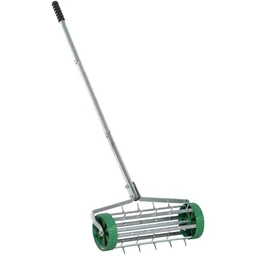
If you want to grow new plants or cultivate bamboo in a large planter, the
is a great option. It offers plenty of room for roots and can also act as a movable rhizome barrier in the garden bed.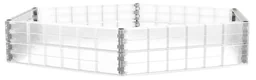
Visit our main Garden + Outdoor category for everything you need to design your garden.
Golden bamboo vs. Fargesia: the key difference
Fargesia, the clump-forming bamboo, is easier to care for. It does not spread and does not require a barrier. However, it usually does not grow as tall, and its canes look different.
The choice depends on your needs: for a tall, dense privacy hedge, golden bamboo with a root barrier is the better choice. For a low-maintenance specimen plant in the front yard, Fargesia is often more suitable.
With the right care, your golden bamboo will be an impressive feature for many years. Plan for a rhizome barrier from the outset and make sure it receives enough water and nutrients. You can then enjoy this striking plant for a long time.
Frequently asked questions
- How tall does golden bamboo grow, and is it winter-hardy?
- Golden bamboo (Phyllostachys aurea) reaches a height of three to five metres in our climate. It is reliably winter-hardy down to around -20°C. Protect young plants and exposed locations during their first winter with a layer of leaves or brushwood around the root area. The canes retain their leaves in winter.
- Does golden bamboo need a root barrier?
- Yes. Phyllostachys aurea is a running bamboo species. Without a rhizome barrier, it spreads extensively underground and can displace neighboring plants or lift paving. A sturdy HDPE rhizome barrier at least 70 cm deep is essential. Check the edge annually.
- How often should I water golden bamboo?
- Water regularly during the first two years after planting so the roots can become established. Mature plants need additional water during prolonged dry periods. Rolled-up leaves are a sign of drought stress. Water thoroughly, but avoid waterlogging.
- When and how should I prune golden bamboo?
- The best time to thin golden bamboo is early spring. Remove old, thin or broken canes directly above the ground. This encourages new growth and maintains an open, healthy structure. For a privacy hedge, shape the sides in summer.
- Can I grow golden bamboo in a container?
- Yes, golden bamboo can be grown in containers to a limited extent. Choose a sufficiently large, sturdy container with good drainage. A root barrier is not needed, but the root ball freezes more quickly in a container. A sheltered location and winter protection are therefore essential.
You may also be interested in
- How to plant bamboo correctly: tips for your green garden
- Bamboo privacy screens: the 5 most common mistakes and how to avoid them
- Golden chain tree in the garden: care, pruning and advice
- Caring for ornamental plants and choosing the right location
- How do I care for houseplants properly? The best tips for healthy greenery
- Pruning ornamental grasses: the right time for healthy growth