
In brief: Our 2026 hoist review and comparison shows that choosing the right hoist depends largely on your application and the loads you need to move. For flexible electric lifting outdoors, cordless wire rope hoists such as PRODUCT_91833 are a top choice. Robust aluminum lever hoists such as PRODUCT_100705 provide precise, powerful lifting in workshops and industrial settings. Our guide helps you find the right hoist for your needs.
In 2026, you can choose from a wide range of powerful tools for lifting. Whether you need to position heavy machinery in a workshop, lift materials on a construction site, or replace vehicle parts in a garage, the right hoist makes all the difference. Our review compares the top hoist types and specific models. We explain what to look for so you can work efficiently and safely.
Contents
What types of hoists are available?
Hoists generally fall into two main categories: electric and manual. Each has its own strengths and applications.
Electric wire rope hoists
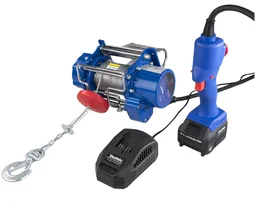
These devices use an electric motor to wind a steel cable onto a drum. They are easy to use and offer high lifting speeds. Cordless models such as the offer outstanding flexibility. Because they do not need to be plugged in, they are ideal for outdoor use, installation work, and large spaces.
Manual lever hoists (hand chain hoists)
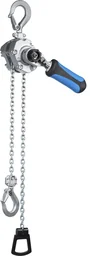
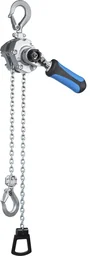
Manual hoists run on muscle power. Pulling the hand chain raises the load through a sturdy gear mechanism. They provide precise control and are mechanically reliable. The PAH series aluminum lever hoists are standouts, including the powerful with a 3200 kg capacity, and the lighter for everyday jobs.
Tip: Pair your hoist with a pulley to change the pulling direction and reach hard-to-access areas. This reduces strain on the hoist and expands the range of jobs it can handle.
What criteria do we use in our review?
To evaluate hoists objectively, we assessed key performance features. These criteria are essential when choosing a hoist.
Capacity and lifting height: Maximum load capacity is the most important factor. Choose a hoist with a rated capacity comfortably above the weight of the loads you typically move. Lifting height determines how far you can raise a load. A standard lift is often 1.5 meters.
Ease of use and ergonomics: For manual lever hoists, we assess how much effort it takes to operate the hand chain. For electric models, we look at intuitive controls, remote-control range, and smooth operation.
Build quality and safety: Quality materials, such as aluminum for a lightweight design or specially hardened steel for the chain, are signs of a well-made hoist. Essential safety features include an automatic load brake, overload protection, and a secure hook with a safety latch.
Best hoists of 2026 compared
Comparing hoists side by side shows which models are best suited to different jobs. The table below summarizes key details for the models we reviewed.
Top-rated hoists in our selection, compared:
| Model | Customer rating | Availability |
|---|---|---|
| 18V WS18 wire rope hoist including 4.0 Ah battery and charger | – | Currently unavailable |
| 18V WS18SH200 wire rope hoist - without battery and charger - | – | Currently unavailable |
| PAH 1600 aluminum lever hoist, 1600 kg capacity, 1.5 m lift, single-fall | – | Currently unavailable |
| PAH 250 aluminum lever hoist, 250 kg capacity, 1.5 m lift, single-fall | – | Currently unavailable |
| PAH 3200 aluminum lever hoist, 3200 kg capacity, 1.5 m lift, single-fall | – | Currently unavailable |
The table offers a quick overview, but our hands-on review goes further. The stands out with a complete setup that includes a battery and charger, so you can get started right away. Its cordless design is ideal for changing work locations.
Among the manual hoists, the stands out. Its 3200 kg capacity makes it a great choice for demanding industrial jobs, while its aluminum housing keeps the weight manageable. For frequent, lighter-duty tasks, the offers an excellent, easy-to-handle option with a 250 kg capacity.
Warning: Never exceed the rated capacity. Overloading can cause a hoist to fail suddenly and lead to serious accidents. Always include lifting accessories when calculating the total load.
Buying Guide: Which Hoist Is Right for You?
The right choice depends on three factors: the weight of the load, how often you use the hoist and where you work.
For occasional light to medium-duty work
If you occasionally move engines, machinery or building materials weighing up to around 500 kg, a compact aluminium lever hoist is the best choice. Models such as the or the 500 kg model are lightweight, durable and maintenance-free. They fit easily into any tool collection.
For regular professional use
In workshops, logistics operations or production facilities where loads are moved every day, it is worth investing in an electric hoist or a heavy-duty lever hoist. A battery-powered wire rope hoist saves time and effort. For the heaviest loads, a lever hoist such as the is indispensable.
For mobile use without mains power
Do you work on a farm, in the garden or at a remote construction site? A battery-powered wire rope hoist is the practical choice. Look for long battery life and compatibility with other tools from the same manufacturer.
Note: Don't forget the accessories. High-quality lifting accessories, such as straps or chains, and a stable mounting point are just as important as the hoist itself. Include them in your plans from the outset.
Hoist Safety
Safety comes first. Always inspect a hoist before use. Check the hooks, rope or chain, housing and brakes for damage.
Always lift loads vertically. Pulling at an angle puts excessive strain on the hoist. Make sure nobody is underneath the load while it is being lifted. When using a lever hoist, pull the hand chain steadily and avoid jerking movements.
Maintenance and Care for a Longer Service Life
A well-maintained hoist can last for decades. For manual lever hoists, occasional chain lubrication and protection from moisture are usually enough. With electric models, keep the rope guide rollers clean and store the batteries according to the manufacturer's instructions.
Store all hoists in a dry, low-dust location. Don't hang lever hoists by their hooks; set them down to take the strain off the chain. Commercial users are legally required to arrange regular professional inspections.
Conclusion: The Best Hoist for Your Work
Our 2026 test and comparison reveals no single overall winner, but the right tool for every job. For maximum flexibility and speed with medium loads, battery-powered wire rope hoists such as the are hard to beat. For heavy, precise lifting in workshops or industrial settings, robust aluminium lever hoists such as the PAH series remain the first choice, from the handy to the powerful .
Choose your hoist based on its maximum load capacity, lifting height and the kind of work you typically do. Invest in quality and safety: a reliable hoist is a long-term purchase that makes work safer and more efficient. Browse our range of hoists to find the right model for you.
Frequently Asked Questions
- What's the difference between a wire rope hoist and a lever hoist?
- An electric wire rope hoist raises and lowers loads quickly and with little effort using a rope. A lever hoist is operated by hand: pulling its chain through a gearbox lets you lift loads with precision and power. Wire rope hoists are suited to frequent, fast-paced work, while lever hoists are ideal for precise positioning and heavy loads.
- How do I choose the right load capacity for my hoist?
- The hoist's load capacity must always exceed the weight of the load being lifted. Allow a safety margin of at least 20-30% to account for dynamic forces during lifting. For occasional light-duty work, 250-500 kg is enough. For heavy machine parts or vehicle engines, choose a hoist with a capacity of 1600 kg or more, such as PRODUCT_100705.
- Are battery-powered hoists powerful enough for professional use?
- Yes. Modern battery-powered hoists such as PRODUCT_91833 can handle many professional applications, thanks to powerful 18V motors and lithium-ion batteries. They're ideal for assembly, logistics or maintenance work where mains power isn't available. Designed for mobile use, they offer more than enough performance for regular work with medium loads.
- Do I need a special mounting point for a lever hoist?
- Yes. A lever hoist needs a stable, load-bearing mounting point that can safely support the combined weight of the load and the hoist. This could be a fixed beam, a dedicated crane hook or a suitable rail. Always check the mounting point's load capacity. For greater flexibility, you can use pulleys to change the direction of pull.
- Can I move loads horizontally with a hoist?
- Hoists are designed primarily for vertical lifting and lowering. For horizontal movement, you'll need additional equipment, such as a beam trolley, or a suitable transport trolley to use with the hoist. Never pull or push a suspended load sideways: it could swing dangerously or become unstable.