
In brief: For healthy roses, choose a sunny location with deep, loamy soil. Dig a planting hole twice as large as the root ball, soak the rose beforehand, and plant it deep enough for the graft union to sit five centimetres below the soil surface. Fill the hole with soil, water thoroughly, and mound soil around the rose.
A garden without roses is hard to imagine. Their abundant blooms and lovely fragrance enchant everyone who sees them. The foundation for a healthy, flower-filled rose bush is laid at planting time. With the right preparation and technique, you can give your rose the best possible start and enjoy abundant blooms for years to come.
This guide walks you through every important step, from choosing the right planting time and location to planting your rose and giving it essential early care. Follow these tips to get your rose garden off to a great start.
When is the best time to plant roses?
The best time to plant depends on how your rose is sold. In general, there are two main planting seasons: fall and spring. Each has its own advantages.
Fall, from October through the end of November, is traditionally considered the best time to plant bare-root roses. The soil is still warm from summer, encouraging root growth. The rose can get established before winter and start the new season with a head start in spring.
Spring planting, from March to May, is ideal once the ground has thawed. It works for all types of roses and is especially suitable for container-grown roses. You won't need to protect the rose from hard winter freezes. However, you'll need to water it carefully throughout its first summer because its roots haven't grown very deep yet.
In theory, you can plant container-grown roses any time during the frost-free season. If you plant in midsummer, though, water consistently and regularly to prevent drought stress.
Additional advice
Choose fall for bare-root roses. They are often less expensive and establish well because their energy goes into growing new feeder roots instead of aboveground growth. As a result, they get off to a stronger start in spring.
What is the ideal location for roses?
Roses love the sun. For abundant blooms, choose a spot that gets at least five to six hours of direct sunlight a day. Morning sun is especially helpful because it dries dew from the leaves quickly, helping prevent fungal diseases such as black spot and powdery mildew.
The perfect soil for your roses
Rose soil should be deep, rich in organic matter, and well drained. Roses develop deep roots and don't tolerate waterlogged soil, which can cause root rot. Sandy loam with a pH between 6,0 and 7,0 is ideal. Improve heavy clay soil with sand and compost. For light, sandy soil, work in well-aged compost or quality rose soil to help it retain water and nutrients.
Good air circulation matters, too. A breezy spot helps leaves dry quickly after rain. Avoid planting roses too close together or right against a solid wall, where air can become stagnant. Depending on the variety, space plants at least 50-80 cm apart.
The rose is a queen of the sun. Without enough light, it will never reveal its full splendour.
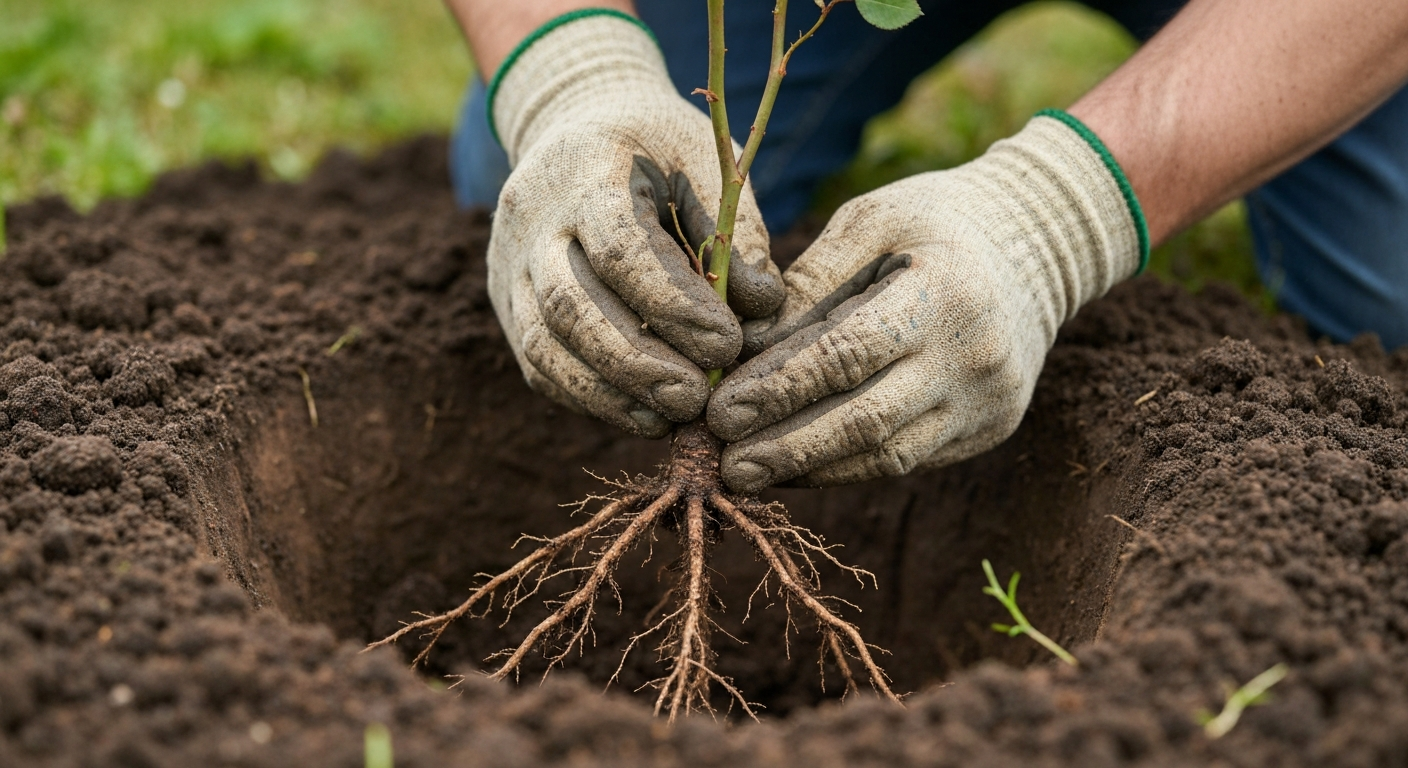
How to plant roses step by step
With the right preparation, planting a rose is straightforward. Take your time with each step—it pays off. You'll need a spade, garden shears, a bucket of water and, if needed, some compost or rose soil.
Step 1: Prepare the rose
Bare-root roses: Before planting, soak the rose in a bucket of water for at least two to four hours, but no longer than 24 hours. The roots should be fully hydrated. Use sharp shears to remove any damaged roots. Trim the main roots slightly and cut the shoots back to around 20-25 cm.
Container-grown roses: Submerge the entire pot in a bucket of water until no more air bubbles rise to the surface. Carefully remove the plastic pot, then gently loosen the sides of the root ball with your fingers to encourage root growth.
Step 2: Dig the planting hole
Make the planting hole generously sized—about twice as wide and deep as the rose's root ball. Loosen the bottom of the hole with a garden fork to improve drainage. If needed, mix the excavated soil with well-aged compost or special rose soil.
Step 3: Plant the rose at the right depth
This is the most important step. Locate the graft union, the swollen area between the roots and the green shoots. Position the rose so the graft union sits about five centimetres below the soil surface. This protects it from winter frost and helps prevent unwanted shoots from the rootstock.
Important note
If the graft union is too high, it can be damaged by frost and drought. If it's too deep, the rose may struggle to grow. Lay a bamboo cane or your spade handle across the hole to check the planting depth.
Step 4: Backfill and water
Fill the planting hole with the prepared soil, gently shaking the rose so soil settles into all the spaces between the roots. Carefully firm the soil and shape a watering basin around the plant. Water the rose thoroughly, even if it's raining. Allow 10 to 15 litres of water per plant. Finally, mound soil or compost around the rose to a height of about 15 cm. This protects against evaporation and winter weather.
Choosing the right rose variety
There are many types of roses to choose from. Before planting, consider which one best suits your garden and preferences. Here's a quick overview:
- Floribunda roses: Grow in a compact, bushy shape and produce clusters of flowers. They're ideal for filling large flower beds.
- Hybrid tea roses: The queens of the rose garden. They produce large, usually double blooms, one per long stem, and are classic cut flowers.
- Shrub roses: Grow into large, spreading shrubs. They're hardy, often bloom repeatedly, and work well as specimen plants or flowering hedges.
- Climbing roses: Need a support such as a rose arch, pergola, or trellis to hold their long shoots.
- Ground cover roses: Grow low and spread wide. They're easy to care for, hardy, and ideal for quickly covering areas and slopes.
Expert tip
When shopping, look for the ADR award (Allgemeine Deutsche Rosenneuheitenprüfung). Roses with this seal are especially floriferous, hardy, and disease-resistant. They need less care and may reduce the need for plant protection products.
How should you care for newly planted roses?
After planting, your rose needs a little help getting started. Proper care during the first few weeks and months is crucial for healthy growth. Keep the soil evenly moist, but avoid waterlogging. Always water directly at the roots rather than over the leaves and flowers to help prevent fungal diseases.
Wait until the rose is putting on strong growth in spring before fertilizing. Applying plant & flower fertilizer too early can burn the delicate new roots. A special rose fertilizer will then provide the plant with all the essential nutrients. A layer of mulch made from bark compost or grass clippings helps retain moisture in the soil and suppress weeds.
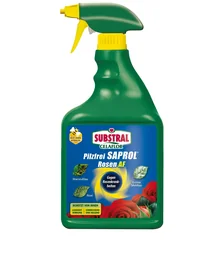
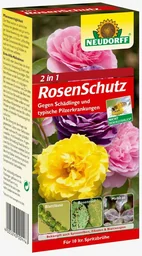
Check your roses regularly for pests and diseases. At the first signs of black spot or powdery mildew, special products such as the ready-to-use can help. A combination product such as protects the plant from the most common pests and fungal diseases at the same time. You can find the right pest and plant protection products in our range.
Patience and observation are the rose gardener's most important tools. The plant will show you what it needs.
The first rose pruning: Be brave with the shears
The first proper pruning should take place in spring after planting, around the time the forsythias are in bloom. Although it may be difficult, this pruning is crucial for encouraging strong, bushy growth.
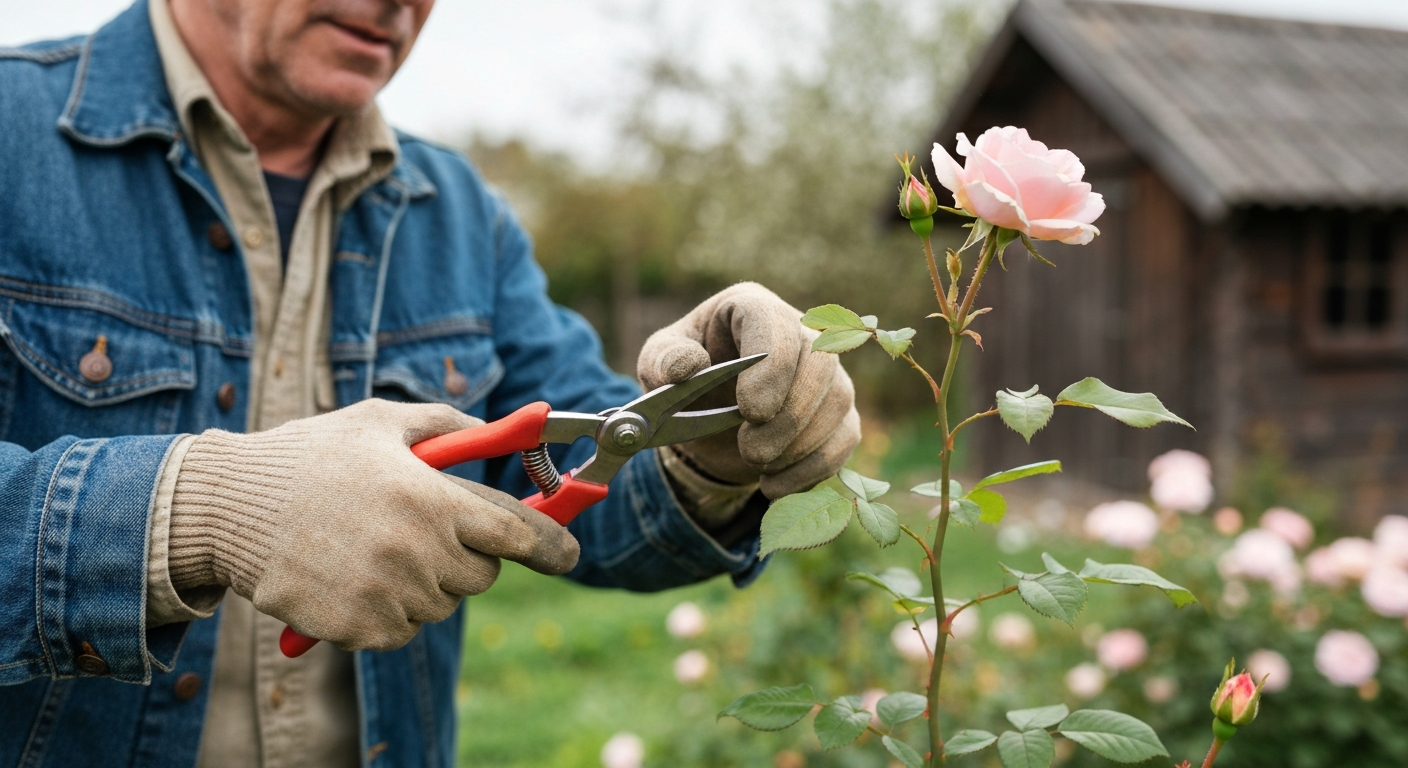
Cut all shoots back firmly to three to five eyes (buds). An eye is a small swelling on the shoot from which a new branch will grow. Remove weak, thin, dead or damaged shoots completely at the base. Make the cut at a slight angle about 5 mm above an outward-facing eye. This encourages the new shoot to grow outward and keeps the crown open and airy.
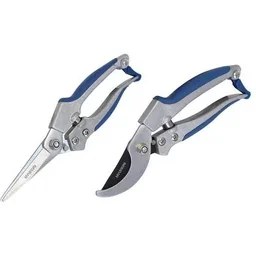
Sharp tools are essential for clean cuts. A high-quality set of shears such as the produces smooth cuts that heal quickly and give pathogens little opportunity to take hold. The right garden tools are the foundation of every successful gardening project. With proper planting and a little care, you will soon be rewarded with an abundance of blooms that transforms your garden into a fragrant paradise.
Frequently asked questions
- When is the best time to plant roses?
- The ideal planting time for bare-root roses is in autumn, from October to November. This allows them to establish over the winter. You can plant container-grown roses almost year-round, as long as the ground is not frozen. Spring after the last frost is also an excellent time to plant all types of roses.
- How deep should I plant a rose?
- The key point is the graft union, the swelling at the root collar. It must be positioned about five centimeters (two finger widths) below the soil surface. This protects the sensitive area from frost damage in winter and encourages healthy growth from the base of the plant.
- What is the best location for roses?
- Roses love the sun. An ideal location provides at least five to six hours of direct sunlight per day, preferably morning sun. The soil should be deep, nutrient-rich and well drained. Good air circulation is also important to help prevent fungal diseases.
- Do I need to fertilize roses immediately after planting?
- No, do not fertilize newly planted roses right away. Give the plant a few weeks to form new roots. Start with the first application of fertilizer when the first new growth is clearly visible in spring. Applying fertilizer too early can damage the fine new roots.
- How often should I water a newly planted rose?
- During the first few weeks after planting, the rose needs a consistent supply of water. Water deeply once or twice a week, depending on the weather. Avoid waterlogging. The soil should be moist but not wet. Always water directly at the roots, not over the leaves.
You might also be interested in
- Designing rose beds: Tips for a sea of blooms
- How to prune roses: A guide to abundant blooms
- Transplanting roses: How to successfully change their location
- Caring for peonies: Tips for abundant blooms
- How to plant tomatoes properly: For a plentiful harvest
- Supporting double roses: Practical solutions for heavy blooms