
In brief: The 2026 comparison shows that choosing the right nail depends largely on the material and intended use. Shorter nails work well for light wood joints, while longer, thicker nails are needed for load-bearing structures. An assortment such as the Basic Box gives you options for a range of projects. Length, head shape and material all matter for a clean, durable result.
Working on a DIY project and wondering which nail to use? Our 2026 comparison will help you choose. We compare different types and explain which nails suit each job. Whether you’re hanging a picture, building a deck or putting together a crate, the right nail helps create a strong, neat finish.
Nails are a classic fastener in fastening technology. They join materials quickly and securely, but there are many types to choose from. Nails vary in material, length, thickness and head shape. Our comparison covers options for DIY projects and offers practical buying advice.
Table of contents
What sets the nails in the comparison apart?
All nails serve the same basic purpose: holding materials together. The differences are in the details. Length, diameter and head design all matter. A thicker nail offers greater holding power, but takes more force to drive in and can split wood more easily.
Material is another important factor. Most standard nails are made of steel. For visible indoor applications, decorative finishes such as brass are popular. For outdoor use, choose corrosion-resistant nails that are galvanized or made of stainless steel.
Head shapes and what they’re used for
Nails come with different head shapes. A countersunk head sits nearly flush with the material and works well for discreet connections. A large, flat head provides a broad contact surface and helps keep the nail from pulling through soft materials such as cardboard or thin wood. A decorative brass head remains visible and adds a finishing touch.
Classic picture nails compared
Picture nails are a popular choice for hanging pictures and lightweight decorations. They’re slim and pointed, and often have a small decorative head. The Home Classic range with brass head is a typical example.
These nails combine practical performance with an attractive finish. The brass head doesn’t need to be painted after installation. The assortment includes different lengths from 20 mm to 50 mm, so you can choose a nail to suit the picture’s weight and the wall material. A lightweight frame may only need a short nail, while a heavy mirror or shelf calls for a longer one.
Tip: If you’re unsure about the wall material, such as drywall, test the nail in a hidden spot first to make sure it holds securely. For hollow walls, special wall anchors or hooks are often a better choice.
A practical option is the
. This 100-piece assortment bag offers a useful selection for home projects, so you don’t have to choose just one nail length.
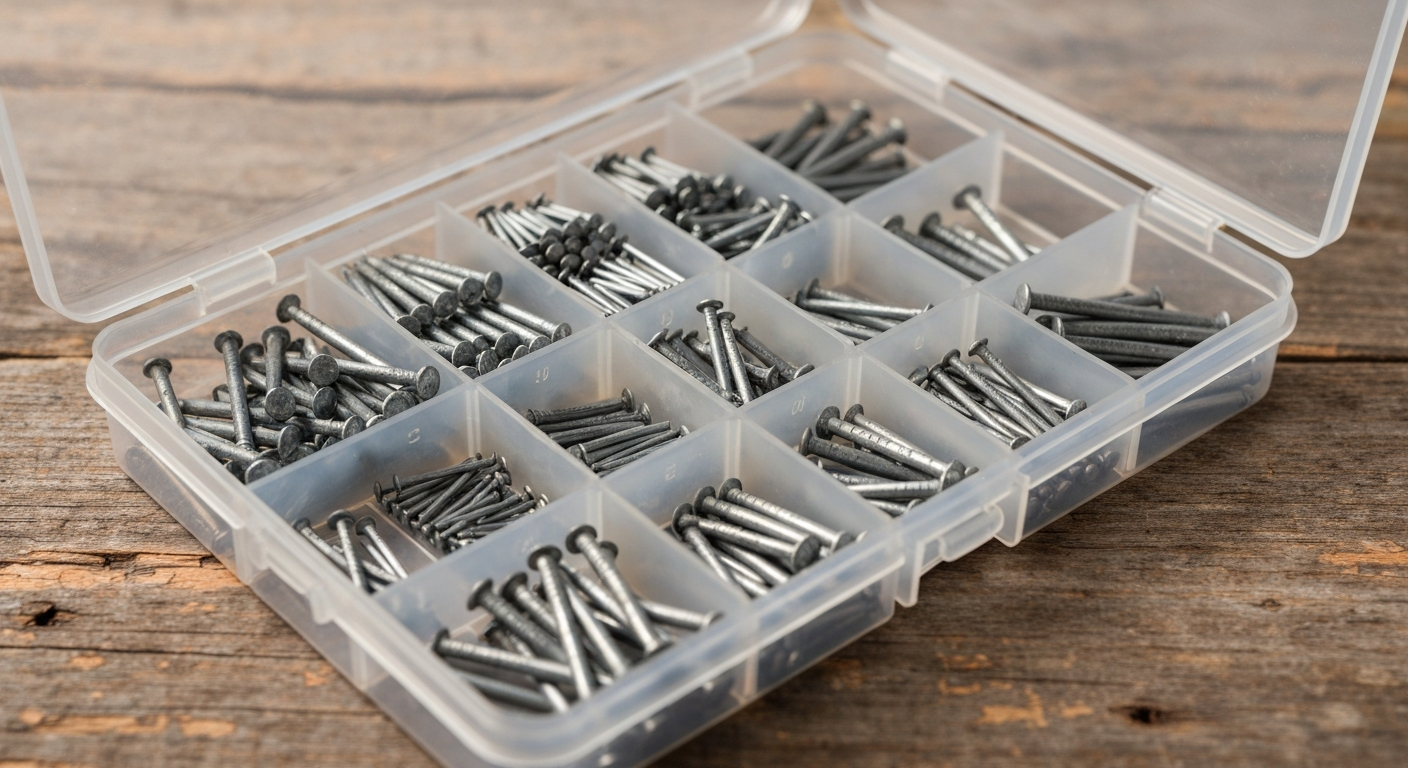
Versatile assortments for flexible projects
If you’re a keen DIYer or regularly tackle repairs and projects around the house, a comprehensive nail assortment is a useful investment. A set gives you more flexibility.
The
is one example of a handy starter set. With 580 pieces, you’ll have the right nails on hand for most small projects. From short nails for small crates to longer ones for stronger joints, the set covers a wide range of uses. That saves time and avoids frustration when a project calls for a different size.
Important: Store nails in a dry place away from moisture. Even galvanized nails can start to rust if stored for a long time in damp conditions, which can weaken them.
What should a good basic assortment contain?
A good household assortment should include nails in a range of lengths and thicknesses. Ideally, it will have thin, short nails for delicate jobs and sturdy, longer nails for furniture or garden projects. Look for a durable storage box that keeps everything sorted and easy to find.
How to choose the right nail length
Choosing the right length is one of the most common sources of mistakes. A nail that’s too short won’t hold securely. One that’s too long may stick out the back or damage the material on the other side.
A simple rule of thumb: the nail should pass all the way through the piece you’re attaching and extend far enough into the supporting material. For a strong joint, the section embedded in the supporting wood should be at least as long as the thickness of the piece being attached. For heavy loads, choose a correspondingly longer nail.
For the
, the 50 mm nail from the Home Classic range is suitable for attaching thicker wood or when you need especially strong holding power, such as when mounting heavy wooden wall shelves to wood studs.
Tips for perfect results
With the right technique, you can get clean results while protecting your tools and the material. Start the nail with a few light taps to set it in place.
Then drive it in with firm, controlled swings, using your wrist and elbow. Grip the hammer near the end of the handle for maximum leverage. Keep the nail straight as you hammer. If it bends, pull it out with a nail puller and use a new one.
Note: When working with hardwood or nailing close to an edge, it's a good idea to drill a small pilot hole. This helps prevent the wood from splitting and makes the nail easier to drive in. The drill bit should be slightly thinner than the nail.
Choose the right hammer
Choose a hammer that suits the nail. A lightweight hammer is enough for small picture nails. For longer, thicker construction nails, use a heavier carpenter's hammer for more driving force and leverage. A well-padded handle also helps protect your wrists.
How to store and care for nails
Proper storage keeps your nails in good condition and ready to use. Store them in a dry place. Moisture can cause rust over time, even on coated nails.
Sort your nails by type and size. Keep them in their original packaging or use clear, labeled storage containers. This saves time when you're looking for the right nail for your next project. Check older nails for signs of rust before use. Rusty nails have significantly less holding strength.
Sustainability and disposal
Use only as many nails as you need. A well-planned, sturdy joint often requires fewer nails than you might expect. Recycle old, rusty nails with other scrap metal. Clean, unused nails can be stored for years and used when needed.
Here are the top-rated nails in our range, compared:
| Model | Customer rating | Availability |
|---|---|---|
| Home Classic picture nail with brass head 2,0 x 20 mm, 20 pieces | – | Currently unavailable |
| Home Classic picture nail with brass head 2,0 x 25 mm, 20 pieces | – | Currently unavailable |
| Home Classic picture nail with brass head 2,0 x 30 mm, 20 pieces | – | Currently unavailable |
| Home Classic picture nail with brass head 2,0 x 40 mm, 20 pieces | – | Currently unavailable |
| Home Classic picture nail with brass head 2,0 x 50 mm, 20 pieces | – | Currently unavailable |
Our comparison shows that the best choice depends on your project. For decorative indoor projects, Home Classic nails with brass heads are an excellent choice. For general workshop use or a range of projects, an assortment such as the Basic Box is a great option. Choose the right nail length and thickness for the holding strength you need.
Now you can browse our nails and find the right ones for your next project. Explore more tools and accessories in our tools category. Good luck with your projects!
Frequently Asked Questions
- What length nail do I need for a strong wood joint?
- The right length depends on the thickness of the wood pieces you're joining. As a rule of thumb, the nail should be at least three times as long as the thinner piece it passes through. For a 2 cm thick strip, choose a nail at least 6 cm long so it can grip securely in the wood underneath.
- What are the benefits of nails with brass heads?
- Nails with brass heads, such as those in the Home Classic series, add a decorative finish, so you don't need to fill or paint over them after installation. The gold-colored head stays visible as an accent. These nails are ideal for visible indoor fastening, such as picture rails or decorative wood joints.
- Are nail assortments useful for DIY projects?
- Yes. An assortment such as the Basic Box is handy for DIY projects because it gives you a range of nail sizes for different jobs and saves you from buying several separate packs. It's especially useful and cost-effective when starting a new project or taking care of general household repairs.
- Can I use any nail for outdoor projects?
- No. Outdoor projects need specially coated nails or nails made from corrosion-resistant materials. Galvanized or stainless steel nails help prevent rust. Don't use untreated steel nails outdoors: they can rust quickly and lose their holding strength.
- How can I stop wood from splitting when I hammer in a nail?
- To reduce the risk of splitting, drill a small pilot hole before nailing, especially in hardwood or near an edge. Use a fine-pointed nail and drive it in straight with controlled swings. You can also slightly blunt the nail tip with a hammer to help prevent splitting.