
Quick explanation: In our 2026 pneumatic stapler test, we focus on precision, material quality and compatibility. We compare the best fine-wire and flat-wire staples for different material thicknesses and applications. Choosing the right wire gauge and staple length for your project is essential. Our buying guide helps you find the right pneumatic stapler staples for efficient results.
Pneumatic staplers bring power and precision to DIY and professional projects. Our 2026 test and comparison focuses on staples, essential consumables for getting the best results. We assess top products for a range of applications and explain what to look for when choosing staples.
Contents
- Fine-wire vs. flat-wire staples: Which do you need?
- Choosing the right staple length for your project
- Material quality and workmanship put to the test
- Common uses for pneumatic staplers
- Compatibility with your pneumatic stapler
- Buying guide: How to choose the right staples
- Care and maintenance for your pneumatic tools
Fine-wire vs. flat-wire staples: Which do you need?
Choosing between fine-wire and flat-wire staples has a major impact on the finished result. Each type has specific benefits for different materials.
Fine-wire staples
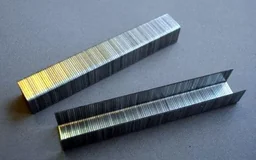
Fine-wire staples have a round cross-section and a 0,7 mm gauge. They penetrate materials easily and leave minimal marks, making them ideal for delicate surfaces that must not be damaged.
The product are 6 mm long, making them ideal for delicate work on thin materials. Their slim design allows for precise fastening without putting too much stress on the material.
Flat-wire staples
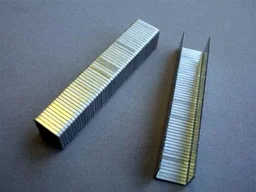
With their rectangular shape and 1,2 mm gauge, flat-wire staples provide significantly greater holding power. They grip the material more securely and are suitable for structural connections.
shows how a compact 6 mm flat-wire staple can still deliver strong holding power. Its wider contact area distributes the load effectively.
Tip: Use fine-wire staples on visible surfaces and flat-wire staples for concealed, load-bearing connections. That way, you get a neat finish and a strong hold.
Choosing the right staple length for your project
Staple length determines how strong and durable a connection will be. Staples that are too short may not hold securely, while staples that are too long can pierce the material or break.
Short staples for thin materials
Staples measuring 6-8 mm are suitable for paper, cardboard and lightweight fabrics. They penetrate the material without protruding too far. offers the shortest length for the most delicate work.
Medium lengths for everyday projects
For most DIY projects involving wood, MDF or thick textiles, 10-12 mm is ideal. are 10 mm long and suit common furniture-making and decorating tasks.
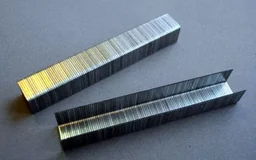
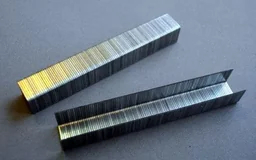
For slightly tougher connections, provide extra security with their 12 mm length. They grip securely even when the materials have slight irregularities.
Material quality and workmanship put to the test
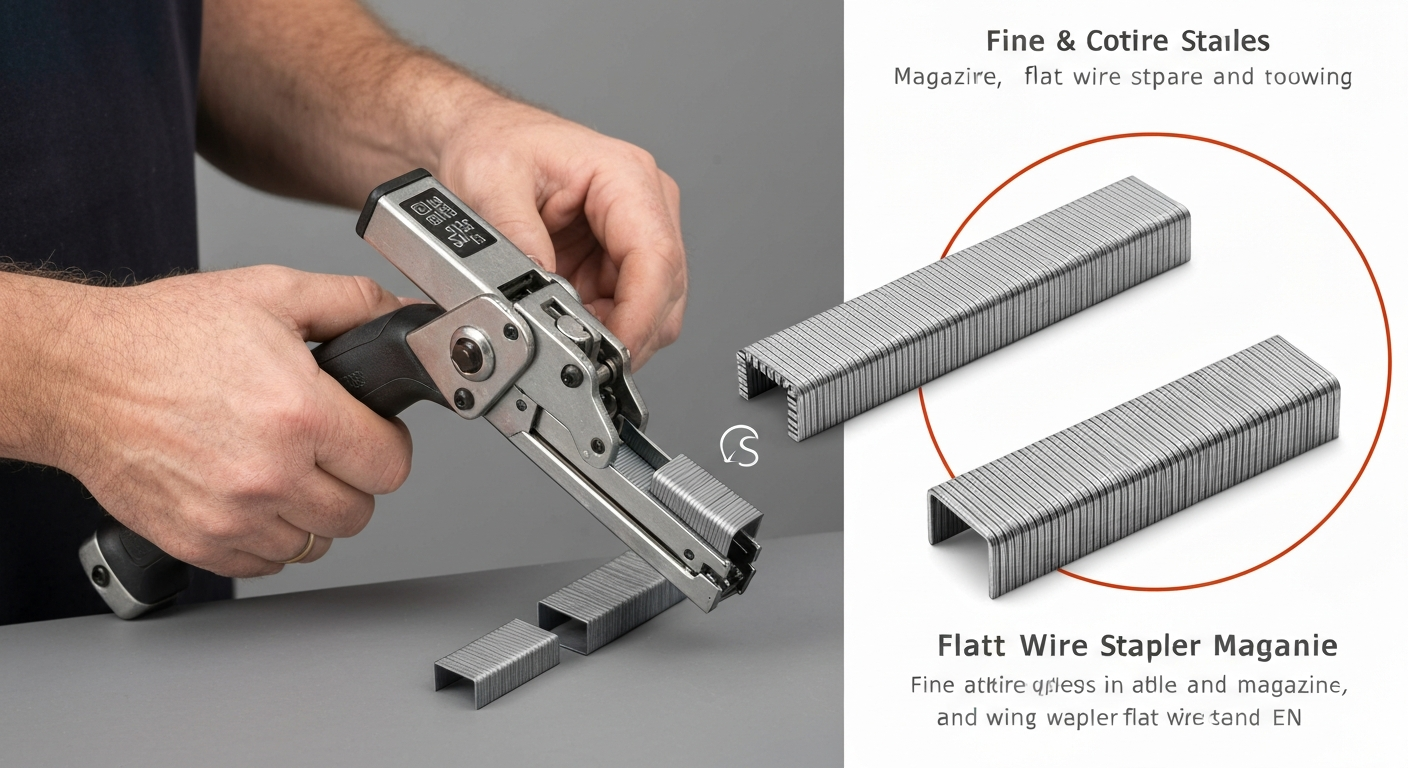
The quality of staples affects both the finished result and the service life of your pneumatic stapler. We examined several key factors.
Wire quality and surface finish
High-quality staples are made from galvanized steel wire, which helps protect against corrosion. The galvanized coating should be even and free of gaps. Rough surfaces or burrs can interfere with smooth feeding through the magazine.
Consistent shape and dimensions
Every staple should have the same dimensions. Variations can cause feed jams or prevent staples from being driven in all the way. In our test, all products we examined had consistent dimensions.
Warning: Cheap staples with inconsistent dimensions can damage your pneumatic stapler. Misaligned staples can jam the magazine and require extensive cleaning.
Typical applications for pneumatic staplers
Pneumatic staplers are used in a wide range of applications. The right staples depend largely on the job at hand.
Furniture making and interior finishing
Flat wire staples are often used in furniture making. with a length of 12 mm and a flat wire profile are ideal for joining wooden strips or attaching back panels. Their strong holding power creates durable joints.
For more delicate jobs, such as upholstering furniture, fine wire staples are a better choice. They pass through the material more cleanly and leave barely visible puncture marks.
Packaging and logistics
Fine wire staples are widely used in the packaging industry. They securely close cartons without damaging the contents. Their slim shape allows for high magazine capacity and efficient work.
Crafts and model making
Short fine wire staples are essential for precision work in model making and restoration. They secure thin materials temporarily or permanently without damaging them.
Compatibility with your pneumatic tool
Not every staple fits every pneumatic tool. Check compatibility before buying.
Check the manufacturer's specifications
Every pneumatic stapler has specific requirements for compatible staple sizes. Check the operating instructions or the manufacturer's website, and follow the recommendations carefully.
Magazine capacity and type
Different staplers use different magazine types, and some only accept staples of certain lengths. Check whether your chosen product, such as , fits your tool's magazine.
Note: Test a few staples from a new pack before filling the entire magazine. This can help you avoid time-consuming cleaning if the staples are incompatible.
Buying guide: How to choose the right staples
Take a systematic approach when choosing staples for your pneumatic stapler. This step-by-step guide will help you make the right choice.
1. Analyse the material
First, decide which materials you want to join. Thin, delicate materials call for fine wire staples, while heavier materials need flat wire staples. The thickness of the material determines the staple length you need.
2. Define the intended use
Decide whether the joint will be visible. Choose fine wire staples for visible areas and flat wire staples for concealed, load-bearing joints.
3. Check compatibility
Compare the staple dimensions with the manufacturer's specifications for your pneumatic tool. If you're unsure, measure a staple that already fits.
4. Assess quality features
Look for even galvanisation, clean edges and precise bends. Quality packaging protects staples from moisture during storage.
5. Plan quantities and storage
Buy enough staples for your project, but avoid keeping excessive stock. Even galvanised staples can eventually rust if stored in damp conditions.
Here are the highest-rated pneumatic tools in our range, compared:
| Model | Customer rating | Availability |
|---|---|---|
| 10 mm fine wire stapler staples, 1.000 pieces, 0,7 mm 🏆 Test winner | ★ 4,9 (15) | In stock |
| 14 mm fine wire stapler staples, 1.000 pieces, 0,7 mm | ★ 5,0 (6) | In stock |
| 8 mm fine wire stapler staples, 1000 pieces, thickness 0,7 mm | ★ 4,8 (6) | In stock |
| 6 mm fine wire stapler staples, 1.000 pieces, thickness 0,7 mm | ★ 5,0 (5) | In stock |
| 6 mm flat wire stapler staples, 1.000 pieces, 1,2 mm | ★ 4,7 (3) | In stock |
Care and maintenance of your pneumatic tools
Proper care can significantly extend the service life of your tools. Pneumatic tools in particular need regular maintenance.
Regular cleaning
Remove dust and debris from the magazine area after every use. Use compressed air or a soft brush. Grease or oil in the magazine can make staples stick and prevent them from feeding properly.
Lubricate as specified by the manufacturer
Only add special pneumatic tool oil to the designated oil ports. Never use universal oils or WD-40, as they can damage the seals.
Safe storage
Store your pneumatic tool in a dry, dust-free place. Before putting it away, drain the compressed air hose to prevent condensation from forming. Always remove any remaining staples from the magazine.
Combining high-quality staples with well-maintained pneumatic tools helps you get the best results. Use our buying guide to find the products that meet your needs.
Frequently Asked Questions
- What's the difference between fine wire and flat wire staples?
- Fine wire staples have a round wire profile with a thickness of 0,7 mm and are suitable for thinner materials such as cardboard or lightweight fabrics. Flat wire staples have a rectangular profile with a thickness of 1,2 mm and offer greater holding power for robust materials such as wood or thick textiles.
- What staple length do I need for my project?
- The staple length you need depends on the material thickness. For thin paper or fabric, 6-8 mm is enough. Medium-thickness materials such as MDF boards need 10-12 mm staples. For thick material combinations, choose 14 mm staples. The staple should pass through the material and anchor securely at the back.
- Will any staples fit my pneumatic stapler?
- No. Compatibility depends on the stapler model. Before buying, check the manufacturer's specifications for compatible staple sizes and wire types. Most pneumatic staplers take either fine wire or flat wire staples within a specific length range. Using the wrong type can damage the tool.
- How should I store staples for a pneumatic stapler?
- Store staples in a dry, dust-free place to prevent rust. Sealed original packaging protects them from moisture. Keep staples at room temperature and out of direct sunlight. Sealed metal boxes or plastic containers are especially suitable for storage.
- Can I use the same staples on different materials?
- Yes, with some limitations. Fine wire staples are suitable for delicate materials where visible marks are undesirable. Flat wire staples offer greater holding power for structural applications. Always test on a scrap piece first to see whether the staple damages the material and provides the strength you need.