
In brief: In our pond pump test & comparison 2026, powerful solar pumps with batteries lead the way. They work independently, save on electricity costs and are ideal for small to medium-sized ponds. Pay attention to the flow rate (l/h), maximum head height and features. Our buying guide will help you find the right pump for your needs.
A reliable pond pump is the heart of every thriving garden pond. It keeps the water moving, adds oxygen and filters the water. In 2026, the trend towards independent solar solutions is clearly continuing. Our test and comparison will help you find the best pump for your individual requirements. We analyse the most important criteria and introduce you to powerful models.
Table of contents
What types of pond pumps are available?
There are three basic types of pumps. Each type has its own specific advantages and disadvantages.
Submersible pumps
Submersible pumps operate directly in the water. They are quiet, easy to install and ideal for pond filters, fountains or streams. Most solar pumps fall into this category.
External pumps
External pumps or dry-mounted pumps are positioned outside the pond. They are often more powerful and easier to maintain, but require a protected, dry location and a separate suction line.
Solar pond pumps
These pumps operate completely independently using solar energy. They are ideal for remote ponds without a power connection. Modern models feature integrated batteries for continuous operation. You can find a wide selection of pond pumps in our range.
Tip: For most private garden ponds, powerful submersible pumps are the most practical choice. They are straightforward to use and deliver good results.
The most important buying criteria at a glance
Not every pump is suitable for every pond. Check these factors before buying.
Flow rate (l/h)
Flow rate is the most important criterion. It indicates how many litres of water the pump can move per hour. Insufficient performance leads to stagnant water and algae growth. Excessive performance can be oversized for small ponds. Take the pond volume and desired circulation rate into account.
Maximum head height
This value is crucial if you want to operate a waterfall or stream. The head height indicates how high the pump can lift the water. Always allow for a safety margin of around 20%, as the hose length and diameter reduce the effective height.
Power supply: Solar, mains or battery
Solar pumps are environmentally friendly and cost-effective, but require sufficient sunlight. Models with batteries compensate for periods of low sunlight. Mains-powered pumps provide consistent performance, but incur ongoing electricity costs and require a socket near the pond.
Durability and build quality
Look for high-quality, UV-resistant and frost-proof construction. The housing should be free from harmful substances to protect fish and plants. A coarse pre-filter screen protects the pump from leaves and dirt.
Important: Do not overlook the maximum head height. A pump with a high flow rate may still be too weak for your planned waterfall if the head height is insufficient.
Pond pump comparison 2026: The best models
Our comparison introduces three outstanding solar pond pumps that meet different needs.
The is a solid entry-level pump with a flow rate of 800 litres per hour. It is perfect for small ponds or decorative fountains. Thanks to its direct solar operation, it is ready to use as soon as the sun shines.
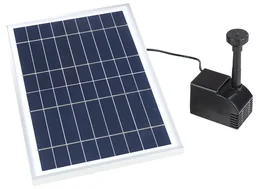
For more demanding projects, such as medium-sized ponds with filters or small streams, the is a good choice. With 1600 l/h and an integrated battery, it operates reliably even in changeable weather. The battery stores energy for use in the evening.
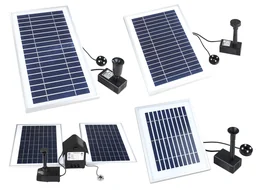
The is the ideal all-in-one solution for constant water circulation. Its 400 l/h performance is supported by a powerful battery. This guarantees continuous circulation, which is particularly important for fish health and clear water. Discover more products for pond construction.
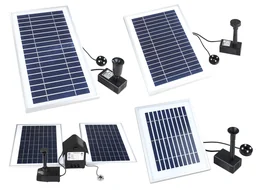
The highest-rated pond pumps in our range compared directly:
| Model | Customer rating | Availability |
|---|---|---|
| Solar pond pump, 800 l/h 🏆 Test winner | ★ 4,8 (28) | In stock |
| 1200 l/h solar pump | – | Currently unavailable |
| 1600 l/h solar pump | – | Currently unavailable |
| 1600 l/h solar pump with battery | – | Currently unavailable |
| 200 l/h solar pump with battery without light | – | Currently unavailable |
Why Solar Pond Pumps Are the Future
The benefits of solar pumps clearly outweigh the drawbacks. They make you independent of rising electricity prices and eliminate the need for complex cable installation. This saves time and installation costs.
The technology is now highly advanced. Modern solar panels still provide sufficient energy in diffuse light. Combined with a battery, they offer an impressive runtime.

From an ecological perspective, using renewable energy is a major benefit. You actively contribute to protecting the environment without having to give up the advantages of a vibrant pond landscape. They are a sustainable choice for all garden projects.
Note: The actual performance of a solar pump depends heavily on the quality of the solar panel and the amount of sunlight at your location. Always place the panel in full sun.
Installation, Connection and Maintenance
Installing a solar pond pump could not be easier. Place the pump at the deepest point of the pond, where the water is coolest. This extends its service life.
Correct Positioning
The solar panel should be positioned as close as possible to perpendicular to the midday sun and kept completely free of shade. If necessary, use an extension cable to find the ideal location.
Maintenance and Cleaning
Regularly remove coarse dirt from the pump's pre-filter screen. During the main season, check the pump operation every two weeks. Before the first frost, drain and clean the pump and store it in a frost-free place.
Battery Care
For pumps with a battery, monitor the charge level over winter. Occasional recharging prevents deep discharge, which can damage the battery.
Avoiding Common Mistakes When Choosing a Pump
Many pond owners underestimate their requirements. This leads to dissatisfaction and unnecessary extra costs.
Mistake 1: Insufficient power. A pump that is too weak cannot circulate the pond water sufficiently. This can result in low oxygen levels, algae and cloudy water. It is better to choose one size larger.
Mistake 2: Ignoring the head height. For a waterfall, the flow rate in litres is not the only important factor—the maximum head height is even more crucial. Measure the height difference carefully.
Mistake 3: Choosing a pump without a battery. A solar pump without a battery stops as soon as a cloud passes in front of the sun. Continuous operation is essential for stable water quality, however. Invest in a model with energy storage.
Conclusion: How to Find the Perfect Pond Pump
Choosing the right pond pump determines the vitality of your garden pond. In 2026, solar pumps with batteries offer the best combination of independence, performance and sustainability.
First, calculate your required pond volume and desired circulation rate. Then decide whether you want to run a stream or waterfall to determine the necessary head height. For reliable operation, choose a model with a battery.
With the products , and we have presented three excellent options for different requirements. This guarantees you will find the pump that brings your pond to life.
Frequently Asked Questions
- What is the biggest advantage of a solar pond pump?
- The main benefits are complete energy independence and lower electricity costs. As it runs solely on sunlight, it does not require a mains connection. This allows flexible placement and is particularly environmentally friendly.
- How do I calculate the required flow rate for my pond?
- As a general rule of thumb, the entire pond volume should be circulated within 1-2 hours. For a 2000-litre pond, you therefore need a pump with a flow rate of approximately 1000-2000 l/h. Also take into account the height difference between the pump and the water outlet.
- Do I need a pond pump with a battery?
- A battery is highly recommended if you want constant water circulation. It stores solar energy and allows the pump to continue running in cloudy weather or during the evening. This is important for oxygen supply and water quality.
- Can I run a solar pump in winter?
- Operating one in winter is generally not recommended. If there is a risk of frost, drain the pump and store it in a frost-free place to prevent damage. The low levels of sunlight in winter are also often insufficient for efficient operation.
- What does the maximum head height mean on a pond pump?
- The maximum head height indicates how many metres the pump can move water vertically upwards. This value is crucial if you want to run a stream or waterfall. Always allow some reserve, as the effective performance decreases with height.