
In brief: Traditionally finish harvesting rhubarb on 24 June (St John's Day). Instead of cutting the stalks, twist and pull them out with a firm jerk to prevent rot. Remove all flower stalks immediately. Then feed the plant with compost or organic fertiliser and keep it sufficiently moist during summer so it can build up strength for the following year.
Rhubarb season is a highlight of the gardening year. But when the harvest period ends in mid-June, a crucial phase begins for the plant. Proper care after harvesting lays the foundation for strong growth and high yields the following spring. If you neglect your rhubarb plant now, you risk a weaker harvest next year.
The care is straightforward but effective. With just a few targeted measures, you can provide the plant with everything it needs and prepare it for its winter dormancy. This will help ensure that your rhubarb remains a productive part of your garden for many years.
- Why is care after the rhubarb harvest so important?
- How to harvest rhubarb correctly: cut or twist?
- Step-by-step guide: caring for rhubarb after 24 June
- What should you do with rhubarb leaves and leftover stalks?
- Common problems after harvesting and how to avoid them
- Preparing for winter and looking ahead to the next season
Why is care after the rhubarb harvest so important?
Harvesting takes a lot of energy from a rhubarb plant. Every stalk you pick is a leaf that is no longer available for photosynthesis. After the traditional harvest break from St John's Day (24 June), the plant needs time to recover. The remaining leaves work at full capacity to produce sugars. The plant stores these sugars as an energy reserve in the rhizome, the underground rootstock.
These stored reserves are the plant's lifeline through winter and its launchpad for spring. Without sufficient time to recover, rhubarb will produce weaker growth, thinner stalks and a poorer harvest the following year. Good care during summer and autumn is therefore a direct investment in the yield of the coming season.
After the harvest period, the plant needs a dormant phase to store enough reserves in the rootstock for growth the following year. Without this phase, it becomes weaker year after year.
How to harvest rhubarb correctly: cut or twist?
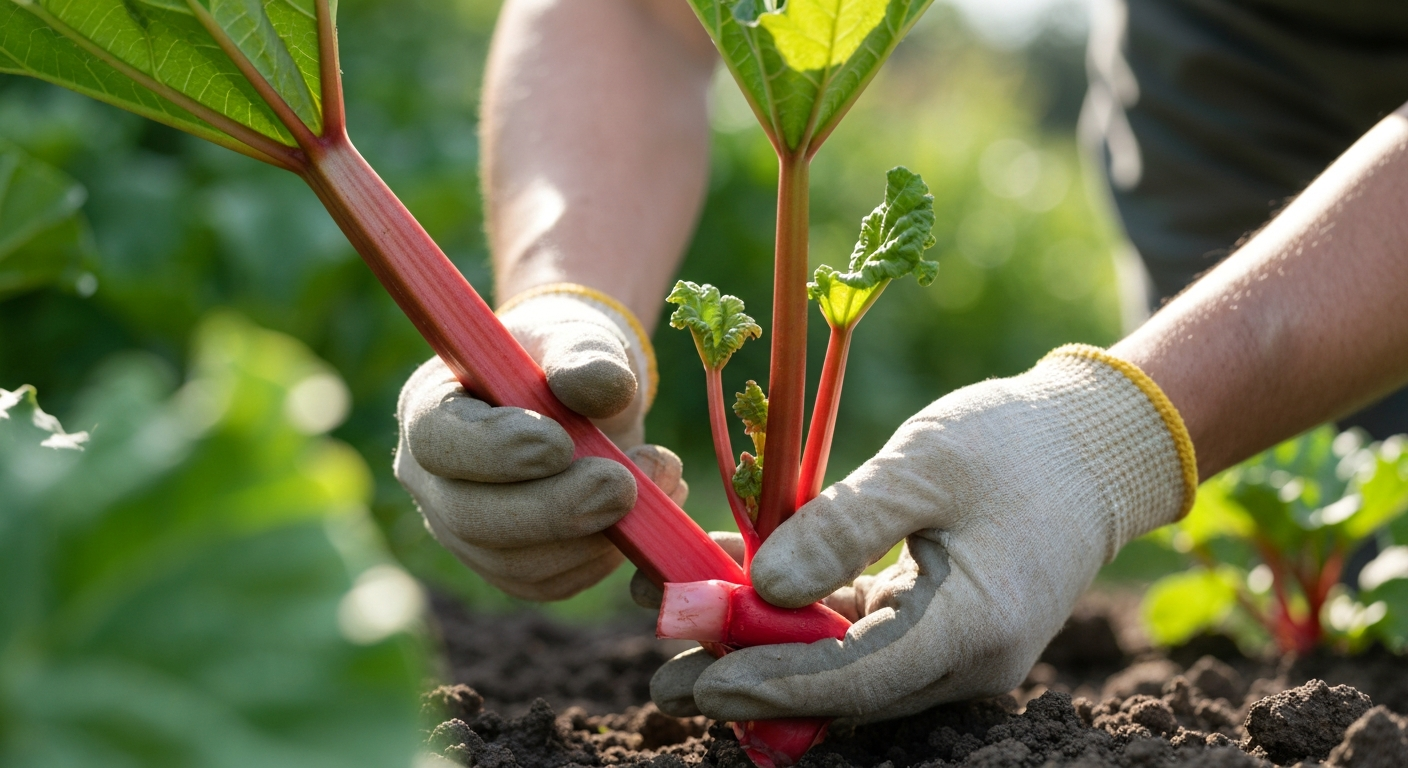
The question of whether rhubarb stalks should be cut or twisted out often leads to debate. The answer, however, is clear: you should always twist rhubarb stalks out. To do this, grip the stalk as low down at the base as possible. With a gentle twisting motion and a sideways jerk, the stalk will come cleanly away from the rootstock.
The reason is simple. If you use a knife, a short stub remains on the plant. This cut surface is an open wound and an ideal entry point for bacteria and fungi that cause rot. The stump starts to decay, and the rot can spread to the heart of the plant, the rhizome. This permanently weakens the entire plant and, in the worst case, can cause it to die. Twisting leaves a clean, natural break that dries quickly and seals itself.
Important note
Never use a knife to harvest rhubarb. The stalk remnants left behind rot easily and create an entry point for pathogens that can damage the rootstock.
Step-by-step guide: caring for rhubarb after 24 June
As soon as the last harvest is safely in your handy
harvest basket, the care phase begins. Follow these five steps to get everything right.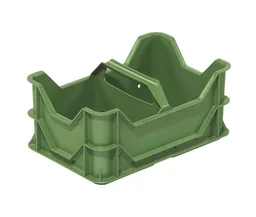
1. Stop harvesting completely
The traditional rule of ending the harvest on St John's Day has two good reasons. Firstly, the oxalic acid content of the stalks increases over the course of summer. Consumed in large quantities, this acid can be harmful to health. Secondly, and more importantly, the plant needs the remaining months before the first frost to recover fully and replenish its energy reserves.
2. Remove flower stalks immediately
Sometimes rhubarb, particularly when stressed by dry conditions, sends an impressive flower stalk upwards. Even though it may look attractive, you should remove it immediately. Producing flowers costs the plant a great deal of energy that it actually needs to store in its roots. Cut the entire flower stalk off as close to the base as possible. This encourages the plant to direct its energy back into the leaves and roots.
3. Feed it to restore its energy
Rhubarb is a heavy feeder and is very hungry after harvesting. A generous application of fertiliser in late June or early July is therefore essential. Work a layer of mature compost or well-rotted manure into the surface of the soil around the plant. Take care not to cover the crown of the plant. You can also find a selection of suitable fertilisers in our shop to provide your plant with exactly the nutrients it needs.
Expert tip
Give your rhubarb an additional boost with a dose of liquid plant feed, such as nettle fertiliser. This provides quickly available nitrogen and valuable trace elements that stimulate leaf growth after harvesting. This strengthens the plant's photosynthetic performance.
4. Water sufficiently and correctly
With its huge leaves, rhubarb loses a considerable amount of water through evaporation on warm summer days. Make sure it receives a steady supply of water, especially during dry periods. It is better to water less frequently but thoroughly and deeply, so that the water reaches the roots. This encourages deep root growth and makes the plant more resilient during short dry spells. Useful aids for efficient garden watering make this task easier.
5. Mulch the soil
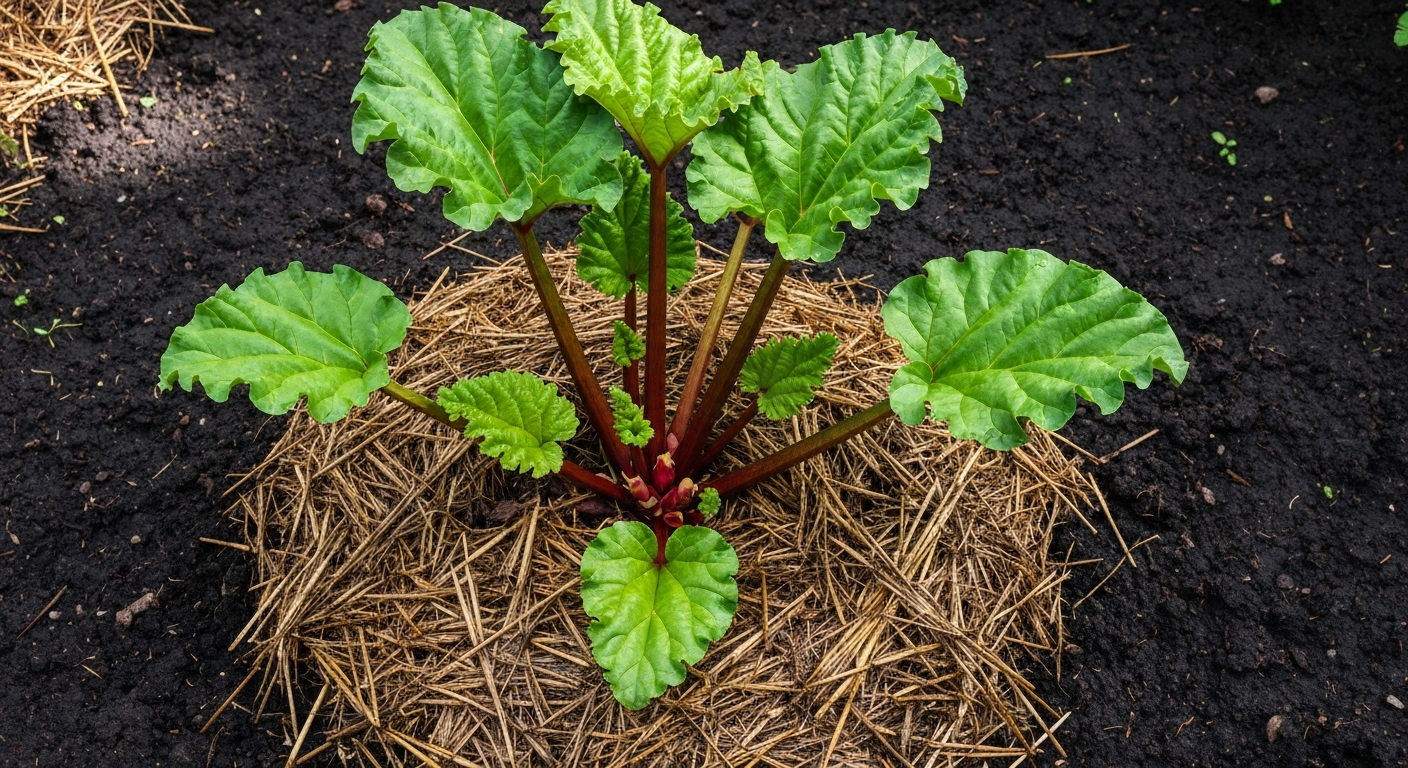
A mulch layer made from grass clippings, straw or partially dried comfrey leaves is a real benefit for any rhubarb plant. The layer retains moisture in the soil, suppresses troublesome weeds and encourages active soil life. Over time, the material breaks down and provides additional nutrients.
What to do with rhubarb leaves and leftover stalks?
After harvesting, the question often arises: What should you do with the large leaves? And what about the stalks still left on the plant after June 24? Both have their place in the garden cycle.
The leaves contain a high concentration of oxalic acid and are therefore unsuitable for consumption. But don't throw them away! Chopped up, they are excellent as mulch directly under the plant or on other beds. They decompose easily on the compost heap. You can also make a liquid manure from the leaves, which works as an organic remedy against aphids.
Additional tip
Place whole rhubarb leaves on weed-free areas in your vegetable garden. They act as a natural barrier that blocks light and effectively prevents weed seeds from germinating. After a few weeks, they will have decomposed and enriched the soil with nutrients.
Leave all stalks still on the plant after the harvest break where they are. They are the powerhouse of the perennial and must not be removed. They supply the plant with energy until autumn. It is best to transport and store your final harvest of the year in an airy basket such as our
harvest and storage basket.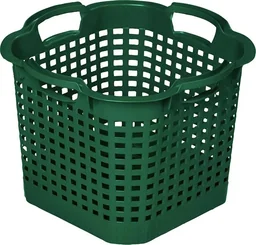
Common problems after harvesting and how to prevent them
Problems can still occur after harvesting. However, by monitoring your plant carefully, you can respond quickly.
- Yellow leaves: Individual yellow leaves in late summer and autumn are normal. The plant is drawing in nutrients and preparing for winter. However, if the leaves turn broadly yellow in midsummer, this may indicate a nutrient deficiency or drought stress. Check the moisture level and apply liquid fertiliser if necessary.
- Pest infestation: Healthy, vigorous plants are less susceptible to pests such as rhubarb leaf beetles or slugs. Good care is the best prevention. If necessary, you will find suitable ecological solutions in our Garden + plant accessories range.
- Rot at the crown: This is often caused by incorrect harvesting (cutting instead of twisting) or planting too deeply. Make sure that the crown of the plant always protrudes slightly above the soil and is not covered with mulch or fertiliser.
A resilient plant is the best defence. Good site conditions, a balanced supply of nutrients and encouraging beneficial organisms are the cornerstones of integrated plant protection.
Preparing for winter and looking ahead to the next season
In autumn, the leaves change colour and die back completely after the first frost. You can leave the dead leaves on the plant as natural winter protection. They decompose and release their nutrients into the soil.
For an ideal start to the new season, apply one final generous dose of nutrients in late autumn. A thick layer of compost or well-rotted farmyard manure spread around the plant acts like a protective blanket and supplies the soil with nutrients over winter. This provides the perfect boost for strong growth in spring.
If your plant is already many years old, you can also use autumn to divide and rejuvenate it. Or add a new variety to your Garden + Outdoor range. Rhubarb
'Holsteiner Blut', for example, is known for its intensely red stalks. With the right care after harvesting, you not only secure next year's harvest but also maintain the vitality of your rhubarb plant for a long time.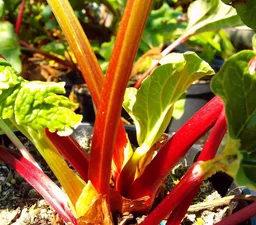
Frequently asked questions
- Why should you stop harvesting rhubarb after June 24?
- After St John's Day, the oxalic acid content in the stalks increases, which can put a strain on the body if consumed in large quantities. The plant also needs the rest of the season to store enough energy in its leaves through photosynthesis for overwintering and new growth the following spring.
- Cut or twist: What is the right way to harvest rhubarb?
- Always twist the stalks out. Grip the stalk low down, twist it gently and pull it away from the plant with a sideways tug. Cutting leaves stubs that can rot and damage the plant, increasing the risk of disease.
- My rhubarb plant is flowering. What should I do?
- Remove the flower immediately by cutting off the entire flower stalk close to the base. Flowering uses a great deal of the plant's energy, which it should instead invest in its roots and growth the following year. Frequent flowering can be a sign of stress.
- What is the best fertiliser for rhubarb after harvesting?
- Rhubarb is a heavy feeder. After harvesting, it benefits from an application of mature compost or well-rotted horse manure. An organic fruit and berry fertiliser is also well suited. These nutrients help the plant recover and build up reserves for winter.
- Can I use poisonous rhubarb leaves in the garden?
- Yes, the leaves can be used in many ways, even though they must not be eaten. They are excellent as mulch to suppress weeds, can be composted or made into a liquid manure to combat aphids. This returns nutrients to the natural cycle.
You may also be interested in
- Rhubarb: Poisonous or healthy? Everything about this popular plant
- Asparagus & rhubarb: How to extend the harvest season
- Freezing rhubarb: How to keep this spring vegetable fresh
- How to prune sage correctly: A guide to a bountiful harvest
- How to prune shrubs correctly: The ultimate guide
- How to prune trees correctly: Promote healthy trees with the right cut