
In brief: Serial renovation uses factory-built components, such as facade and roof modules, to make energy-efficient home upgrades faster and more predictable. It can modernize a home in just a few weeks instead of months, improve energy efficiency and help reduce costs over time. It is a key approach to making the building stock climate neutral.
Want to improve your home's energy efficiency but dread months of construction noise, dust and unpredictable costs? You're not alone. Upgrading existing homes is one of the biggest challenges on the path to climate neutrality. One innovative approach promises to change the process: serial renovation. It can make home upgrades faster, more predictable and often more affordable.
What exactly is serial renovation?
Imagine your home getting a new, state-of-the-art exterior that's precisely built in a factory and installed in just a few days. That's the idea behind serial renovation. Instead of building everything piece by piece on site, this approach moves much of the work to a factory, where complete building components are made under controlled conditions.
Typical components include:
- Facade modules: These elements include the insulation, exterior cladding and often even pre-installed triple-pane windows. They're installed over the existing facade like a second skin.
- Roof modules: Complete roof sections are prefabricated with insulation, roofing and an integrated photovoltaic system.
- Building services modules: Compact energy centers containing a heat pump, hot water tank and ventilation system are delivered and connected as a complete unit.
The process begins with a precise digital 3D scan of your home. Using this data, the modules are factory-made to millimeter precision. This high degree of prefabrication reduces on-site work to a minimum: installation.
Serial renovation is the urgently needed industrial revolution for the heating transition in the building sector. It combines speed, quality and cost-effectiveness, making climate action attractive to broad sections of the population.
Why is serial renovation the future of energy-efficient home upgrades?
This approach offers far-reaching benefits and addresses some of the biggest challenges of traditional renovation. It's about more than a new facade; it represents a major shift in the construction industry.

Faster, more efficient upgrades
A traditional energy-efficiency upgrade can take many months. Scaffolding, noise and contractors become part of everyday life. With serial renovation, the time spent on site is drastically reduced. While the modules are being made at the factory, you can carry on living at home with minimal disruption. Installing the facade and roof elements often takes just a few weeks. This makes the process more convenient and limits disruption to your daily life.
Lower costs through economies of scale
Factory production means standardization and repeatability. As in the automotive industry, larger production runs reduce the cost per unit. While the upfront cost of a single project may still be comparable to a high-quality traditional renovation, economies of scale can bring prices down over time. This approach also offers greater cost certainty. The price agreed in advance for the modules is fixed, helping avoid unpleasant surprises on site.
Pro tip
Plan your home's systems as a whole, not just the building envelope. Serial renovation is an ideal opportunity to replace an outdated heating system with an efficient heat pump and check your house drain pipe system. This can help maximize energy savings and comfort at home.
High quality and precision
Factory production is subject to strict quality controls. Components are made to consistent standards, regardless of the weather, using state-of-the-art machinery. Precise planning and manufacturing help eliminate thermal bridges, which can easily occur during manual work on site. The result is an airtight, well-insulated building envelope designed to perform for decades.
Sustainability and active climate protection
The biggest benefit is the significant improvement in energy efficiency. Homes upgraded through serial renovation can often meet net-zero energy standards, producing as much energy over the course of a year as they use. Your home can go from an energy consumer to a small power plant. This benefits both the climate and your energy bills. Many manufacturers also use sustainable materials, such as wood for the modules' supporting structure and recyclable insulation materials.
How does the serial renovation process work?
Serial renovation follows a clear process supported by digital tools. It can be broken down into a few precise steps that fit together seamlessly.
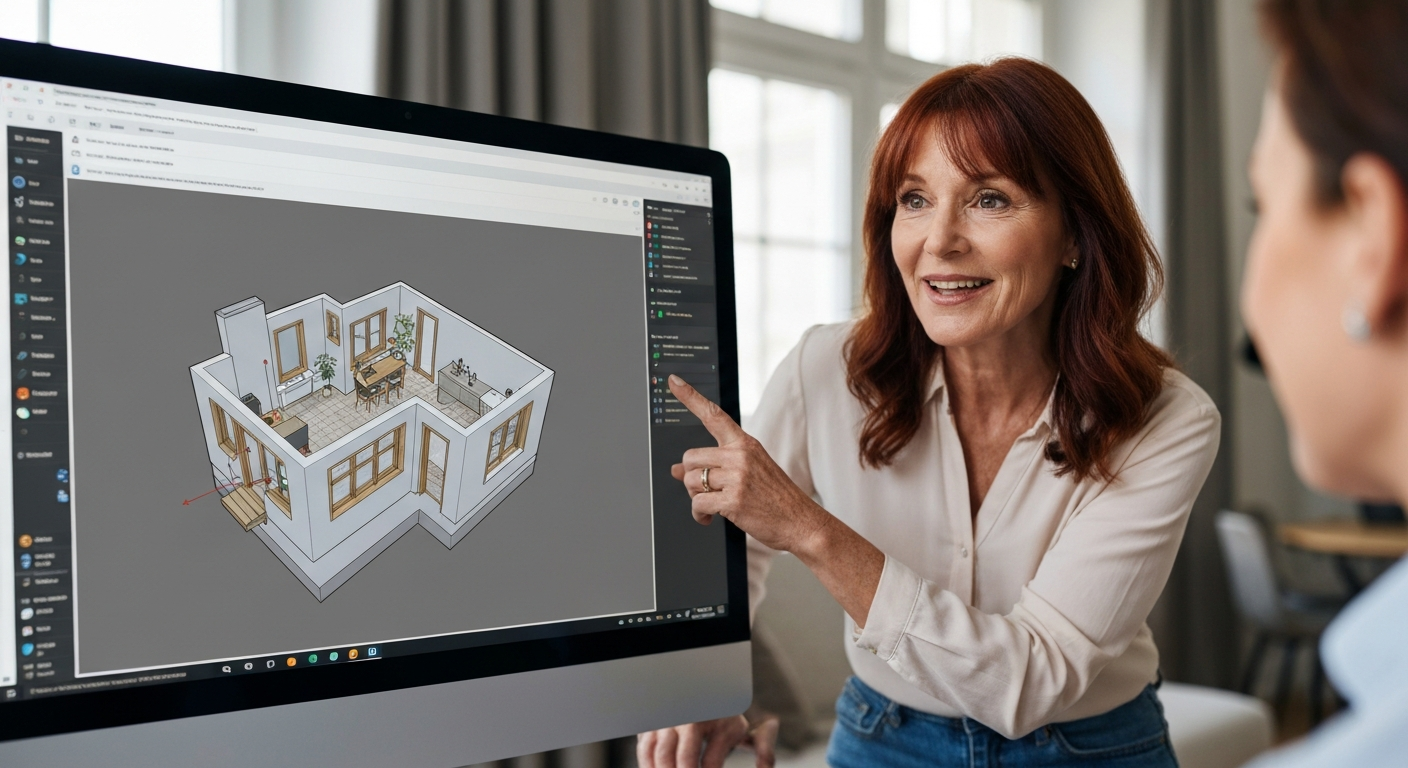
- Digital scan: The process starts with a highly precise 3D laser scan of your home, not a rough estimate. The scan records exact dimensions and any unevenness in the facade. The result is a digital twin of your home.
- Planning and design: Using the digital twin, architects and engineers plan the renovation modules on a computer. They determine the positions of windows and doors, integrate the building systems and design the look of the new facade.
- Factory prefabrication: Production begins at the factory. Robots and CNC machines make the facade, roof and building services modules to millimeter precision. Each step is checked for quality.
- Delivery and installation: The finished modules are delivered to the site “just in time.” A crane lifts the elements into position, where a specialized team installs and anchors them quickly. The connections for electricity, water and ventilation are joined, and the new systems are commissioned.
Important note
Serial renovation is a high-tech process that requires specialized partners. Choose an experienced company that can manage the entire process, from the 3D scan through final inspection. Look for reference projects and clear, transparent communication.
Is serial renovation right for my single-family home?
For now, serial renovation is mainly used for post-war apartment blocks. Their simple, boxy designs are ideal for standardised solutions. However, the industry is working hard to adapt the approach for single-family homes and more complex building types. The principles remain the same: digital planning, extensive prefabrication and fast installation.
A complete serial renovation package tailored to your home may still be some way off, but you can put the basic principles into practice today. Talk to your energy consultant or architect about using prefabricated building components. The market for prefabricated dormers, timber-frame façade elements and compact building services units is growing steadily. With the right power tools, you can also carry out preparatory work efficiently on a smaller scale.
The Energiesprong approach not only guarantees performance for decades, but also creates an entirely new market for high-quality, industrialised renovation solutions.
The “Energiesprong” approach, which originated in the Netherlands and is considered a pioneer of serial renovation, sets a clear goal: renovated homes should come with a long-term guarantee of their energy performance, while energy savings should cover the cost of the renovation. It is an ambitious goal that industrialisation can help achieve.
What funding is available for sustainable home renovations?
The government offers substantial support for ambitious renovation projects. The “Federal Funding for Efficient Buildings” (BEG), administered through KfW Bank and BAFA, provides low-interest loans and generous repayment subsidies for renovations that meet a high efficiency-house standard. Since serial renovations often aim for the highest level (Efficiency House 40) or even net-zero status, they may qualify for the maximum funding.
More advice
Be sure to involve a certified energy efficiency expert. They can help with planning and construction supervision, and are also essential when applying for government funding. Their fees are subsidised too.
Combining energy savings with government funding makes a comprehensive, future-proof renovation an attractive investment. Your upgraded home will be both climate-friendly and a way to preserve your property's value. Any surplus electricity from your new photovoltaic system can also help support the shift to sustainable transport. With your own electricity, you can charge an electric car as well as handy everyday vehicles such as the economical “Messina” electric scooter



Serial renovation is more than a new construction method. It addresses some of the most pressing issues of our time: climate protection, resource efficiency and affordable housing. It turns the vision of a climate-neutral building stock into something tangible and gives you, as a homeowner, the opportunity to future-proof your property quickly, to a high standard and with predictable costs.
Frequently asked questions
- How much does a serial renovation cost?
- Upfront costs are comparable to those of a high-quality conventional renovation, but economies of scale can bring them down. The biggest benefit is the substantial, predictable savings on energy bills over the decades, making it a highly profitable long-term investment.
- How long does a serial renovation take on site?
- The work at your home is remarkably quick. Since all major components are prefabricated at the factory, installing the façade and roof elements often takes just a few days to a few weeks. The disruption for residents is minimal compared with conventional renovations, which can take several months.
- Is my house suitable for a serial renovation?
- Homes built from the 1950s through the 1970s with simple, regular shapes are currently ideal candidates. However, the technology is advancing rapidly. In the future, more complex single-family homes may also benefit from tailored serial renovation solutions. An individual assessment is always the first step.
- Which building components are typically used in serial renovations?
- The centerpiece is a set of highly insulated façade elements with new windows and, in some cases, integrated ventilation ducts. These are complemented by complete roof modules, often with photovoltaic systems pre-installed, as well as compact building services units that combine heating, ventilation and hot water production.
- Can I receive government funding for a serial renovation?
- Yes. Since serial renovations typically achieve very high efficiency standards, such as net-zero energy performance, they may qualify for the highest funding rates under the Federal Funding for Efficient Buildings (BEG) program. This can significantly reduce the investment cost.
You may also be interested in
- Smart renovation: Modernize your home with a systematic approach
- Energy-efficient renovation: Modernize your home efficiently
- Energy efficiency in older homes: How to plan your home renovation properly
- Renovating your home: Planning and key steps for your project
- KfW funding 2024: Your guide to affordable renovations
- Renovating a three-sided farmhouse: How to bring an old farmstead back to life