
In brief: Serial renovation is revolutionizing energy-efficient home improvements with industrially prefabricated components such as facade and roof modules. This method makes it possible to modernize a home in just a few weeks instead of months, significantly increase energy efficiency and reduce costs in the long term. It is the key to a climate-neutral building stock.
Is it time to improve your home's energy efficiency, but are you put off by months of construction noise, dirt and uncertain costs? You are not alone. Modernizing existing buildings is one of the biggest challenges on the path to climate neutrality. One innovative method promises to revolutionize the process: serial renovation. It makes refurbishment faster, more predictable and often more affordable.
What exactly is serial renovation?
Imagine your home receiving a new, state-of-the-art exterior that is precision-built in a factory and installed within just a few days. That is the core idea behind serial renovation. Instead of laboriously building brick by brick on site, this approach shifts much of the value creation to the factory. Complete building components are produced there under controlled conditions.
Typical components include:
- Facade modules: These elements include the complete insulation, exterior cladding and often even pre-installed triple-glazed windows. They are mounted in front of the existing facade like a second skin.
- Roof modules: Entire roof sections are prefabricated, including insulation, roofing and an integrated photovoltaic system.
- Building services modules: Compact energy centres containing a heat pump, hot water cylinder and ventilation system are delivered and connected as a complete unit.
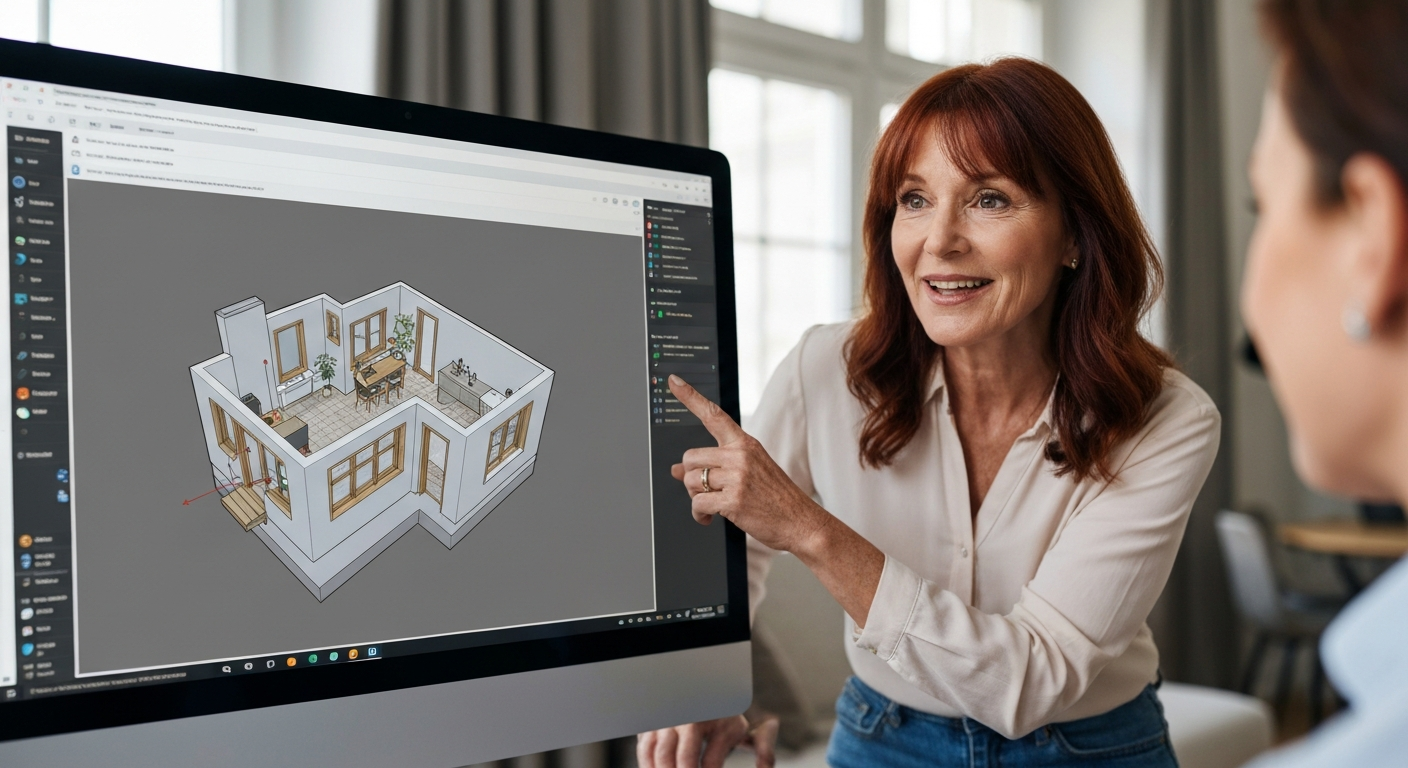
The process begins with a precise digital 3D survey of your home. Based on this data, the modules are industrially manufactured to millimetre precision. This high degree of prefabrication reduces on-site work to a minimum: installation.
Serial renovation is the urgently needed industrial revolution for the heating transition in the building sector. It combines speed, quality and cost-effectiveness, making climate action attractive to broad sections of the population.
Why is serial renovation the future of energy-efficient home improvements?
The benefits of this method are far-reaching and address the biggest weaknesses of conventional renovation. It is about more than just a new facade; it represents a paradigm shift in the construction industry.

Speed and efficiency at a faster pace
A conventional energy-efficiency renovation can take many months. Scaffolding, noise and tradespeople become part of everyday life. With serial renovation, the time spent on site is drastically reduced. While the modules are being manufactured at the factory, you can continue living undisturbed. The actual installation of the facade and roof elements often takes just a few weeks. This efficiency minimizes disruption and makes the entire process much more comfortable.
Cost savings through economies of scale
Industrial manufacturing means standardization and repetition. As in the automotive industry, high production volumes reduce the cost per unit. While the initial cost of a single project may still be comparable to a high-quality conventional renovation, economies of scale will drive prices down in the future. The method also offers a high degree of cost certainty. The price for the modules agreed in advance is fixed, so unpleasant surprises on site are avoided.
Pro tip
Plan the building services as a complete system, not just the building envelope. Serial renovation offers the perfect opportunity to replace outdated heating systems with an efficient heat pump and check the house drain pipe system. This allows you to maximize energy savings and living comfort.
Highest quality and precision
Factory production is subject to strict quality controls. Independent of the weather and using state-of-the-art machinery, components of consistently high quality are produced. Thermal bridges, which can easily occur during manual work on site, are almost completely eliminated through precise planning and manufacturing. The result is an airtight, optimally insulated building envelope that performs its function for decades.
Sustainability and active climate protection
The most important aspect is the enormous increase in energy efficiency. Serial-renovated buildings often achieve net-zero energy standards. This means they produce as much energy over the course of a year as they consume. Your home changes from an energy consumer into a small power plant. This benefits not only the climate but also your wallet. Many manufacturers also use sustainable materials such as wood for the modules' supporting structure and recyclable insulation materials.
How does the serial renovation process work in practice?
The serial renovation process is clearly structured and digitally supported. It can be divided into a few precise steps that fit together seamlessly.
- Digital scan: It all starts not with a rough estimate, but with a highly precise 3D laser scan of your building. This records the exact dimensions and any unevenness in the facade. The result is a digital twin of your home.
- Planning and design: Based on the digital twin, architects and engineers plan the renovation modules on a computer. They determine the position of windows and doors, integrate the building services and design the new facade appearance.
- Industrial prefabrication: Production now begins at the factory. Robots and CNC machines manufacture the facade, roof and building services modules to millimetre precision. Quality control accompanies every individual step.
- Logistics and installation: The finished modules are delivered to the site “just in time”. A crane lifts the elements into position, where a specialized team installs and anchors them in a short time. The connections for electricity, water and ventilation are joined, and the new systems are commissioned.
Important note
Serial renovation is a high-tech process that requires specialized partners. Choose an experienced company that offers the entire process, from the 3D scan to final acceptance, from a single source. Look for reference projects and transparent communication.
Is serial renovation suitable for my single-family home?
At present, serial renovation is mainly focused on post-war apartment buildings. Their simple, cubic forms are ideal for standardisation. However, the industry is working intensively to adapt the method for single-family homes and more complex types of buildings. The principles remain the same: digital planning, a high degree of prefabrication and rapid installation.
Even if a comprehensive serial renovation package for your individual home may still be a thing of the future, you can already apply the basic principles today. Speak to your energy consultant or architect about using prefabricated building components. The market for prefabricated dormers, timber-element façades and compact building services units is growing steadily. With the right power tools, preparatory work can also be carried out efficiently on a smaller scale.
The Energiesprong approach not only guarantees performance for decades, but also creates an entirely new market for high-quality, industrialised renovation solutions.
The “Energiesprong” approach, which originated in the Netherlands and is regarded as a pioneer of serial renovation, sets out a clear direction: the renovated property should receive a long-term guarantee for its energy performance, while the renovation costs should be refinanced through the energy savings achieved. It is an ambitious goal that can be achieved through industrialisation.
What funding options are available for sustainable renovations?
The government provides substantial support for ambitious renovation projects. The “Federal Funding for Efficient Buildings” (BEG), administered through KfW Bank and BAFA, offers low-interest loans and high repayment subsidies for renovations that achieve a high efficiency-house standard. Since serial renovations often target the highest level (Efficiency House 40) or even a net-zero standard, they qualify for the maximum funding.
Additional advice
Be sure to involve a certified energy efficiency expert. They can help not only with planning and construction supervision, but are also essential for applying for government funding. The cost of this advice is also subsidised.
Combining energy savings with government funding makes a comprehensive, future-proof renovation economically attractive. Your modernised home will not only be climate-friendly, but also a value-preserving investment. The surplus electricity generated by your new photovoltaic system can also support the transition to sustainable mobility. With the electricity you generate yourself, you can charge not only an electric car, but also practical everyday helpers such as the economical “Messina” electric scooter



Serial renovation is more than just a new construction method. It is an answer to the pressing questions of our time: climate protection, resource efficiency and affordable housing. It makes the vision of a climate-neutral building stock tangible and gives you, as a homeowner, the opportunity to prepare your property for the future – quickly, to a high standard and with predictable costs.
Frequently asked questions
- How much does a serial renovation cost?
- The initial costs are comparable to those of a very high-quality conventional renovation, but they decrease through economies of scale. The biggest advantage is the substantial and predictable savings on energy costs over decades, making the investment highly profitable in the long term.
- How long does a serial renovation take on site?
- The construction work directly at your home is impressively quick. Since all major elements are prefabricated at the factory, installing the façade and roof elements often takes just a few days to a few weeks. The disruption for residents is minimal compared with conventional renovations that take several months.
- Is my house suitable for a serial renovation?
- Buildings from the 1950s to the 1970s with simple, clear geometric shapes are currently ideal. However, the technology is developing rapidly. In the future, more complex single-family homes will also be able to benefit from tailored serial renovation solutions. An individual assessment is always the first step.
- Which building components are typically used in serial renovations?
- The centerpiece is highly insulated façade elements with new windows and, in some cases, ventilation ducts already integrated. These are complemented by complete roof modules, often with photovoltaic systems pre-installed, as well as compact building services units that combine heating, ventilation and hot water production.
- Can I receive government funding for a serial renovation?
- Yes, absolutely. Since serial renovations generally achieve very high efficiency standards, such as net-zero energy performance, they qualify for the highest funding rates under the Federal Funding for Efficient Buildings (BEG) program. This can significantly reduce the investment costs.
You may also be interested in
- Smart renovation: Modernize your home with a systematic approach
- Energy-efficient renovation: Modernize your home efficiently
- Energy efficiency in older homes: How to plan your building renovation properly
- Renovating your home: Planning and key steps for your project
- KfW funding 2024: Your guide to cost-effective renovation
- Renovating a three-sided farmhouse: How to bring old farmsteads back to life