
In short: The best front loader for your farm depends on your tractor, the jobs you need it to do and your budget. Versatile compact loaders work well for a range of tasks, while heavy-duty models are built for heavier loads. Choosing the right lift capacity and quick-attach system, along with reliable service, is essential. Our comparison looks at the strengths of different types.
A front loader turns your tractor into a versatile machine for lifting and moving loads. Choosing the right model can make your work more efficient and cost-effective. Our 2026 comparison explains the strengths and weaknesses of different designs and which type suits each job.
Your choice has a lasting impact on your day-to-day work. A loader with too little capacity can slow you down, while an overly heavy model can put too much strain on your tractor. We look at key factors such as lift capacity, reach, visibility and operating comfort. Our aim is to help you find a loader that meets your farm's needs.
Table of contents
Front loader types compared
Front loaders vary in design, and each type has its own strengths and uses. In general, there are three main types.
Compact front loaders for a range of jobs
These models are all-rounders in agriculture. They offer a good balance of lift capacity, reach and maneuverability, and are designed to fit a range of tractors. They are a popular choice for farms with varied workloads.
Their main advantage is versatility. From loading manure and handling feed to moving bulk materials, they can take on a wide range of jobs. When comparing models, pay close attention to the quality of the quick-attach system.
Heavy-duty front loaders for heavy loads
If you regularly move heavy materials such as wet sand, gravel or large bales, a heavy-duty loader may be the right choice. These models have a robust design, stronger hydraulic cylinders and often greater breakout force.
The trade-off is their greater weight, which reduces the tractor's payload. These loaders are best suited to powerful tractors with an appropriate axle load rating. The investment can pay off if heavy lifting is part of your daily work.
Lightweight loaders for small tractors
Lightweight loaders are ideal for compact tractors and frequent, lighter-duty work. They put less strain on the tractor's front axle and are often highly maneuverable. Their lift capacity is limited, but usually sufficient for hay, light manure or bedding.
They are less expensive to buy and use less additional fuel. However, they are not as well suited to demanding earthmoving or digging. Choosing the right front loader bucket is essential, such as the
.
Tip: Don't focus on maximum lift capacity alone. Reach, lift height and the loader's own weight together often have a bigger impact on ease of use.
Key buying criteria at a glance
Which factors should guide your decision? Make sure you have considered these points before buying.
- Tractor compatibility: The loader must be mechanically and hydraulically compatible with your tractor. Frame size and mounting system are key.
- Maximum lift capacity: Use the weight of the loads you typically handle on your farm as a guide. Allow a 10-15% reserve.
- Lift height and reach: Do you need to load high-sided trailers or silage wagons? Reach in front of the tractor matters when stacking.
- Quick-attach system: A good system saves time every day. Check that it works with your existing attachments.
- Service and spare parts availability: Fast access to wear parts such as hydraulic hoses and seals is essential to keep your operation running.
The most important technical specifications
Knowing how to read the figures in a spec sheet can tell you a lot about how a loader will perform in practice.
Lift capacity at the fork tip
This is one of the most important figures. It shows how much weight the loader can lift at maximum reach in front of the tractor. Lift capacity directly at the attachment point is always higher. To compare models fairly, make sure the figures are measured at the same point.
Lift height and dump angle
Lift height tells you how high the loader can raise a load. The bucket's dump angle matters for precise work and clean unloading. A larger angle makes it easier to empty sticky materials from the bucket.
Hydraulic requirements and flow rate
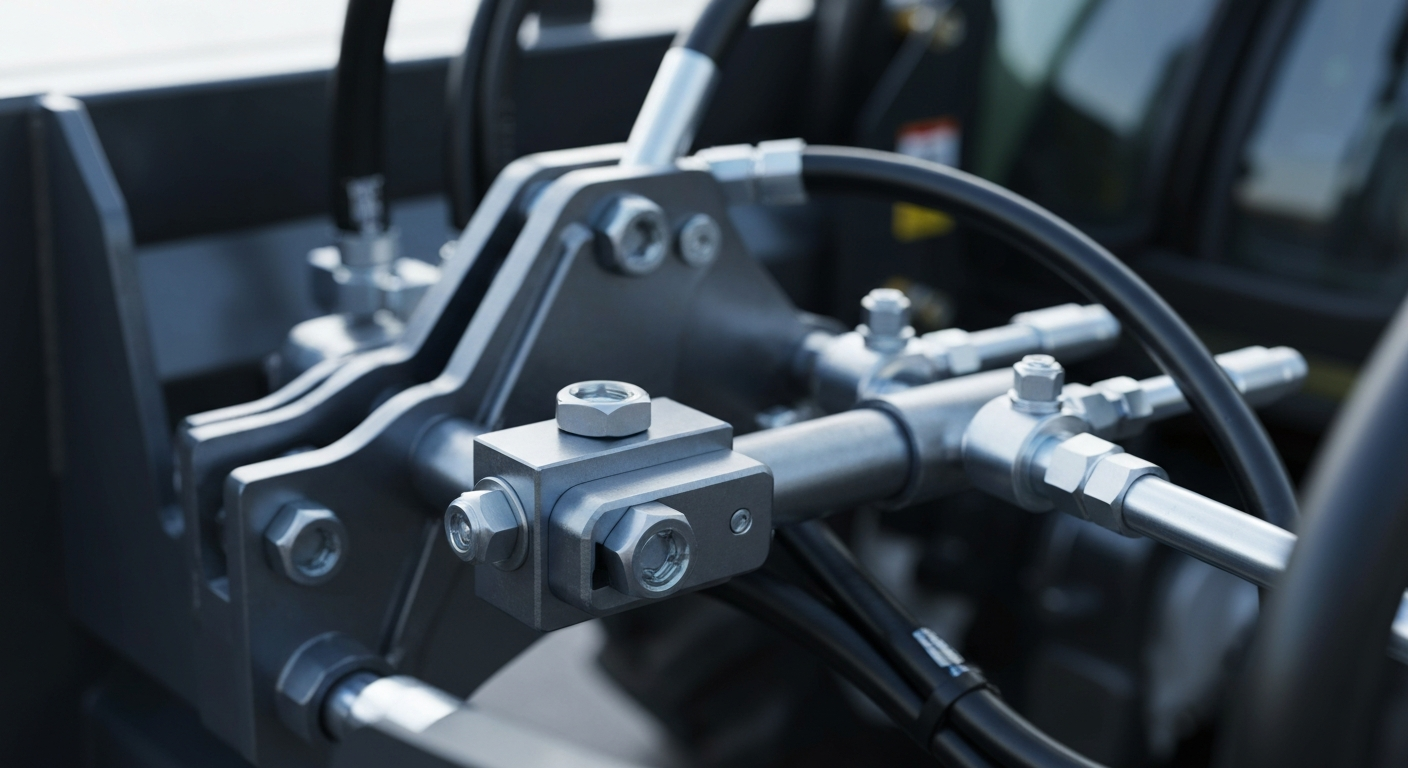
Your tractor must provide the required hydraulic flow rate (l/min) and enough operating pressure (bar). Too little flow can make movements slow and jerky. Make sure the requirements match your tractor's hydraulic system.
Safety and operation
A front loader is a powerful tool. Safe operation should always come first.
Many modern models have load moment limiters. These systems sound an alarm or automatically restrict operation when the stability limit is reached. This is a valuable safety feature, especially when carrying heavy loads over uneven ground.
The control lever's ergonomics can make a big difference to operator fatigue. An intuitive layout and comfortable grip help reduce operating errors. You should have a clear view of the load and fork tips throughout the job.
Warning: Never drive over uneven ground with a raised, fully loaded bucket. A shifted center of gravity can cause the tractor to overturn. Keep the load low, close to the ground.
Transporting and securing loads safely
Any equipment transported on the front loader must be securely fastened. Use high-quality equipment such as the
. Check tie-down straps regularly for damage. Make sure the equipment is secured against slipping or tipping.
Maintenance and Care
Regular maintenance can significantly extend the life of your front loader and help prevent costly breakdowns.
Lubrication is the simplest and most important maintenance task. Grease all grease fittings according to the maintenance schedule, especially the lift arm joints and quick coupler, which are subject to heavy loads. Use the grease recommended by the manufacturer.
Before each use, check the hydraulic hoses for cracks, wear or oil leaks. Dirt and stones can damage the hoses. Also make sure the mounting frame and pins are secure.
Note: Wear parts such as bucket cutting edges are often easy to replace. A product such as the
can extend the life of your bucket at a reasonable cost, without replacing the entire component.
Accessories Expand Its Capabilities
The front loader is just the starting point. The right accessories turn it into a true all-around tool.
- General-purpose bucket: The standard attachment for bulk materials, soil and snow.
- Forks: For pallets, bales or logs. Available in different widths and tine configurations.
- Grapples: Ideal for manure, silage or root balls, and easier on your back.
- Sweeper: For cleaning farmyards and paths. Faster than sweeping by hand.
- Hitch hooks and plates: Let you pull trailers or implements directly from the front loader.
Invest in high-quality accessories. Low-cost versions can bend easily and may pose a hazard if they fail. Make sure they're compatible with your quick coupler.
Our Conclusion
Choosing the right front loader is a long-term investment in your farm's efficiency. The right model will work reliably for years and make heavy tasks easier.
Choose established brands with strong local service. Get expert advice before you buy and, if possible, arrange a test drive with your own tractor. Don't cut corners where it matters. A front loader gets used every day, so spending more on quality and safety pays off.
Here are the highest-rated front loader products in our range, compared side by side:
| Model | Customer rating | Availability |
|---|---|---|
| Front loader hitch hook | – | Currently unavailable |
| Right and left hitch plate set for agricultural use | – | Currently unavailable |
| Frankfurt-pattern hardened digging shovel, 300 x 270 mm, for excavation and earthwork | – | Currently unavailable |
| Fritz Göbel 1200mm scraper handle - sturdy handle for snow shovels and scrapers | – | Currently unavailable |
| Fritz Göbel 2-piece yellow ratchet tie-down strap, 8 m - 5000 kg | – | Currently unavailable |
Frequently Asked Questions
- What lifting capacity should my front loader have?
- The lifting capacity you need depends on how you plan to use the loader. For light materials such as hay or manure, 800-1000 kg is often enough. For heavy loads such as bulk materials or pallets of stone, choose a model rated for 1500 kg or more. Always stay within your tractor's permitted axle load.
- What is a quick coupler, and do I need one?
- A quick coupler lets you change front loader attachments in seconds. It's highly recommended if you often switch between a bucket, grapple, forks and other implements. It can make your work much more efficient. Check that it's compatible with your existing attachments.
- Can I fit any front loader to my tractor?
- No. Front loaders are designed for specific tractor makes and models. The loader must match your tractor's frame, hydraulic capacity and mounting points. Always check the manufacturer's compatibility list or ask your equipment dealer.
- How often should I maintain my front loader?
- Check the lubrication points after every period of heavy use or at least once a week. The main bearings and joints need regular greasing. Inspect the hydraulic hoses for damage every few months. An annual inspection by a professional is recommended.
- Which accessories should I start with?
- A general-purpose bucket is essential. Forks for pallets and bales are also very useful. Depending on your farm's needs, you might also add a hitch hook or bale grapple. Start with the attachments you use most often.