
In brief: Beer usually foams in a beer dispensing system because of incorrect CO2 pressure, beer that is too warm or problems with the beer line. Excessive pressure forces too much CO2 into the beer, while a temperature that is too high releases the CO2 uncontrollably. Kinked or dirty lines can also cause turbulence and foam.
You have fulfilled your dream of owning your own beer dispensing system. The keg is chilled and the anticipation is building. You place the glass under the tap, open it and... foam. Just foam. The glass is full, but you are a long way from the beer-drinking experience you were hoping for. Many home bar operators know this scenario. But the solution is often simpler than you think.
The most common cause of excessive foam is not the dispensing system itself, but small yet crucial details in the chain from keg to glass. One of the most important components for a smooth beer flow is a high-quality beer line. It is the artery of your dispensing system. If it is kinked, too short or unclean, problems are inevitable. A food-safe, pressure-resistant hose is the foundation for every perfectly poured beer. The beer hose by the metre gives you the flexibility you need to adjust your system perfectly.

Why is my beer foaming? The physics of pouring beer
Beer contains dissolved carbon dioxide (CO2). This carbonation is responsible for its freshness and head. In the keg, pressure keeps it dissolved in the liquid. As soon as you open the tap, the pressure drops rapidly. The CO2 wants to escape from the beer. This process needs to be controlled.
If the beer foams uncontrollably, it means that the carbonation is separating from the beer too quickly and suddenly. This happens because of turbulence and sudden changes in pressure or temperature. Imagine a shaken bottle of sparkling water. When pouring beer, you want exactly the opposite: a gentle, steady flow that allows the CO2 to form a perfect head only once it reaches the glass. The entire dispensing system is designed to control this transition.
A perfectly poured beer is not a matter of chance, but the result of a finely tuned system. Pressure, temperature and cleanliness must work together. Neglect one factor and the result will suffer.
How Can I Identify the Most Common Sources of Errors? A Checklist
Work through the following points systematically. In most cases, you will find the cause of your foaming problem here. Often, it is a combination of several factors.
Source of Error 1: Incorrect CO2 Pressure
CO2 pressure has two functions: it transports the beer from the keg to the tap and ensures that the carbon dioxide remains dissolved in the beer. If the pressure is set incorrectly, problems are inevitable.
- Pressure too high: Additional CO2 dissolves in the beer (over-carbonation). The beer becomes "fizzy" and foams heavily as soon as it leaves the tap. You end up dispensing almost nothing but foam.
- Pressure too low: The carbonation escapes from the beer in the keg or in the line. The beer reaches the tap flat and without pressure. The pressure is often increased in response, which only makes the problem worse, as the already "lively" beer now shoots out of the tap with force.
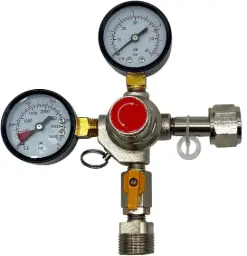
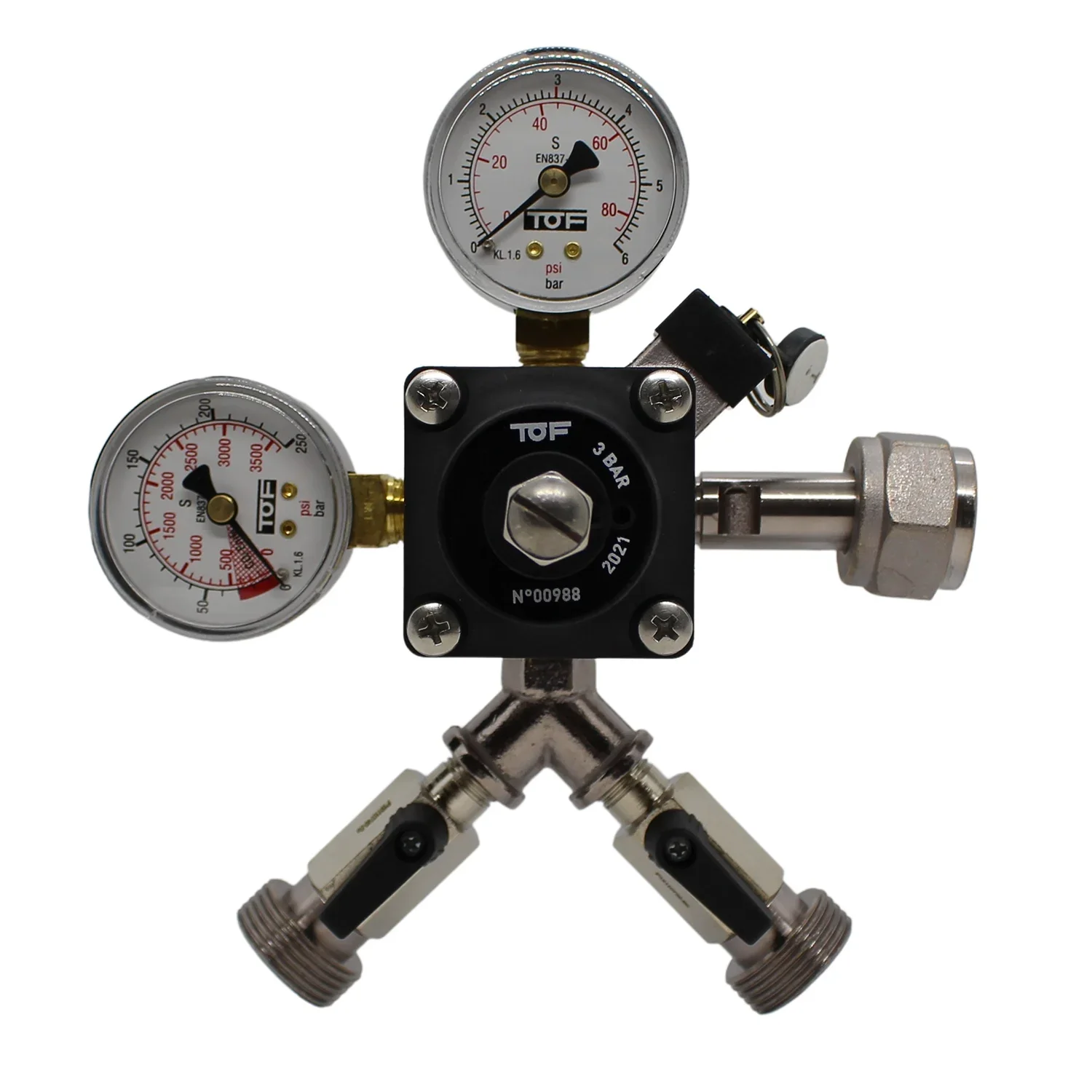
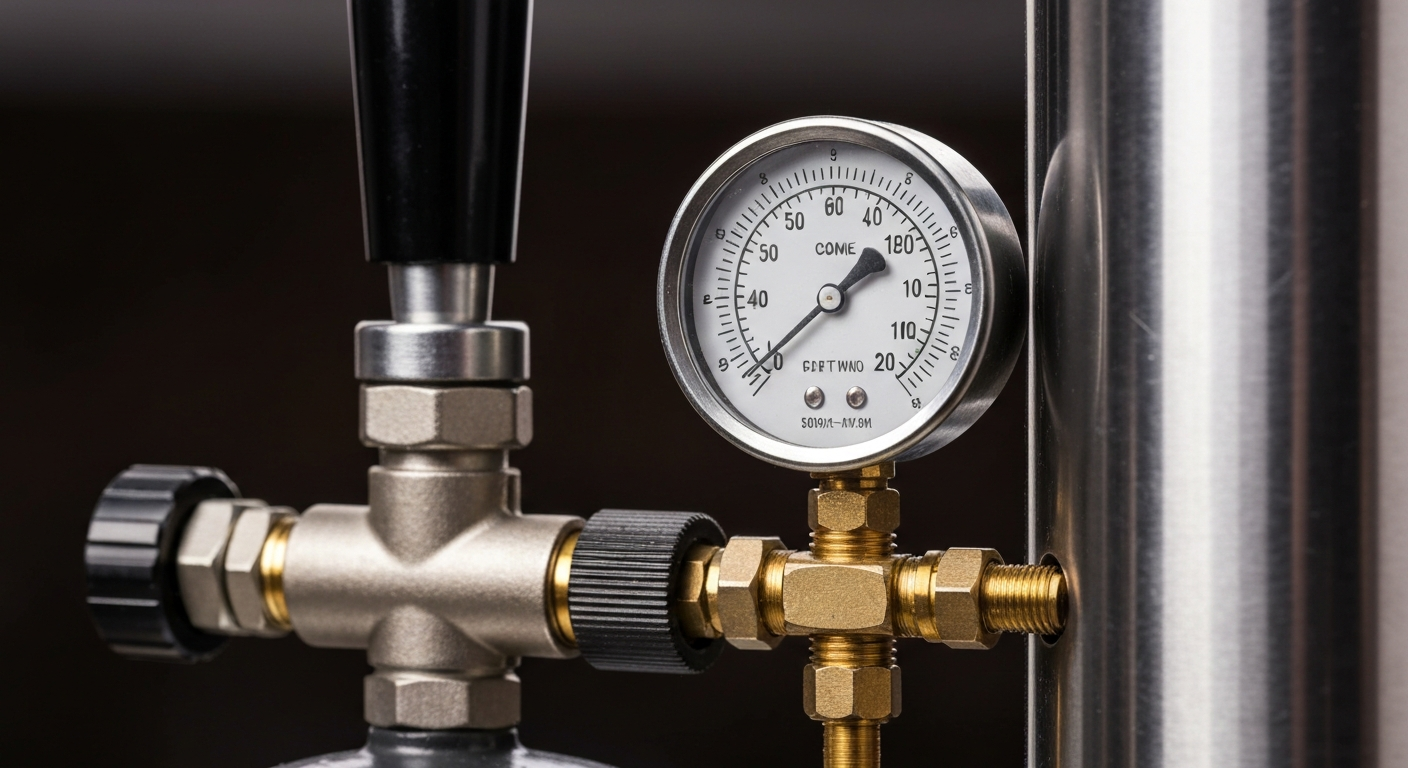
Controlling the pressure is essential. A precise pressure reducer is therefore not an option but a necessity. With the
Source of Error 2: Incorrect Beer Temperature
Temperature is the second main factor. The warmer the beer, the less carbon dioxide it can retain. The ideal storage temperature for most beer kegs is between 4 and 8 °C. This temperature should be kept as constant as possible, from the keg through the line to the tap.
If the temperature rises on the way to the tap, for example because the beer line runs through a warm room, the CO2 suddenly escapes from the beer. The result is nothing but foam in the glass. Make sure your keg is sufficiently chilled and that the cold chain is not interrupted. A professional system such as the
PYGMY 25 beer dispensing system with an integrated dry cooler ensures a constant, optimal dispensing temperature directly at the tap, even if the keg is not perfectly chilled.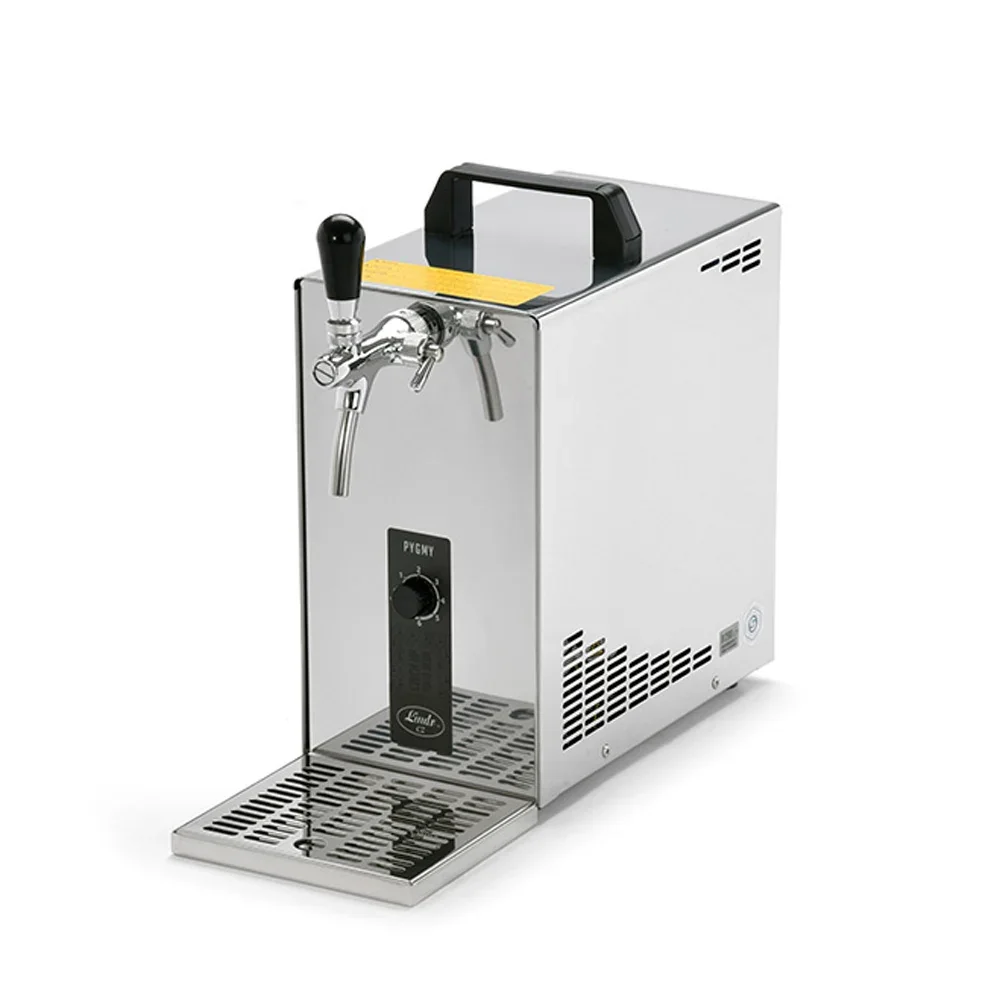
Expert tip
After a longer break from dispensing, let the first beer poured (approx. 0.1 litres) run off. This "first beer" has been sitting in the warmer tap for longer and would only foam. The beer that follows comes directly from the chilled line and can be poured perfectly.
Source of Error 3: Problems with the Beer Line
The beer line, which is often underestimated, is one of the most common causes of beer line problems. It acts as a so-called "calming section". This is where the high pressure from the keg is reduced in a controlled manner, so that the beer reaches the tap at the correct pressure.
- Incorrect diameter/length: A hose that is too short or too thick provides too little resistance. The pressure cannot be reduced sufficiently. A hose that is too long or too thin slows the beer down too much, so it reaches the tap "flat". For most home systems, a hose with an internal diameter of 7 mm is ideal.
- Kinks and narrow sections: Every kink in the line acts like a nozzle. The beer accelerates and swirls, causing immediate foaming. Route the hose in wide curves.
- Contamination: Deposits such as beer stone or biofilm narrow the cross-section and create a rough surface. The beer swirls against it and foams. These contaminants also cause a bad beer taste. A clean, smooth beer hose is therefore essential.
Source of Error 4: The Beer Tap and the Correct Pouring Technique
The final station, the beer tap, can also cause problems. A dirty tap with dried-on beer residue causes the same turbulence as a dirty line. Clean the tap regularly, both inside and out.
Technique is also crucial. Always open the tap fully and quickly. A tap that is only half open squeezes the beer, causing foam. Hold the glass at an angle under the tap and fill it until it is two-thirds full. Then set it down briefly, allow the foam to settle, and straighten the glass to top it up with a head.
Additional advice
Make sure your glasses are clean and cool. Residue from washing-up liquid destroys the head, while a warm glass immediately heats the beer and causes it to overflow with foam. Always rinse the glasses with clean, cold water before pouring.
How Do I Set the Dispensing Pressure Correctly? Step-by-Step Guide
Setting the correct pressure is a matter of balance. You need to bring the saturation pressure (which keeps the CO2 in the beer) and the delivery pressure (which transports the beer) into harmony.
- Determine the beer temperature: Measure the temperature of the beer directly in the keg cellar or refrigerator.
- Know the CO2 content: Pilsners and lagers contain approx. 5.0 g/l CO2, while wheat beer contains up to 7.0 g/l. You can find a saturation pressure table online or in your system's manual. At 8°C and 5.0 g/l CO2, you need a saturation pressure of approx. 1.2 bar.
- Calculate the delivery pressure: Add 0.1 bar for each metre of height difference between the bottom of the keg and the tap. Also add 0.1 bar for every 10 metres of hose length.
- Set the total pressure: Add the saturation pressure and delivery pressure together. Example: 1.2 bar (saturation) + 0.1 bar (1m height) = 1.3 bar total pressure at the pressure reducer.
Start with this setting and pour a test beer. If it still foams, increase the pressure in small 0.1-bar increments. If it pours too quickly, reduce the pressure slightly. Whether you are browsing the We are celebrating a birthday sale for a large family celebration or enjoying a relaxed evening, the right setting will help you pour every beer perfectly.
How important is regular cleaning for beer flavour?
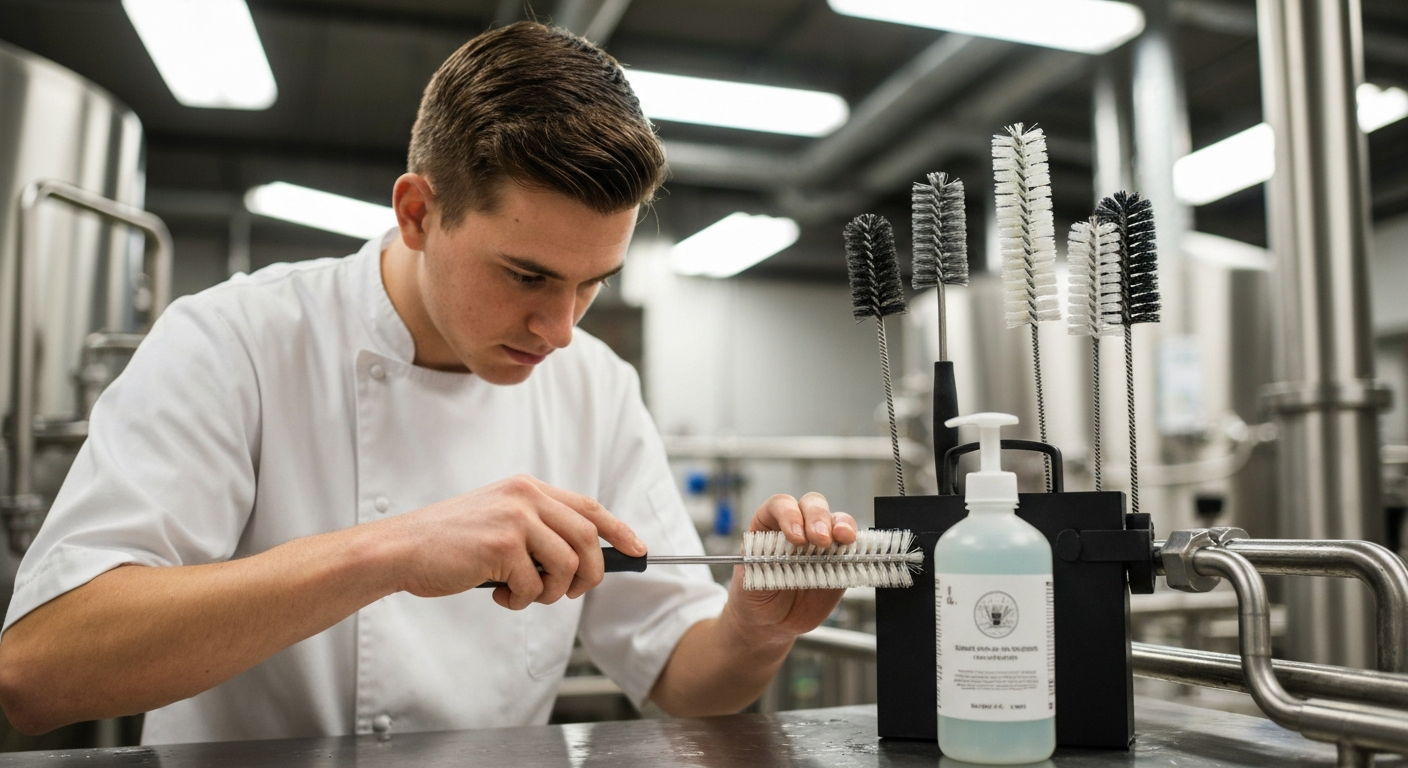
A clean system is the absolute foundation for enjoying great beer. Without regular cleaning, bacteria and yeast can quickly settle in the lines and form what is known as a biofilm. This is not only a breeding ground for germs, but can also cause foaming problems and an unpleasant sour or musty taste.
After changing each keg, carry out a basic clean with clear water. At least every two weeks, chemical-mechanical cleaning is required. Use special cleaning sponges and a disinfectant approved for beer lines. The effort is worthwhile, because only a hygienically clean system can deliver beer with perfect flavour and an appetising appearance. After all, a perfectly poured beer is also one of the best gifts for any beer lover.
Important note
Never use ordinary household cleaners or washing-up liquid for cleaning. They can damage the plastic lines and leave residues that ruin the beer’s flavour and may be harmful to your health. Use only professional cleaning products for beer dispensing systems.
You can also find great offers for your home bar, from accessories to complete systems, time and again in our Pop-Up Sale. With the right knowledge and equipment, nothing stands in the way of the perfect draught beer experience.
The journey from keg to glass is short, but crucial. Anyone who pays attention to quality and cleanliness here will be rewarded with every sip.
Patience and the right technique are your best tools. Work through the checklist, adjust the pressure and temperature, and make sure the lines are clean. The frustration of excessive foam will soon turn into the pure pleasure of pouring the perfect beer.
Frequently Asked Questions
- What is the correct CO2 pressure for my beer dispensing system?
- The correct pressure depends on the beer temperature, the CO2 content of the beer and the difference in height between the keg and the tap. As a general rule, start at around 1.2 to 1.4 bar at a cellar temperature of 8 °C and fine-tune the pressure as needed.
- Can a dirty beer tap cause excessive foaming?
- Yes, definitely. Deposits and beer residue in the tap restrict the outlet and create rough surfaces. The beer swirls around them, causing the carbon dioxide to escape suddenly and resulting in excessive foam. Regular cleaning is essential.
- My beer tastes strange. Could this also be related to the foaming?
- Foaming problems and poor beer flavour often go hand in hand. The cause is usually bacteria and deposits in the beer lines (biofilm). These contaminants cause not only foam, but also a sour, musty or buttery taste.
- How often should I clean my beer line?
- Clean your home beer dispensing system thoroughly after every keg change. At the latest, however, you should carry out chemical-mechanical cleaning with a brush and suitable cleaning products every two weeks to reliably remove biofilm and deposits.
- Does the length of the beer hose affect foaming?
- Yes, the length and diameter of the hose are crucial. The hose acts as a calming section where the beer can reduce its pressure. A hose that is too short or too thick means that the beer reaches the tap at excessive pressure and foams.
You might also be interested in
- Changing a beer line: Step-by-step guide
- Buying a beer line: Which 3/8 Zoll hose is the right one?
- Cleaning a foam gun: Easy and straightforward?
- Beer around the home and garden: Practical hacks
- Choosing and using expanding foam correctly – The guide
- Chainsaw chain jumping, jamming or cutting poorly? Solutions!